
Last updated November 23, 2026
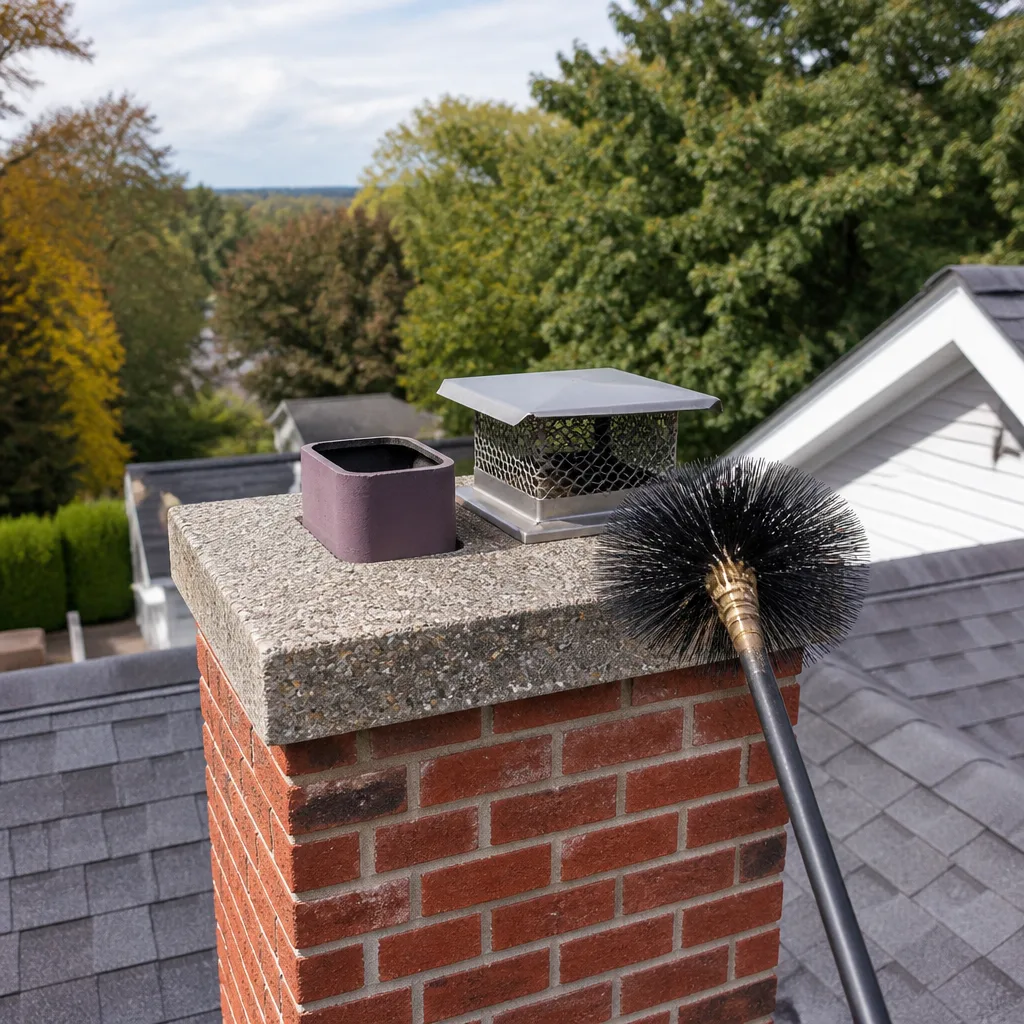 Sweep & inspection
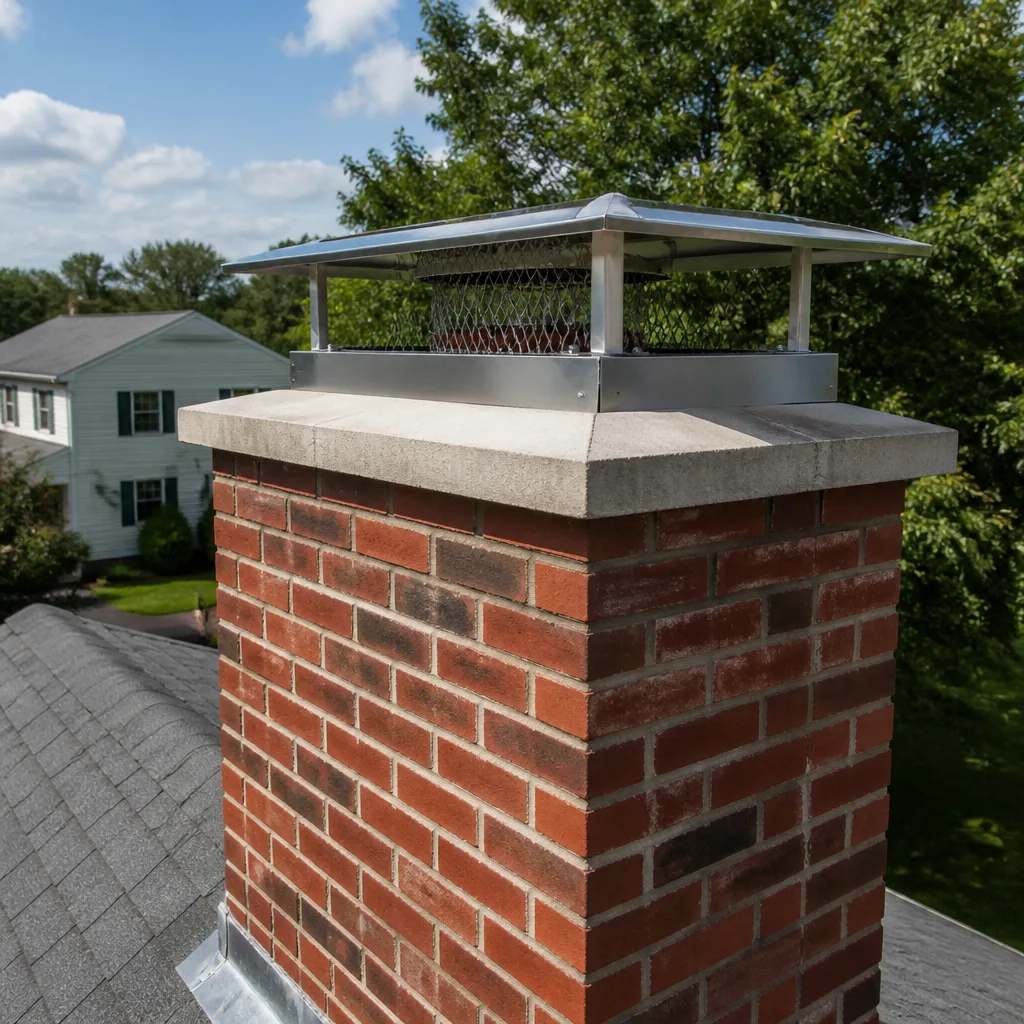 Caps & crowns
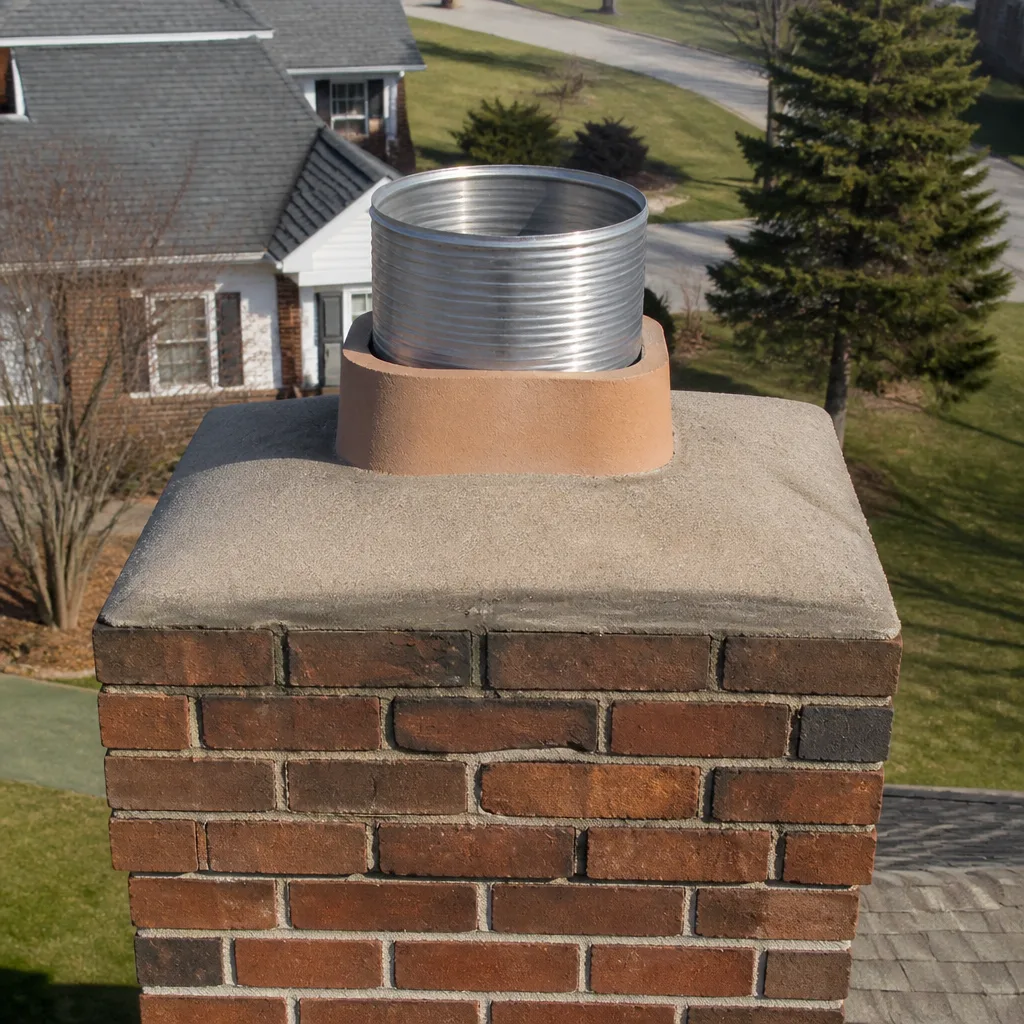 Flue relining
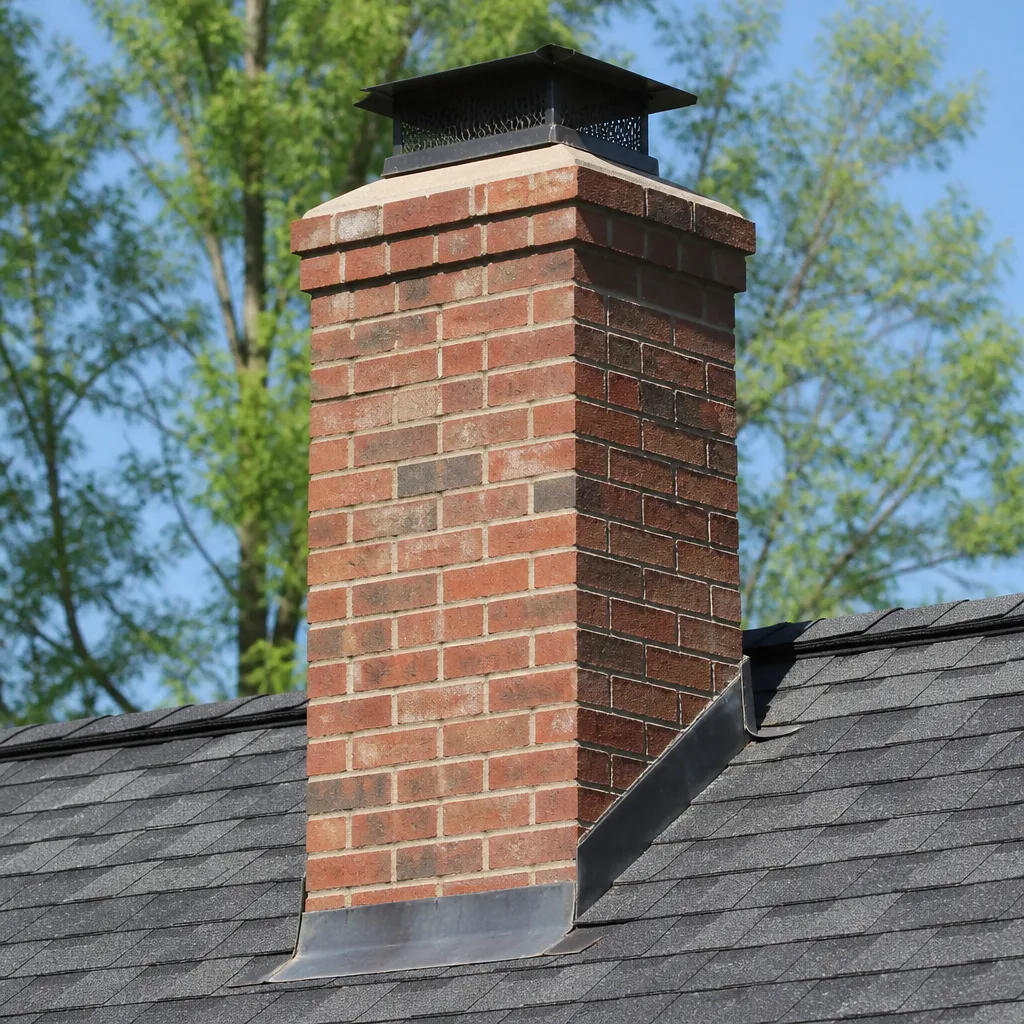 Masonry repair
 Gas fireplace service
Level 1 sweep and inspection to the NFPA 211 annual standard - flue, crown, cap, and flashing checked and photographed
Chimney sweep logs do not sweep chimneys. They loosen some creosote - which then falls where a brush and vacuum still have to collect it.
Chimney Cleaning Warning Signs: A South Coast Metro Homeowner’s Reference Guide
Most chimney warning-sign guides point you at the dramatic stuff: smoke rolling into the living room, a visible crack you can fit a finger into, a fire that won’t draw. By the time those show up, you’re past warning and into repair. The signals that actually matter in South Coast Metro homes are quieter. They’re the white chalky stain on the stucco chimney that everyone assumes is paint fade. The damper that “kind of sticks” and gets a little worse every season. The faint smell in the firebox in July that no one can place. This guide covers the early indicators we’ve learned to read on South Coast Metro housing stock – stucco-clad chimneys, brick with old mortar, tile roofs, mild winters that let problems hide for years – so you can catch a failing system while it’s still a repair and not a rebuild.
Quick Answer
The earliest warning signs of a chimney problem in South Coast Metro are usually exterior, not interior: white efflorescence staining on the chimney’s stucco or brick, spalling masonry, and hairline cracks in the crown. Inside, watch for rust stains on the firebox floor, crumbling firebrick mortar, a damper that sticks, and a persistent smoky or acidic smell when the fireplace is cold. Any one of these is worth a professional inspection – they indicate water intrusion, liner wear, or a smoke chamber that’s no longer sealing.
Styles & brands we work with
- Sweep & inspection
- Caps & crowns
- Flue relining
- Masonry repair
- Gas fireplace service
Table of Contents
- What White Stains on Your Chimney Actually Mean
- Spalling Brick and Hairline Crown Cracks on South Coast Metro Chimneys
- Cold-Start Smoke vs. a Compromised Smoke Chamber
- Reading the Smell: Creosote, Animals, or Active Moisture
- Why a Sticking Damper Is Worth Documenting
- Interior Indicators: Rust, Crumbling Mortar, Discoloration
- Inspection Findings vs. Repair Capability
- When in the Year to Act on Warning Signs in South Coast Metro
What White Stains on Your Chimney Actually Mean
A white, powdery stain running down the outside of a chimney isn’t cosmetic. It’s efflorescence, and it means water is already moving through the masonry toward the firebox. When moisture gets into brick or stucco and then dries from the outside in, it carries dissolved salts to the surface and leaves them behind as a chalky bloom. The path the water takes to get out is roughly the path it took to get in – and that path runs past your flue, your smoke chamber, and the top of your firebox.
On South Coast Metro housing stock this shows up in a few predictable places. Stucco-clad chimneys, common in the tract housing built from the 1960s through the 1980s, will show a vertical white streak starting near the crown and running down one face. Brick chimneys on older homes often bloom at the mortar joints first, because the mortar is softer than the brick and absorbs water more readily. A single isolated patch near the top is usually the first hint; a broad wash down the whole face means the crown or the cap has been letting water in for a while.
What most homeowners miss is the timing. Efflorescence often appears and disappears with the seasons. It’s most visible after a wet stretch and fades in dry weather. If you only look at your chimney in August, you may never see it. Look in the weeks after rain and take a photo, even if the stain is faint.
- Isolated white bloom near the crown: early moisture entry, usually crown or cap related.
- Vertical streaks down a stucco face: water tracking behind the stucco, often from a failed crown seal.
- White at mortar joints on brick: moisture absorbed into the masonry itself, often from above.
- Broad puffy white wash: long-term intrusion, worth a full inspection.
Efflorescence alone doesn’t mean the flue is compromised, but it’s the single best early indicator we see on South Coast Metro chimneys that a crown or cap is due. Fixing the water source early is what keeps a cheap repair from becoming a masonry rebuild.
Spalling Brick and Hairline Crown Cracks on South Coast Metro Chimneys
Spalling is when the face of a brick flakes off, leaving a rough, pitted surface. It’s the next stage after efflorescence: the masonry has held enough water, often through repeated wet-dry cycles, that the surface fails. Once brick starts spalling, the chimney’s structural skin is thinning, and the flue inside is more exposed to the same moisture. It doesn’t reverse on its own.
On the stucco-heavy South Coast Metro construction, spalling often hides behind a stucco coat until the stucco itself cracks and falls away, revealing the damaged brick beneath. That’s the moment most homeowners call. Catching it earlier is better: look for a bulge in the stucco, a hairline crack that runs vertically and widens, or a hollow sound when you tap the chimney with a screwdriver handle from the ground.
The crown – the concrete or mortar cap at the very top of the chimney – is where water intrusion usually starts. It’s a horizontal slab that takes the full sun and every rain event. Over time it develops hairline cracks from thermal movement. Those cracks are small enough to ignore visually, but they’re exactly wide enough to channel water into the masonry below. On South Coast Metro homes, where the fireplace often goes unused for six or seven months of the year, a cracked crown has that whole dormant stretch to let water work its way down before anyone notices.
- Look up, in good light. From the street or yard, check the crown for a visible crack line or a chunk missing at the edge.
- Check the cap. A missing or loose spark arrestor or cap is the second most common entry point after the crown.
- Tap the exterior. A hollow or crumbly sound when you tap the stucco is a sign of spalling behind it.
- Photograph and compare. Hairline cracks look stable until you put a straight reference against them. A photo a year apart shows if they’re moving.
- Book a cap and crown check. The chimney cap & crown work we handle with Gelco and Famco components is commercial-grade and built to hold up under the sun and rain cycles here.
None of this is DIY repair territory. The crown is up high, and working on masonry above the roofline means the safety risk is real. Get someone with a ladder and the right materials.
Cold-Start Smoke vs. a Compromised Smoke Chamber
A little smoke rolling out of the firebox when you first light a fire is normal. It happens because the flue is cold and the fire needs to heat the column of air inside it before the draft pulls upward. Usually within a minute or two the smoke clears and the fire draws. If it doesn’t – if smoke lingers past several minutes, or comes back every time you open the glass doors mid-burn – the smoke chamber or flue may be compromised.
The way to tell them apart is timing and pattern:
- Normal cold-start backdraft: smoke for 30 to 90 seconds after lighting, then draws cleanly. Worse on still, windless mornings.
- Smoke chamber problem: smoke continues to seep after the fire is established. Often worse when the fire is hot.
- Blocked or partially blocked flue: smoke puffs out intermittently, sometimes with a hissing or rumbling sound. Can come and go with weather.
- Liner or smoke-chamber joint failure: smoke smell without visible smoke – the fire draws, but the house still smells smoky after a fire.
The “smell smoky but no smoke visible” pattern is the one that gets missed for years. The fire looks fine. The visible smoke goes up. But some is escaping at a joint or crack you can’t see, and it’s accumulating in the room slowly. In South Coast Metro, where homes are often sealed tight and run the air conditioner 10 months of the year, that low-level smoke gets pulled into the house instead of out of it. The fix is a proper inspection once, not opening a window every time you burn.
The smoke chamber is the sloped area above the damper and below the flue. It’s built with corbelled brickwork on most older chimneys, and that stepped brickwork collects creosote and lets smoke curl. A chimney sweep removes the creosote that feeds the problem; if the chamber itself has lost its parging or has gaps, that’s a repair, and it should be documented on camera before anyone recommends anything.
Reading the Smell: Creosote, Animals, or Active Moisture
Most homeowners can tell when something smells off about their fireplace. Fewer can tell what the smell means. The three sources – creosote buildup, animal intrusion, and active moisture damage – have distinct profiles, and each points to a different level of urgency.
Creosote buildup smells like a sharp, acrid, tar-and-ash odor, strongest in warm weather when the flue is cold and the air in the chimney has nowhere to go. It gets worse over the summer, not better. That’s because the deposits that built up during the burning season sit and slowly offgas into the house as the air pressure shifts. A faint ashy smell when you walk past the fireplace is normal. A strong tar smell that fills the room in July means the deposits have built up enough to need a sweep before the next burning season.
Animal intrusion smells more like urine and nesting material – musty, sharp, and usually concentrated. It often appears suddenly in spring, when birds or squirrels look for a place to nest. The animal smell matters because the same missing cap or loose cap that let the animal in will let water in too. A missing cap is the cap-sized hole at the top of your chimney that never should be there. We install Gelco caps for exactly this reason: they close off the flue to animals and rain while letting smoke escape.
Active moisture damage smells like wet masonry, mildew, or a faintly sour note that lingers in the firebox even when the fireplace has been cold for months. Sometimes it comes with a musty smell in the room above the fireplace. If the smell has been there since the last rainy season and hasn’t cleared, water is still inside the masonry.
- Sharp tar smell (warm months): creosote buildup. Schedule a sweep before burning season.
- Urine or nesting smell (spring): animals. Get a cap and an inspection.
- Musty or sour smell (year-round): active moisture damage. Look for efflorescence and spalling at the same time.
- Smoky smell after a fire, no visible smoke: joint or liner leak. Inspect before burning again.
If two or three of these are present at once, that’s a sign the chimney has more than one issue. Call for an inspection instead of guessing.
Why a Sticking Damper Is Worth Documenting
A damper that sticks is a quirk to most homeowners. It’s been a little stiff for years. You give the handle a wiggle and it opens. Nothing urgent. The problem with that reasoning is that the damper is attached to the smoke chamber, and the smoke chamber is attached to the flue. When the damper gets progressively harder to open, something is changing above it. Sometimes it’s rust from moisture. Sometimes it’s warping from heat. Sometimes the frame is going.
Why it matters in South Coast Metro specifically: the damper is one of the few moving metal parts in a fireplace, and in a mild climate it often sits closed for months. Corrosion or scale builds up in the gap, and the operation gets sticky. Left alone, the damper either stays open (losing heat and letting in cold air all winter) or stays closed (no draft), and neither is good. A damper that won’t seal means the fire can’t be controlled as well, and a fire that runs hot with the draft slightly open burns hotter than the flue liner was built to handle.
Documenting it matters because it’s a trackable indicator. Note the date the damper first stuck. Note whether it’s gotten worse. When a technician inspects the chimney, the damper’s condition is one of the specific things they’ll check and photograph – it’s an easy read on the smoke chamber’s health. If you can hand them a note that says “sticking since spring, worse in the fall,” the inspection goes faster and the findings are clearer.
The number-one mistake here is forcing a stuck damper, especially if you don’t know whether it’s rusted or warped. A warped damper forced open can crack the frame and take the smoke chamber frame with it. Get it looked at.
Interior Indicators: Rust, Crumbling Mortar, Discoloration
The most reliable early warnings are inside the firebox, and most homeowners never look. Here’s what to check and what each means.
Rust stains on the firebox floor. A patch of orange-brown staining on the floor of the firebox, no ash or coals nearby, is the classic sign of water coming down the flue. The water hits the firebox floor, evaporates, and leaves rust from any metal it touches on the way – typically the damper frame, the firebox grate, or the liner’s connection hardware. On South Coast Metro homes, this is often the first interior sign that the crown is failing above. It’s easy to mistake for a stain from a wet log. If you haven’t stored wet wood in the firebox, treat it as water intrusion.
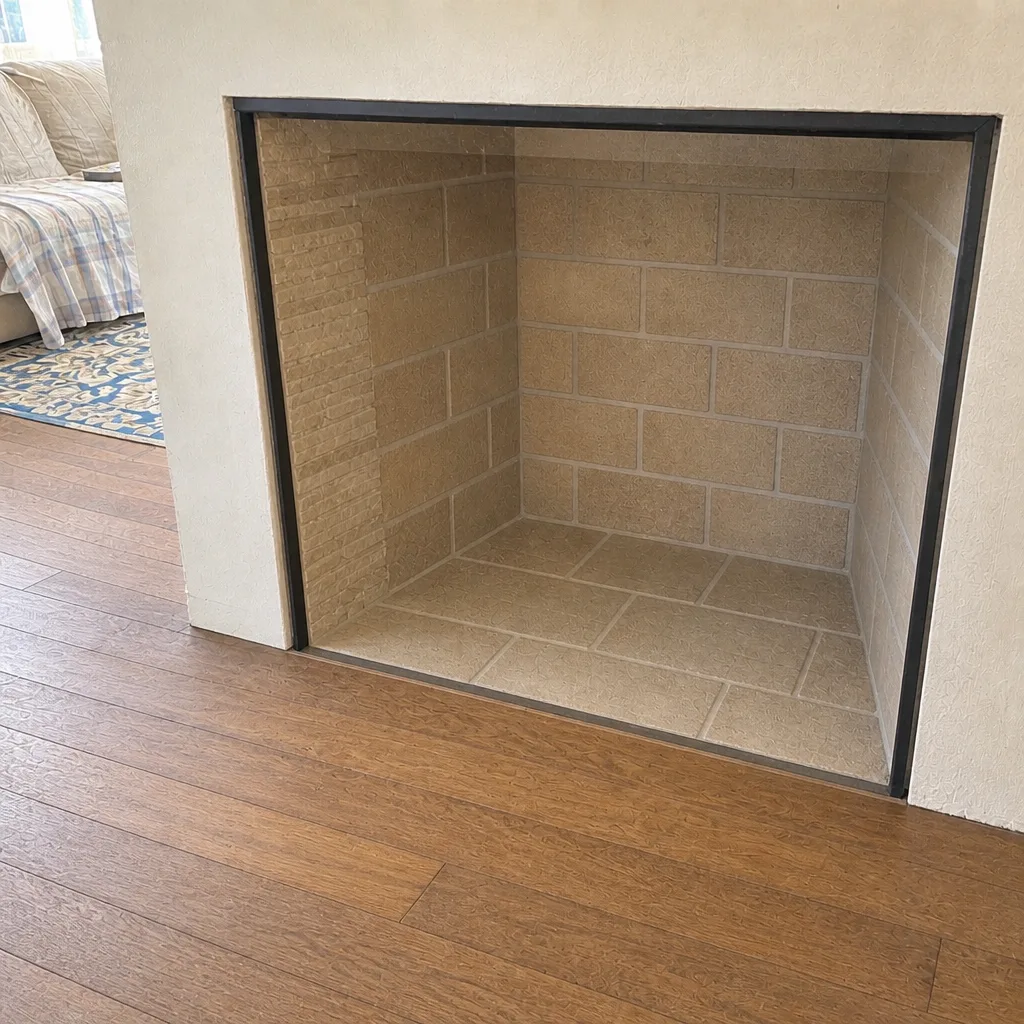
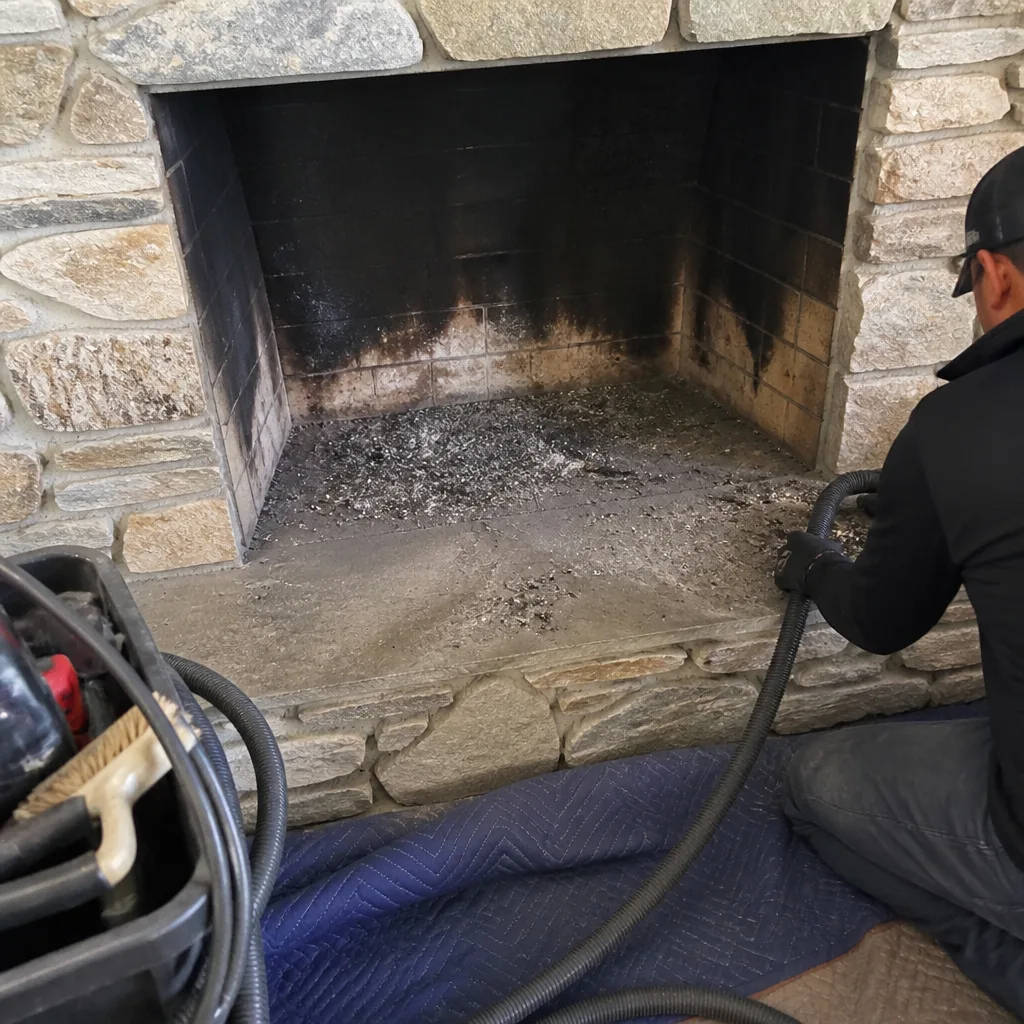
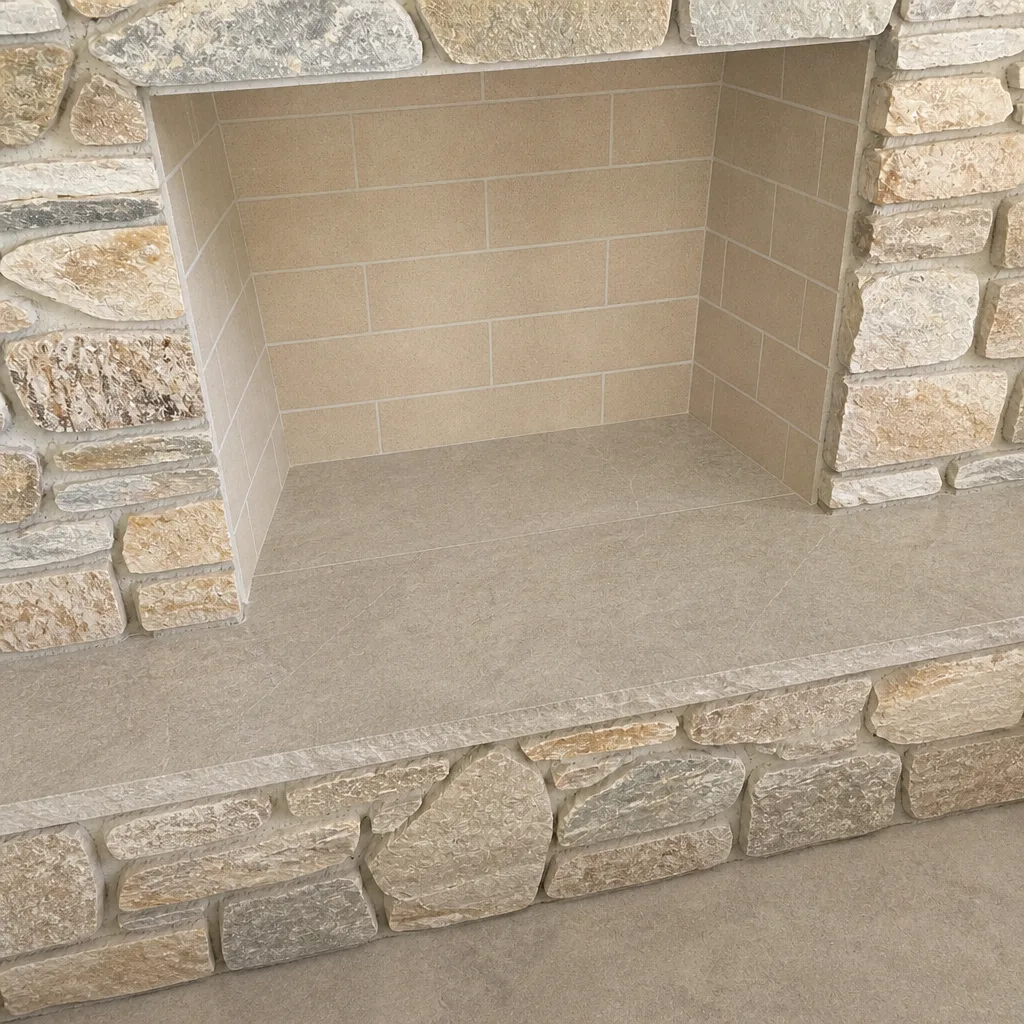
Crumbling firebrick mortar. The mortar joints between the firebrick (the refractory brick lining the firebox) should be tight, continuous, and roughly the color of the brick. If the joints are sandy, crumbling, or coming away when you touch them with a fingernail, the firebrick is losing its hold. That’s a repair, not a cleaning. When the mortar joints fail, the fire beyond them heats the firebox walls directly. This is where fireplace repair starts – not with a full liner replacement, but with restoring the firebox and smoke chamber surfaces with a HeatShield ceramic resurfacing system. That’s a specialist-level repair that extends the chimney’s life without tearing the whole thing out, and it’s the answer for most of the crumbling firebrick we see in South Coast Metro homes.
Discoloration patterns. Where the firebox or the flue above it discolors tells you where the leak or the heat damage is coming from:
- Dark staining at the top of the firebox, near the damper: smoke escaping before the fire is fully drawing – a smoke chamber issue.
- Discoloration running up one side of the firebox: often a breach in the liner above, letting smoke find a path.
- Pale or white streaks up the firebox wall: moisture tracks from above, and usually means crown or cap.
- Scorched or blistered areas on the firebox face: heat escaping through failed mortar or a failing firebrick.
If you see any of these, do not keep burning. A professional camera inspection will show exactly where the failure is and how far it extends. Nothing gets recommended without that camera evidence, and you’ll be shown what was found on screen.
Inspection Findings vs. Repair Capability
Most chimney inspections end with a written report and a phone call that the homeowner doesn’t answer. An inspection that isn’t paired with the ability to repair turns into a homeowner making three more calls to sort out who’s actually going to fix the problem. In South Coast Metro we see the fallout of that constantly – a homeowner with a report from a sweep who doesn’t do liners, a call to a liner guy who doesn’t do caps, and a mason who won’t touch the firebox. Two months later, still nothing fixed.
Here’s the full picture of what inspection findings usually trigger, and what should be handled by the same company:
- Sweep. Creosote removal, always the first step – you can’t see through a dirty flue, and a camera inspection on a dirty flue gives false readings.
- Camera inspection and photo report. The whole flue is scoped, top to bottom. Findings are documented on screen and in images.
- Cap and crown. The exterior top end of the system is restored with manufacturer-grade components – we use Gelco and Famco parts because they’re built for the job and we can stand behind them.
- Fireplace and firebox repair. Firebrick and smoke chamber work, including HeatShield ceramic resurfacing where the surface is worn but not structurally lost.
- Liner work. When a liner is genuinely beyond resurfacing, the replacement is done with DuraFlex or Olympia Chimney components.
- Structural chimney repair. Masonry, spalling brick, and crown rebuilds where the existing masonry is failing.
Our aim is a single point of contact from the day the inspection is booked to the day the last repair is done. When we can safely defer work, we tell you – chimney work that can wait six months gets said so, in writing, alongside the work that should happen now. And nothing gets recommended without a camera image you’ve seen yourself. A professional-grade supply line that includes HeatShield, DuraFlex, Gelco, Olympia Chimney, and Copperfield means we’re not shopping for parts when a repair is needed. We stock and install professional-grade components – not generic substitutes.
As an entry point to the whole service, the Chimney Sweep South Coast Metro overview is a good place to see how the sweep, inspection, and repair fit together as one process.
When in the Year to Act on Warning Signs in South Coast Metro
South Coast Metro’s mild winters are what let chimney problems grow for years without being noticed. There’s no hard freeze to crack pipes and force a repair, and many homeowners here burn a fire a dozen or two times a season at most, so creosote accumulates slowly and a smoke chamber that’s starting to lose its parging has time to get worse without obvious symptoms. The early warning signs are easy to ignore because the house stays warm without the fireplace.
The practical schedule:
- After the last burning season (spring): sweep the flue and inspect. The creosote from the winter is at its highest, and any water damage from the winter rains is visible.
- Late summer: look at the exterior. Efflorescence and spalling are most visible in the week after a rain, and crown cracks show up clearly in bright sun. This is the best time to check and repair a cap and crown before the burning season.
- Before the first burn of the season (fall): firebox check for rust stains, crumbling mortar, and damper operation. Book a repair now if the camera inspection found anything.
- Mid-winter: if you notice smoke lingering, a smoky smell in the house, or the fire drawing worse than it did in the fall, stop burning and get an inspection.
One of the quietest warning signs is also seasonal: a chimney that never smells in summer but smells strongly in the first cool week of fall. That’s the creosote offgassing under the pressure change, and it means the buildup is finally dense enough to register. It’s the reason the pre-season appointment in fall is worth scheduling, even on a chimney that “seems fine.”
Common Mistakes to Avoid
- Painting over efflorescence. A coat of paint covers the stain for a season and traps moisture inside the masonry, making the eventual spalling worse. Fix the water path, not the stain.
- Assuming a little smoke at cold start is always normal. It usually is, but if the smoke lingers past a minute or comes back when the fire is hot, it’s a smoke chamber issue, not a draft quirk.
- Living with a sticking damper. A sticky damper is a front-row look at what’s going on in the smoke chamber. Document it, don’t force it.
- Ignoring the spring animal smell. A chimney that hosted a nest in spring has a missing cap, which means it also took on rain all winter. Both need attention.
- Booking the sweep and stopping there. A sweep clears creosote but doesn’t repair a failing crown, an eroded smoke chamber, or a linar crack. The inspection has to be paired with the repair capability, or you’re just repeating the process every year.
- Assuming this climate is too mild to matter. The absence of hard freeze cycles is exactly why problems hide longer here. Time is not on your side on a South Coast Metro chimney.
- Acting on scare tactics. If an inspection finds nothing, we say so. If a repair can safely wait until spring, we say that too. Anything else is a sales tactic.
See the difference
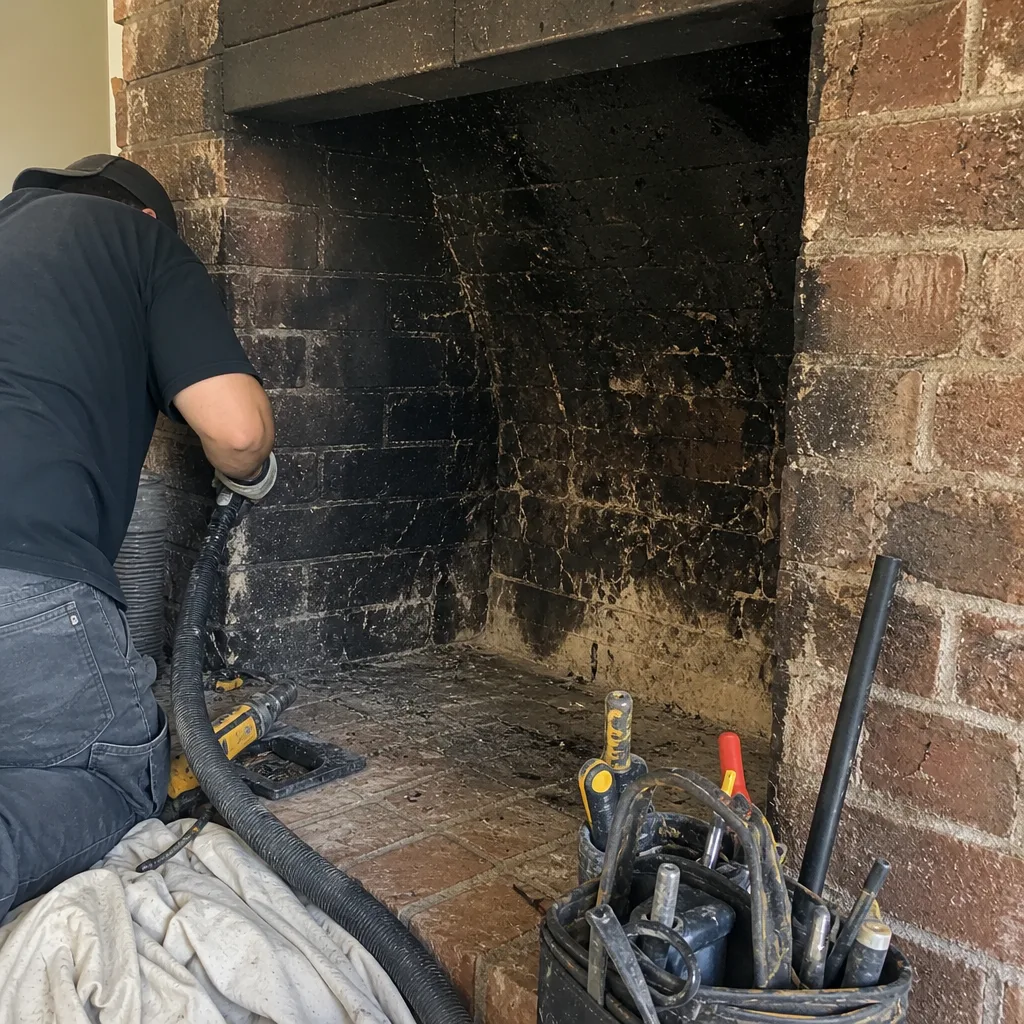 Before
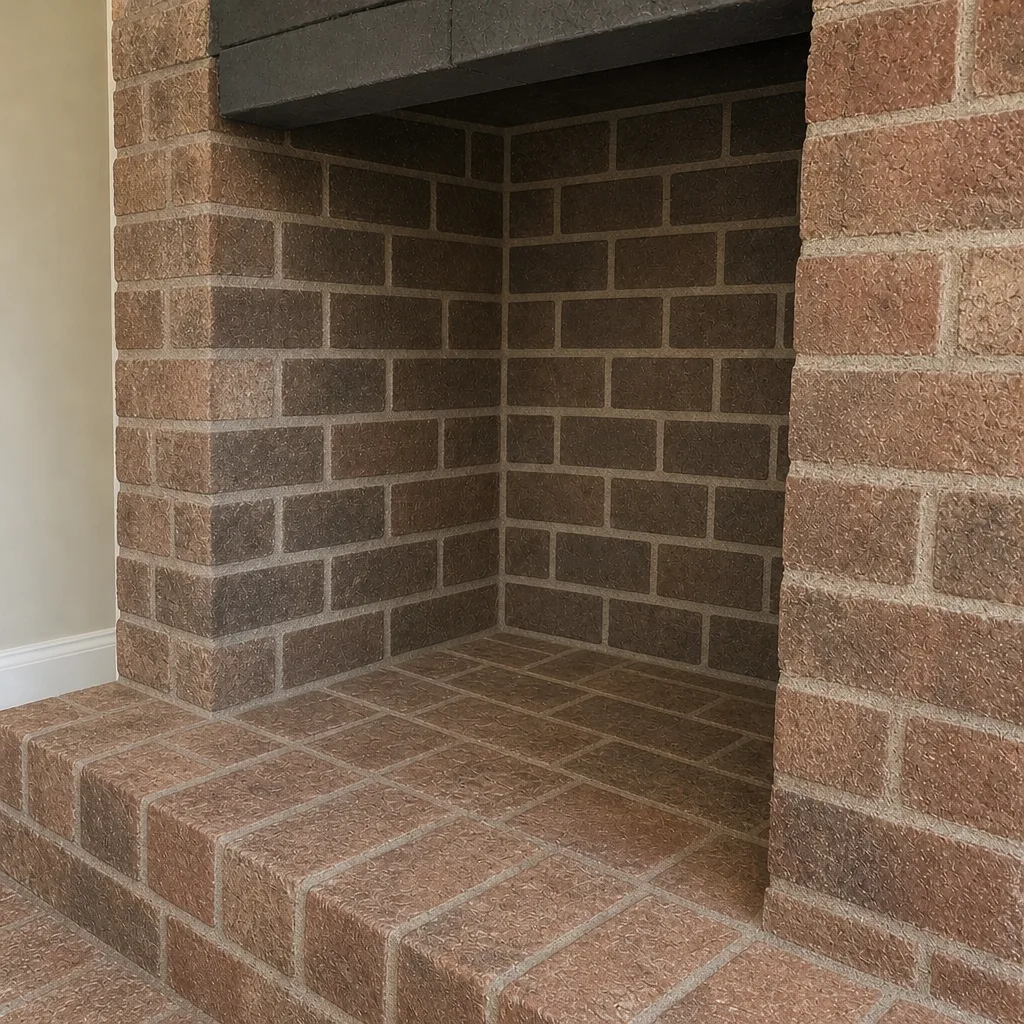 After
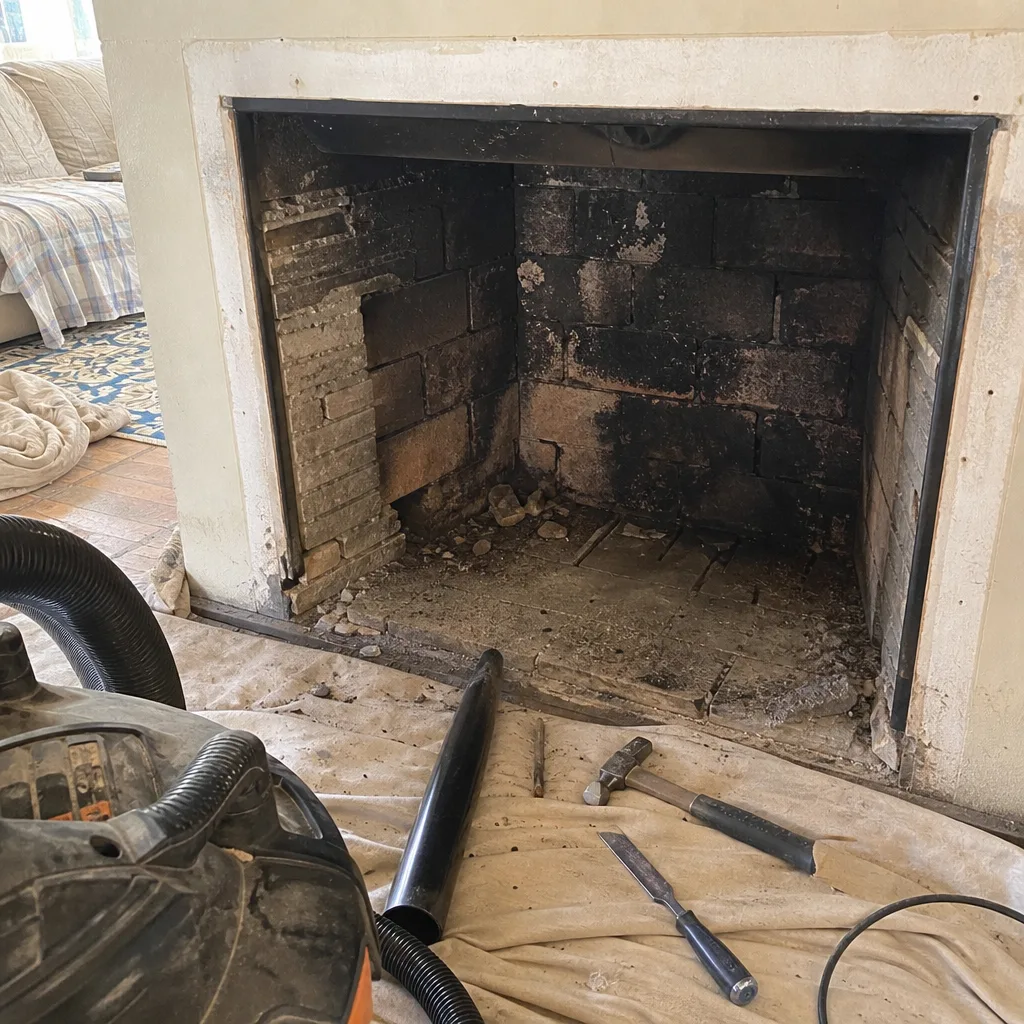 Before
 After
 Before
 After
When to Call a Professional
Call a professional for any of the following:
- You’ve seen efflorescence, spalling, or a crown crack on the exterior
- Smoke lingers in the room after the fire is established, or the smell of smoke returns after your fire is out
- Rust stains appear on the firebox floor
- Firebrick mortar is crumbling, or you can touch it and it comes away
- The damper is sticking or you have to force it
- You smell an acrid or musty odor from the fireplace in the off-season
- It’s been more than a year since the last sweep, or you don’t know when it was last done
Our technicians have up to 11 years of experience reading exactly these signals on South Coast Metro construction. Chimney Sweep South Coast Metro offers free estimates in South Coast Metro – call (833) 509-5393. We answer 24/7. Fast dispatch from 7am to 7pm, Sunday through Friday.
Frequently Asked Questions
Once a year, if you burn regularly, and at the start of every burning season even if you burn a light fire. A once-a-year sweep plus inspection captures creosote buildup and catches crown, cap, and firebox issues while they’re still small repairs. If you burn heavily or burn green wood, sweep more often. Call (833) 509-5393 for an exact quote – estimates are free.
It’s efflorescence – dissolved salts left behind when water passes through the masonry and dries on the surface, and it means water is already moving through your chimney toward the firebox. It’s not cosmetic. It usually points to a failing crown or cap as the water source. Call (833) 509-5393 to book a camera inspection.
Sometimes. Efflorescence without spalling can often wait for a cap and crown appointment. A sticking damper can wait if it still operates. What should not wait is any sign of a compromised flue: rust stains on the firebox floor, crumbling firebrick mortar, smoke that lingers in the house, or a smoky smell with the fire out. Those mean stop burning until the chimney is inspected. We tell you plainly in writing when work can safely wait. Call (833) 509-5393.
Because the chimney is cold and the creosote deposits offgas into the house instead of being drawn up and out. The smell gets stronger through summer, not weaker. A tar-and-ash smell means a sweep is due before burning season; a musty or sour smell means moisture is still inside the masonry. Call (833) 509-5393 for a diagnosis.
Time it. A cold-start backdraft clears within about 90 seconds of lighting and doesn’t come back during the burn. If smoke continues after the fire is established, puffs out intermittently, or returns whenever you open the glass doors, that’s a smoke chamber or flue issue and it needs an inspection. Call (833) 509-5393 – estimates are free.
It’s a real warning sign. A sticking damper means something is changing in the smoke chamber above – rust from moisture, warping from heat, or frame movement. It’s a trackable indicator worth documenting, and forcing it can crack the frame. Get it inspected. Call (833) 509-5393.
The Bottom Line
The early warning signs of a failing chimney in South Coast Metro are usually exterior and quiet: efflorescence on the stucco, spalling brick, hairline crown cracks. Inside, they’re rust on the firebox floor, crumbling firebrick mortar, a sticking damper, and a smell that tells you whether the problem is creosote, animals, or water. Cold-start smoke clears in 90 seconds; anything longer points to the smoke chamber. None of these are cosmetic, and none of them fix themselves – this mild climate lets problems hide for years. The right move is the same every time: a sweep, a camera inspection, and a repair capability attached to the inspection so the findings become a fix. And when the camera shows nothing, we say so.
Chimney Sweep South Coast Metro is one company for the sweep, the inspection, the cap and crown work, the fireplace repair, and the chimney repair that follows. When you see any of these signs, call (833) 509-5393 for a free estimate. We answer 24/7. Fast dispatch from 7am to 7pm, Sunday through Friday.
Written by the team at Chimney Sweep South Coast Metro.