
Last updated November 23, 2026
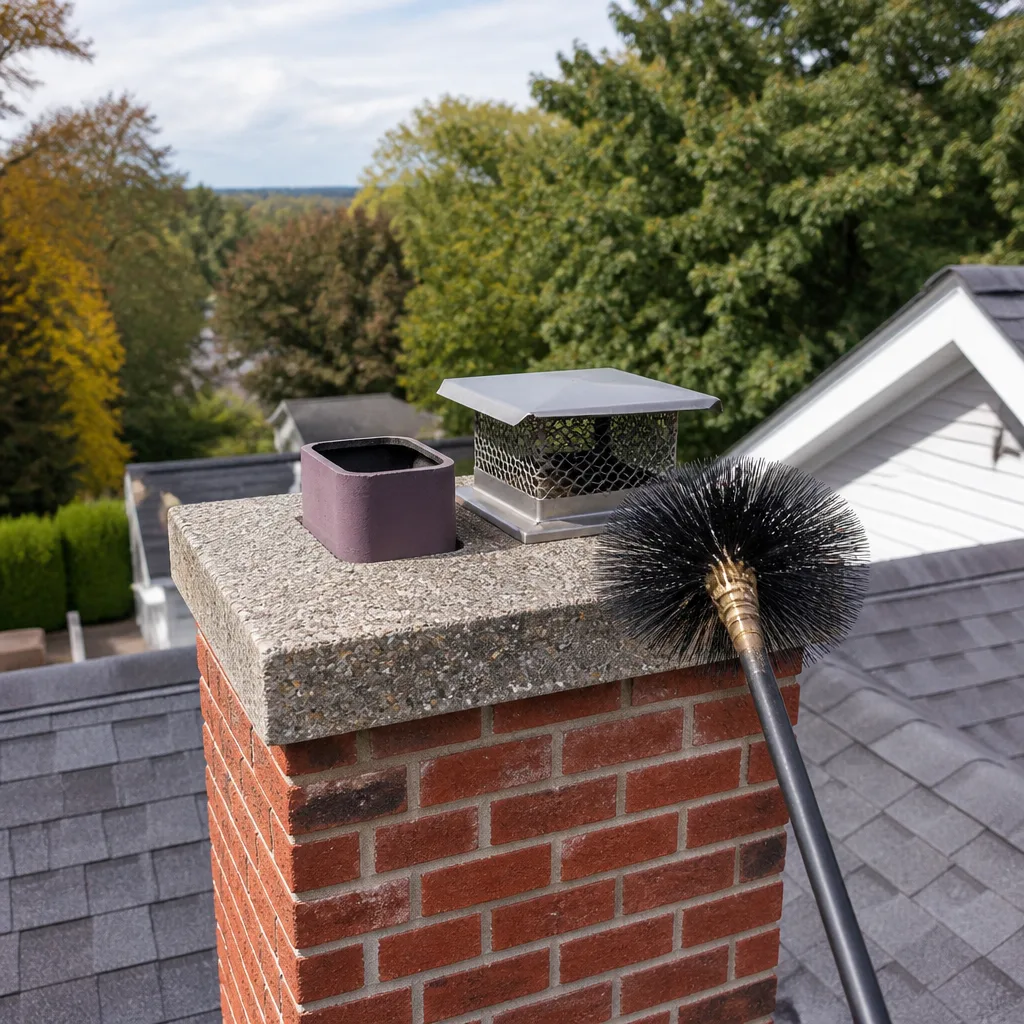 Sweep & inspection
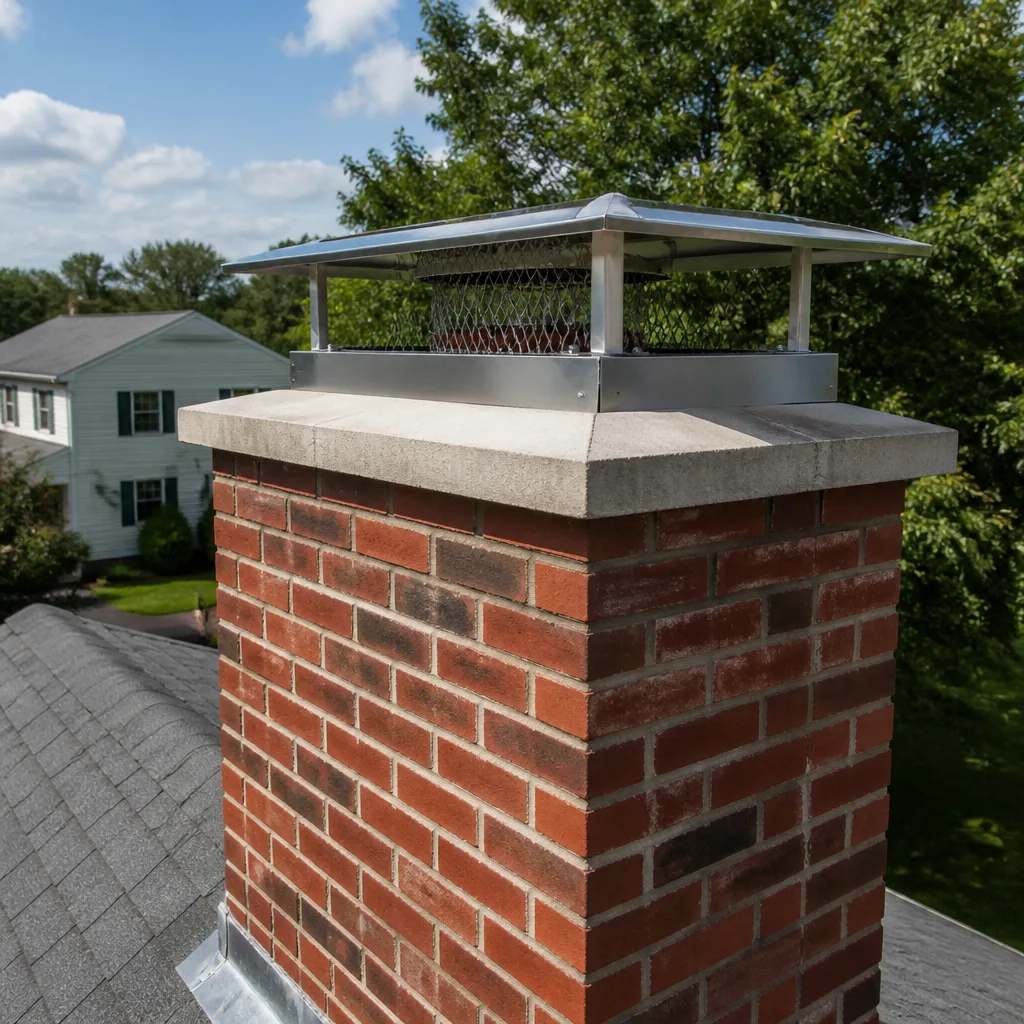 Caps & crowns
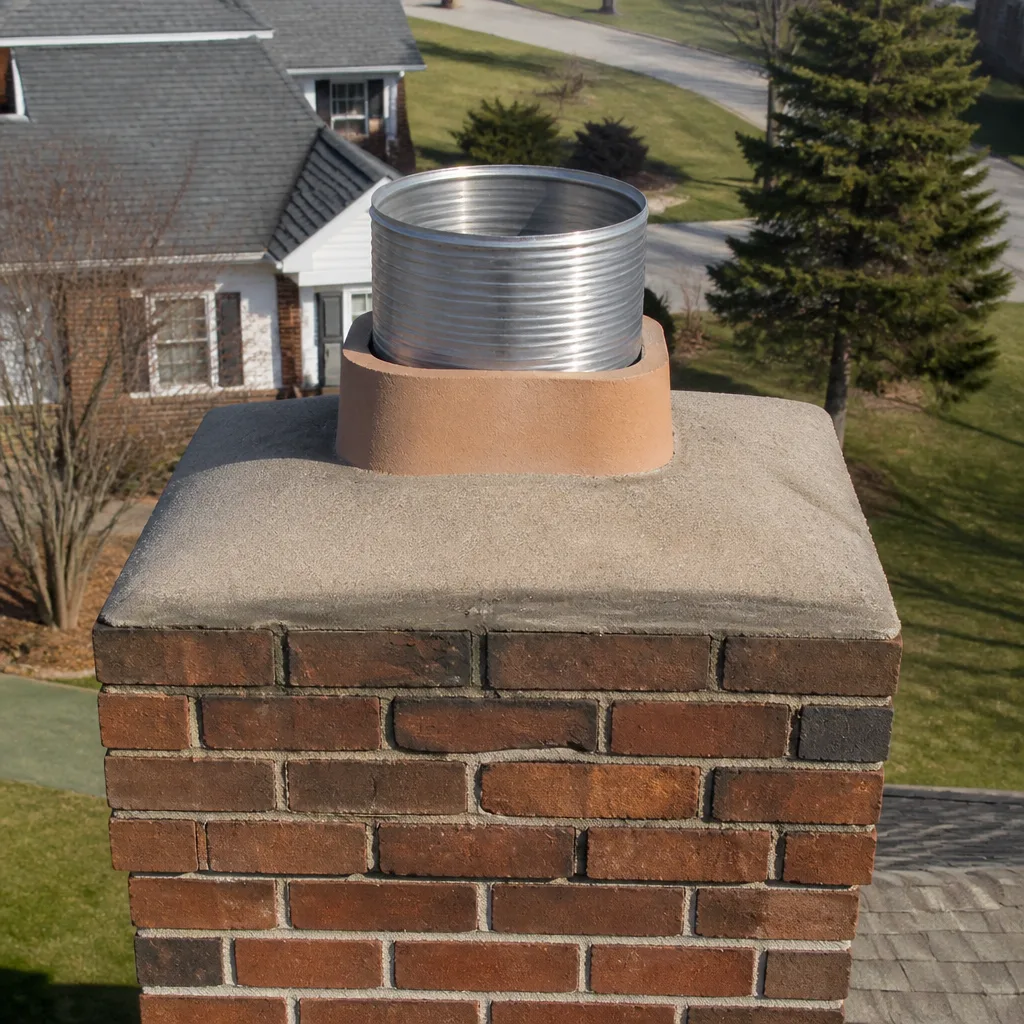 Flue relining
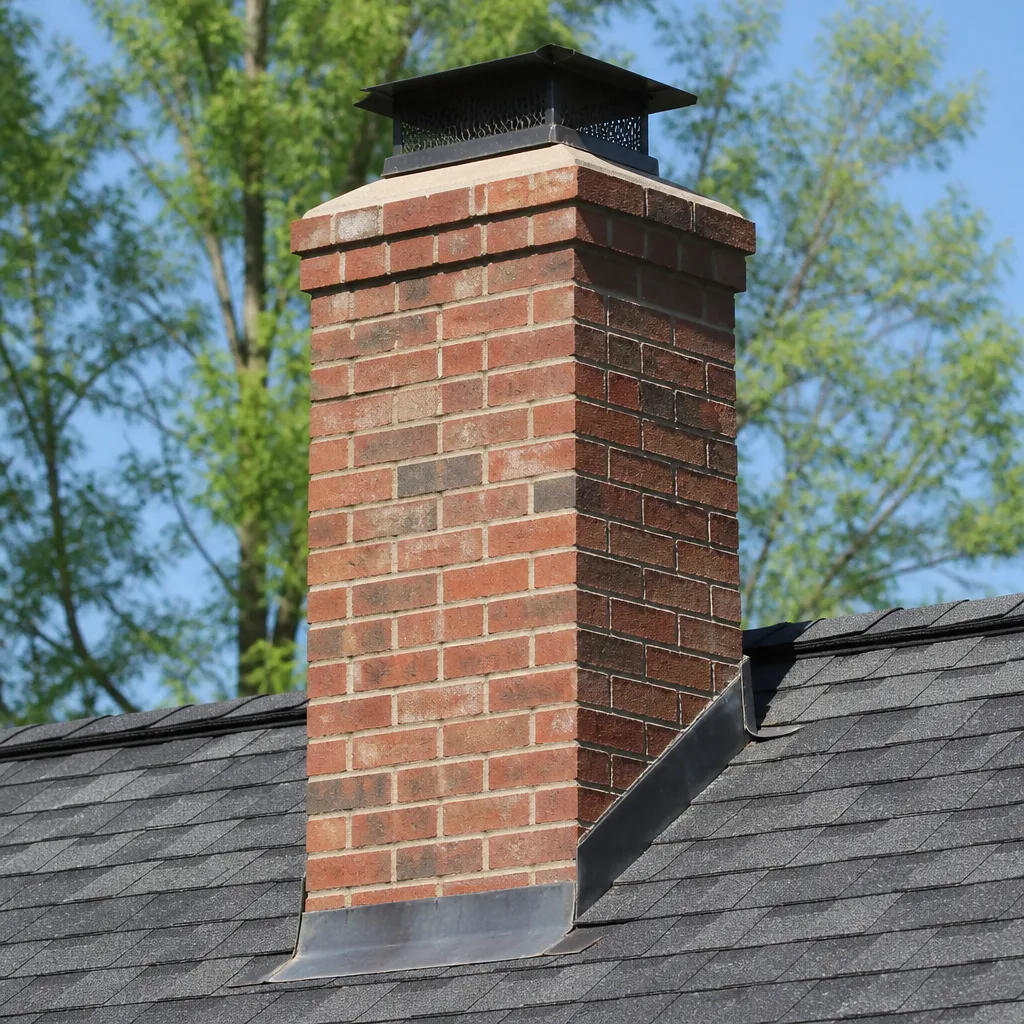 Masonry repair
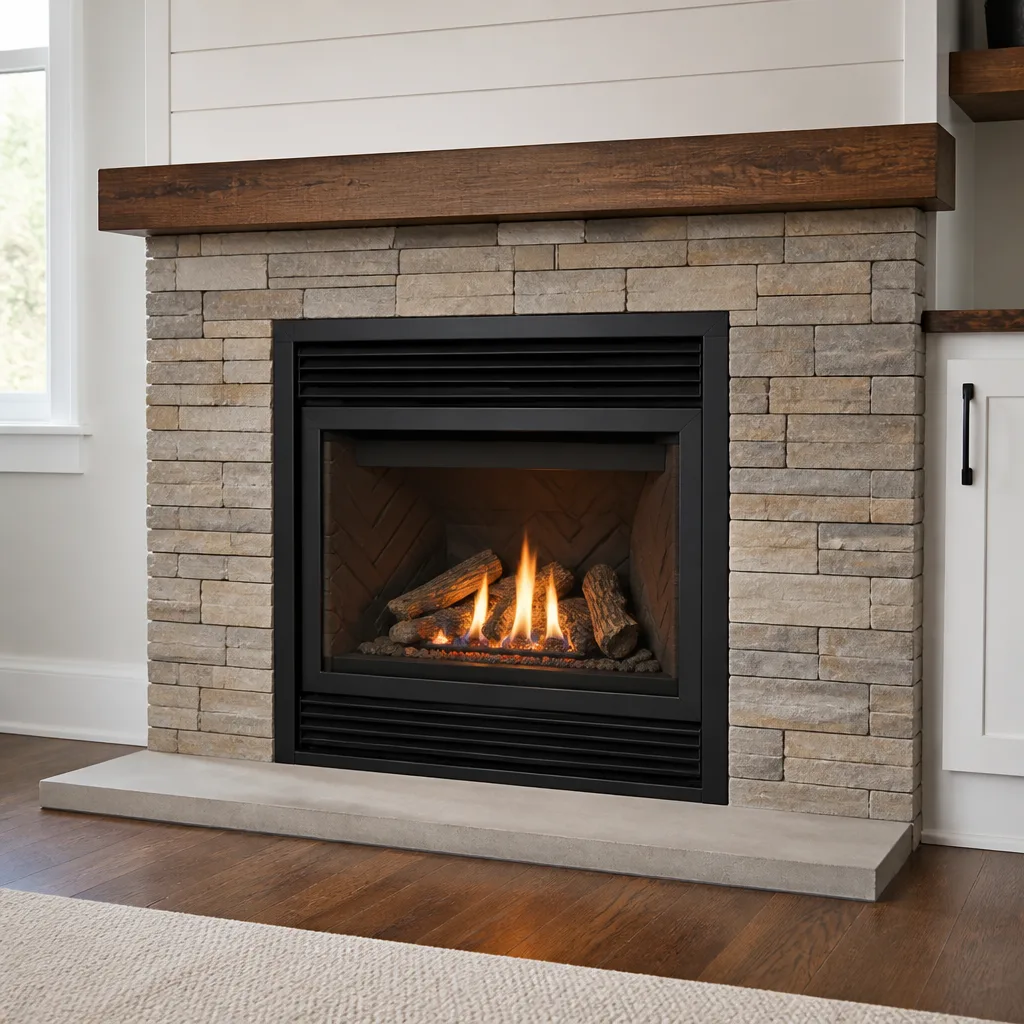 Gas fireplace service
Level 1 sweep and inspection to the NFPA 211 annual standard - flue, crown, cap, and flashing checked and photographed
Chimney sweep logs do not sweep chimneys. They loosen some creosote - which then falls where a brush and vacuum still have to collect it.
Chimney Sweep Troubleshooting in South Coast Metro: Common Problems and How to Fix Them
If your fireplace smokes into the room every time you light it, another cleaning probably won’t fix it. Most homeowners assume every chimney problem traces back to a dirty flue, so they call for a sweep, pay for one, and watch the same symptoms return the next time they build a fire. In our experience across South Coast Metro, backdraft, persistent odor, and draft loss are usually system-component problems: a liner that’s separated, a damper that isn’t sealing, negative pressure from the home’s own exhaust fans, or a firebox that’s no longer reflecting heat the way it should. Cleaning solves creosote restriction. It doesn’t solve any of those.
This guide is written so you can read your own symptom before calling anyone. You’ll learn how to tell a restriction problem from a draft-inversion problem, how to spot a failing liner by smell and staining alone, and the thirty-second damper check that tells you whether you’re dealing with something mechanical or something combustion-related. South Coast Metro homes have specific characteristics that drive specific failure patterns, and knowing them saves you money on a repair you didn’t need.
Quick Answer
Most chimney problems that aren’t solved by a standard chimney sweep fall into one of four categories: draft inversion from negative air pressure, a cracked or separated flue liner, condensation odor from cooler flue temperatures, or a firebox and smoke chamber that no longer perform their job. Diagnosing which one you have takes a camera inspection and a few simple homeowner checks, not guesswork. A cleaning fixes creosote restriction and nothing else.
Styles & brands we work with
- Sweep & inspection
- Caps & crowns
- Flue relining
- Masonry repair
- Gas fireplace service
Table of Contents
- Creosote Restriction vs. Draft Inversion: Two Different Problems
- How to Identify a Cracked or Separated Flue Liner Before Inspection
- Why South Coast Metro Chimneys Develop Odors That Sweeping Won’t Fix
- The Damper Position Test: A 30-Second Diagnostic
- When Troubleshooting Reveals a Firebox or Smoke Chamber Issue
- Cap and Crown Failures That Look Like Draft Problems
- Repair Pathways: From Resurfacing to Full Reliner
- When to Call a Professional
Creosote Restriction vs. Draft Inversion: Two Different Problems
These are the two most-confused chimney problems in South Coast Metro, and they call for completely different fixes. Creosote restriction is a physical blockage: as smoke cools on its way up the flue, it deposits creosote on the walls, and over time that layer narrows the passage until the chimney can no longer move the volume of smoke your fire produces. The result is a lazy, smoky fire that backs up when you add a log.
Draft inversion is a pressure problem. The flue isn’t blocked. The house simply isn’t giving the chimney enough air to establish upward flow. Tight modern construction is the usual cause: weather-stripped doors, sealed windows, and high-volume kitchen and bath exhaust fans pull air out of the house faster than it can leak back in. When the pressure inside is lower than outside, the chimney becomes a path for air to come down instead of smoke going up. That’s why backdraft often shows up right after a kitchen remodel.
Here’s how to tell them apart without any special tools:
- Creosote restriction: The fire starts fine and gets smoky later. Smoke rolls out when you add wood or when the fire builds. You may smell creosote or see black flakes at the top of the firebox.
- Draft inversion: The chimney smokes immediately on lighting, often before the fire has grown. A burning piece of newspaper held near the open damper should be pulled upward strongly; if the flame flutters or the smoke drifts into the room, you have an inversion.
- Both at once: A restricted flue worsens any pressure problem, which is why a sweep is still the first step before diagnosing anything more involved.
If you’re seeing both patterns, start with the sweep, then re-evaluate. We’ve seen plenty of South Coast Metro calls where the original “backdraft” complaint disappeared after a proper cleaning and a cap inspection. Others reveal a pressure issue that needs a makeup-air solution or a taller termination.
How to Identify a Cracked or Separated Flue Liner Before Inspection
A failing flue liner is the most consequential chimney problem a homeowner can have, and the one most often missed until it’s inspected. The liner is the metal or clay passage inside the masonry that keeps hot gases and carbon monoxide contained. When it cracks, separates at a joint, or rusts through, that containment is gone. You won’t necessarily see a problem from the firebox, but the chimney will tell you in other ways.
Three homeowner-observable signals are worth knowing:
- Smell. A persistent, harsh, burnt-rubber or metallic odor that lingers after a fire has cooled is often the smell of combustion gases leaking past a broken liner joint into the surrounding chase. Ordinary creosote smells smoky and sweet; a liner leak smells sharper and doesn’t fade as quickly.
- Staining. Look at the top of the firebox, around the damper frame, and on the exterior masonry near the roofline. Rust-colored or white efflorescence staining, or dark streaking that appears only in one band, suggests moisture and gases are escaping where they shouldn’t. A streak that follows a horizontal line is a strong hint of a separated section.
- Debris. Flakes of clay tile or rust-colored metal shards on the smoke shelf or firebox floor are pieces of a failing liner. When you find them, the liner is actively deteriorating.
None of these signals confirm a diagnosis on their own. A camera inspection does. South Coast Metro homes built in the 1960s through the 1980s often have original clay-tile liners that have survived every fire since, and when they go, they usually go at the joints first. If a liner fails, professional-grade relining with a system like DuraFlex or Olympia Chimney gives you a stainless passage designed for the appliance’s flue temperature. Some liners can be restored instead of replaced; HeatShield ceramic resurfacing can seal a compromised flue from the inside without a full tear-out in the right conditions, which is a pathway most local sweep crews don’t offer.
Why South Coast Metro Chimneys Develop Odors That Sweeping Won’t Fix
South Coast Metro sits close enough to the coast to see regular morning fog and a marine layer that keeps the air damp well into the day. It doesn’t snow here, and winters are mild, but the combination of cool, humid mornings and a chimney that’s shaded from the sun most of the day produces a specific problem: condensation inside the flue. When the flue stays cooler than the surrounding air, moisture from combustion condenses on the liner walls, and it mixes with creosote to make a sticky, acidic film that smells much stronger than dry creosote.
The symptom that tells you it’s condensation, not just soot:
- The smell is strongest after rain, or on a foggy morning, and weakest on a dry, warm afternoon.
- It’s a heavy, sour, musty smell rather than a sharp smoky one.
- It shows up most in spring and fall, when fires are occasional and the flue never gets fully warmed.
- Sweeping it helps for a few weeks, then the smell returns without any new fires.
Sweeping doesn’t fix this because the problem is thermal, not physical. The flue is staying cold, condensing moisture, and the creosote is re-wetting. The fixes are usually insulation of the flue, a proper cap that keeps rain out without trapping moisture, and sometimes a top-sealing damper that stops the constant warm-air escape that drives condensation overnight. In South Coast Metro, we’ve found that a properly insulated liner and a correctly sized cap solve more recurring-odor calls than any cleaning schedule does.
This is also why an inspection without a repair path leaves homeowners stuck. If a crew can only tell you “your flue is corroded,” you’re left calling someone else. We do the sweep, the inspection, and the repair, so you’re not handing a report to a second contractor. That’s the practical value of one company: the diagnosis and the fix are the same visit.
The Damper Position Test: A 30-Second Diagnostic
The damper is one of the most common points of failure in a chimney, and it’s also the easiest to test yourself. A damper that won’t open fully, won’t close flush, or sits crooked in its frame will mimic a draft problem or a firebox problem without actually being either. The thirty-second check separates mechanical failure from combustion failure before you spend money on either.
Here’s the test, step by step:
- With no fire lit and the firebox cold, open the damper fully. Look up into the chimney. You should see the flue opening cleanly, with no obvious obstruction.
- Close the damper fully. From the firebox, look for daylight or a visible gap around the edges of the damper plate. A gap in a closed damper means heat is escaping and cold air is leaking in – one of the most common overnight-odor causes in South Coast Metro homes.
- Open the damper fully again. Move it gently side to side. A slight wobble is normal; a plate that lifts out of its frame, or one that won’t move at all, is a mechanical failure.
- With the damper open, hold a lit piece of newspaper near the firebox opening. Strong upward pull: damper and flue are fine, so your problem is downstream (firebox, smoke chamber, or the fire itself). Weak or reversed pull: the problem is up top, likely pressure or a flue issue.
If step 4 shows strong pull and you still get smoke on lighting, the diagnosis narrows quickly to the firebox or smoke chamber. If pull is weak and the damper plate itself moves freely, you’re looking at a flue or pressure problem. Either way, the answer is specific, and it doesn’t call for replacing the whole chimney. This is the test that saves most homeowners the cost of a repair they didn’t need.
When Troubleshooting Reveals a Firebox or Smoke Chamber Issue
Sometimes a “chimney problem” turns out to be a firebox or smoke chamber problem, and the repair scope changes entirely. The smoke chamber is the sloped transition between the top of the firebox and the bottom of the flue, and its job is to compress smoke and push it up. When its surface is rough, cracked, or out of shape, smoke curls and spills into the room no matter how clean the flue is. The firebox itself does a similar job at a lower temperature: it reflects heat forward and keeps the fire burning efficiently. When the firebox walls break down, the fire burns cooler, smokes more, and puts more creosote in the flue.
The signals that point at the firebox or smoke chamber rather than the flue:
- Smoke appears at the top of the firebox opening, not the bottom, and appears only when the fire is building.
- The fire burns poorly even with dry, well-seasoned wood.
- Firebrick joints are visibly eroded, or the back wall is cracked or spalling.
- A camera inspection shows heavy creosote and rough parging in the smoke chamber, but a clean flue above it.
This is where a proper fireplace repair plan matters. A smoke chamber that’s out of shape can often be re-parged and smoothed rather than rebuilt, and HeatShield ceramic resurfacing is a specialist-level option that gives the smoke chamber a smooth, heat-resistant surface that smoke slides up instead of tumbling into the room. Many local sweep crews don’t carry it; when we open a chamber and find rough parging, we can usually address it on the same job instead of handing you a separate masonry project.
Firebox repairs are more straightforward: cracked firebrick and failed mortar joints get relaid with heat-rated materials rated for that specific location. What we won’t do is tell you the whole chimney needs rebuilding when the problem is at the firebox. What we found and what fixing it actually requires is what you’ll hear from us, with the camera evidence shown to you on the job.
Cap and Crown Failures That Look Like Draft Problems
A surprising share of “draft problems” in South Coast Metro turn out to be cap and crown failures. The cap sits on top and keeps rain, birds, and debris out while letting smoke through. The crown is the sloped concrete surface around the top of the chimney that sheds water away from the masonry. When either one fails, you get a cascade of problems that mimic a restricted or drafty flue.
What typically goes wrong:
- Crown cracks: Water enters the masonry, freezes in cooler weather and pushes the crack wider, then runs down the outside of the flue and causes the interior staining described earlier. A crown that should slope away is often flat or tipping toward the chimney.
- Cap damage: A cap with torn mesh lets birds and squirrels in. A cap that’s too small for the flue opening restricts flow and causes smoking. A cap that’s too large lets rain blow in sideways.
- Cap corrosion: Cheap hardware-store caps rust and lose their shape in a few years. Professional-grade components from Gelco or Famco hold their shape and mesh far longer.
Our team stocks and installs chimney cap & crown components from Gelco and Famco, so cap and crown work is done with manufacturer-quality parts rather than generic substitutes. That matters: the cap is the one component that takes the full force of sun, wind, and rain for the life of the chimney, and a cheap one fails early. A proper crown rebuild, poured with the right slope and sealed correctly, is the single most effective step against the moisture-driven problems we described above.
If you’ve had recurring odor or interior staining for years, this is where to look first. It’s a low-cost fix compared to a liner repair, and it’s often the reason the liner isn’t drying out.
Repair Pathways: From Resurfacing to Full Reliner
Once you’ve diagnosed the problem, the fix usually falls on a spectrum, not a single answer. The mistake most homeowners are pushed into is jumping straight to a full reliner. A full reliner is sometimes the right call, but more often than not there’s an intermediate repair that solves the problem for less money and less disruption.
Think of the options in order of severity:
- Sweep only. Creosote restriction with an intact liner. Cleaning restores draft; nothing else is needed. This is the simplest case.
- Crown and cap repair. Water intrusion and debris problems. The flue is fine; the top of the chimney isn’t. Routine materials handle it.
- HeatShield ceramic resurfacing. A compromised liner or rough smoke chamber that can be restored from the inside without a tear-out. The ceramic system fills cracks, smooths rough parging, and gives a fire-resistant surface. In our experience this is the repair pathway most local sweep services can’t offer, and it’s often the difference between a modest repair and a full reliner.
- Full reliner. A liner that’s completely failed, wrong-sized for the appliance, or not rated for the fuel being burned. DuraFlex and Olympia Chimney stainless systems are what we install when a full reliner is the only safe answer.
- Structural chimney repair. Spalling masonry, chimney lean, or a failed smoke chamber that goes beyond resurfacing. This is where a genuine repair capability matters, and where “a report and no path forward” from a sweep-only crew leaves you stuck.
We’re authorized to work with professional chimney supply lines including DuraFlex, HeatShield, Gelco, Olympia Chimney, Famco, and Copperfield, which is why we can present an honest set of options rather than whatever’s on the shelf. Our technicians have up to 11 years of experience, and their job is to walk you through the camera footage and the materials, then recommend the least invasive fix that actually solves the problem. Nothing gets recommended without visual evidence you can see for yourself.
The full lifecycle of chimney work – sweep, inspection, cap and crown, fireplace repair, and structural repair – is covered by one company. No handoffs between contractors. No waiting on a second crew to act on a report.
Common Mistakes to Avoid
- Treating every smoky fire as a dirty flue. As this guide shows, backdraft, odor, and poor draft are usually not cleaning problems. Get the diagnosis right before paying for a service that won’t solve it.
- Running a chimney with an unknown liner condition. If you haven’t had an inspection since you moved in, you don’t know what’s inside the flue. A failing liner is a carbon monoxide pathway, so it’s worth the visit.
- Burning unseasoned wood to save money. Green wood produces far more creosote and forces cooler flue temperatures, which accelerates the condensation problem in South Coast Metro’s marine-layer mornings. Dry wood, properly stored, is a maintenance decision.
- Skipping the cap because “it looks fine from the ground.” Cracks and mesh failures are almost never visible from below, and a damaged cap lets birds and water into a flue you just cleaned.
- Patching a crown with hardware-store sealant. Thin patching doesn’t fix a bad slope, and it fails within a season or two. A proper crown rebuild is the durable fix.
- Letting a sweep crew diagnose a liner without a repair option. A report that says “your liner needs replacing” without the capability to replace it leaves you making a decision from a stranger’s notes. Work with a company that can inspect and repair the same visit.
- Ignoring a smell that returns after every cleaning. Recurring odor after a sweep is a sign of moisture or a liner leak, not a cleanliness issue. Repeating the sweep will keep repeating the cost.
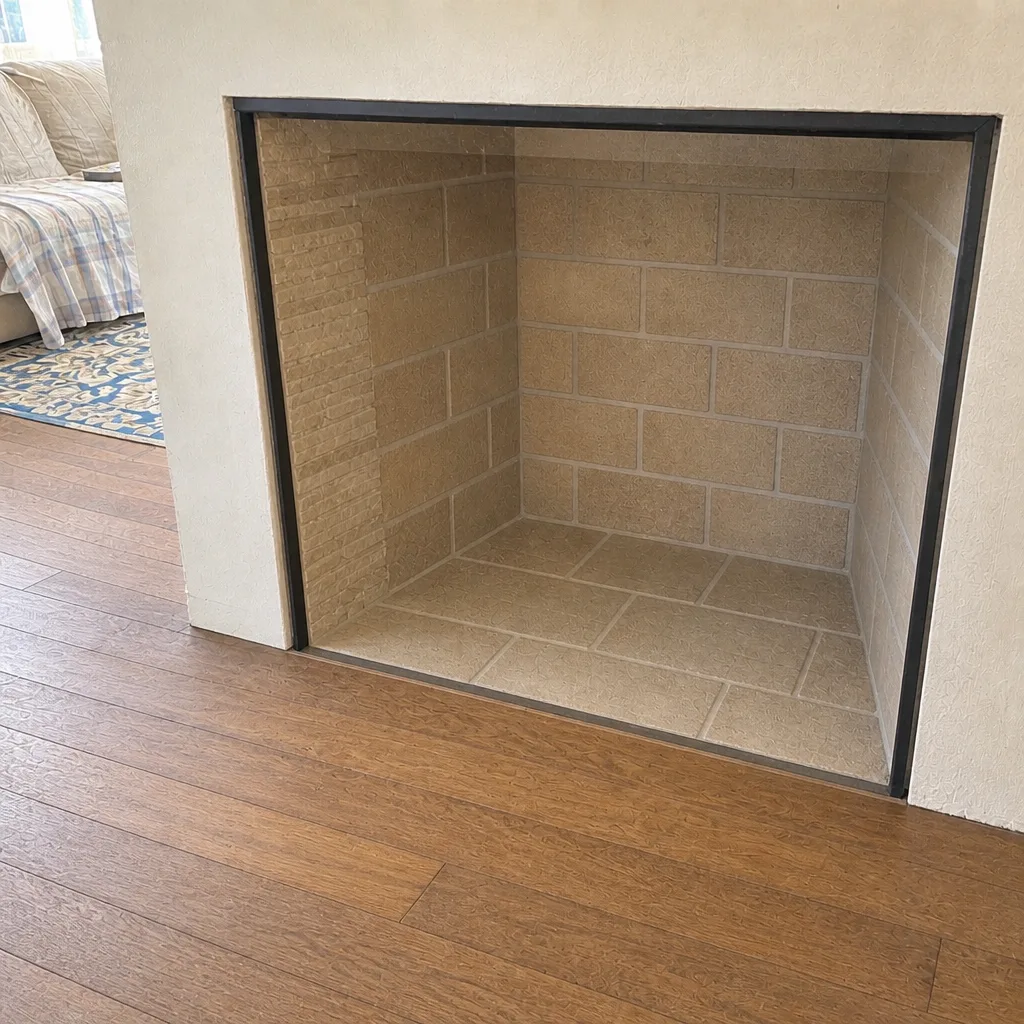
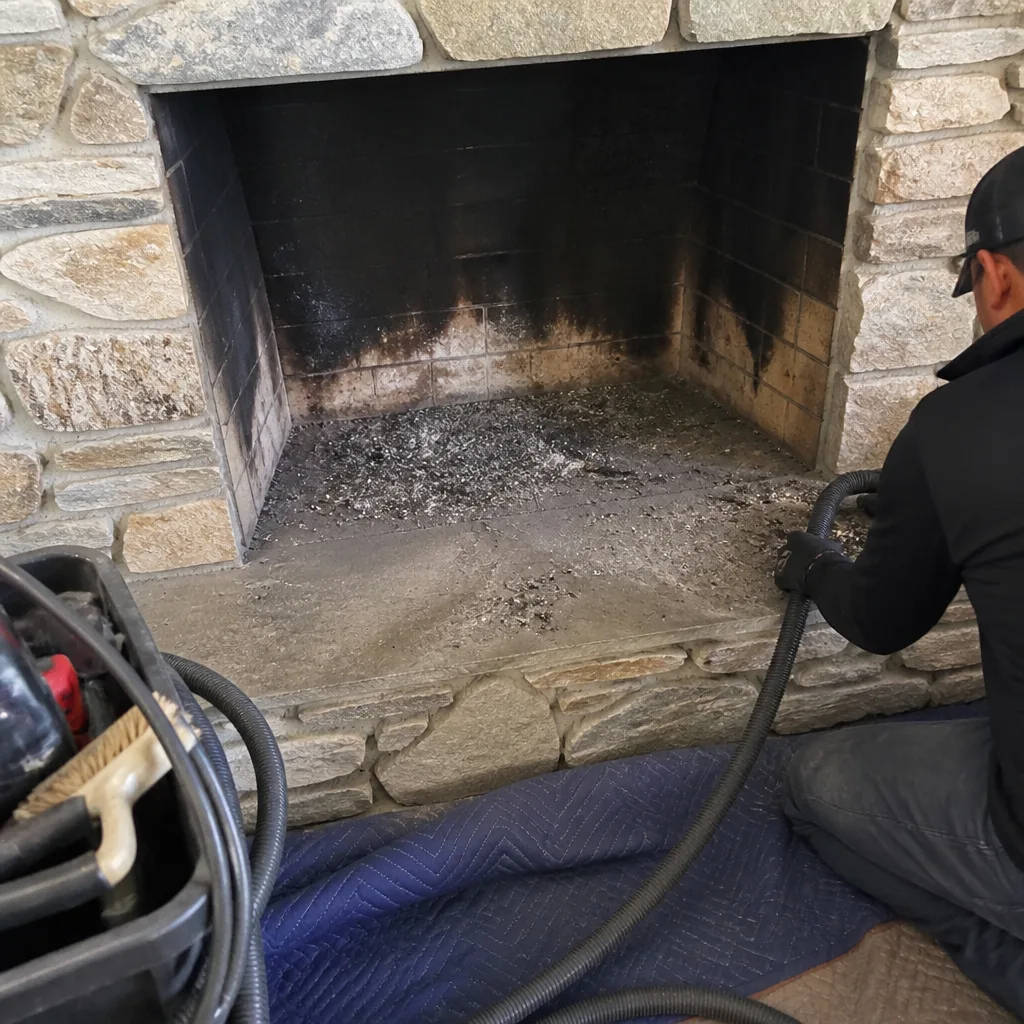
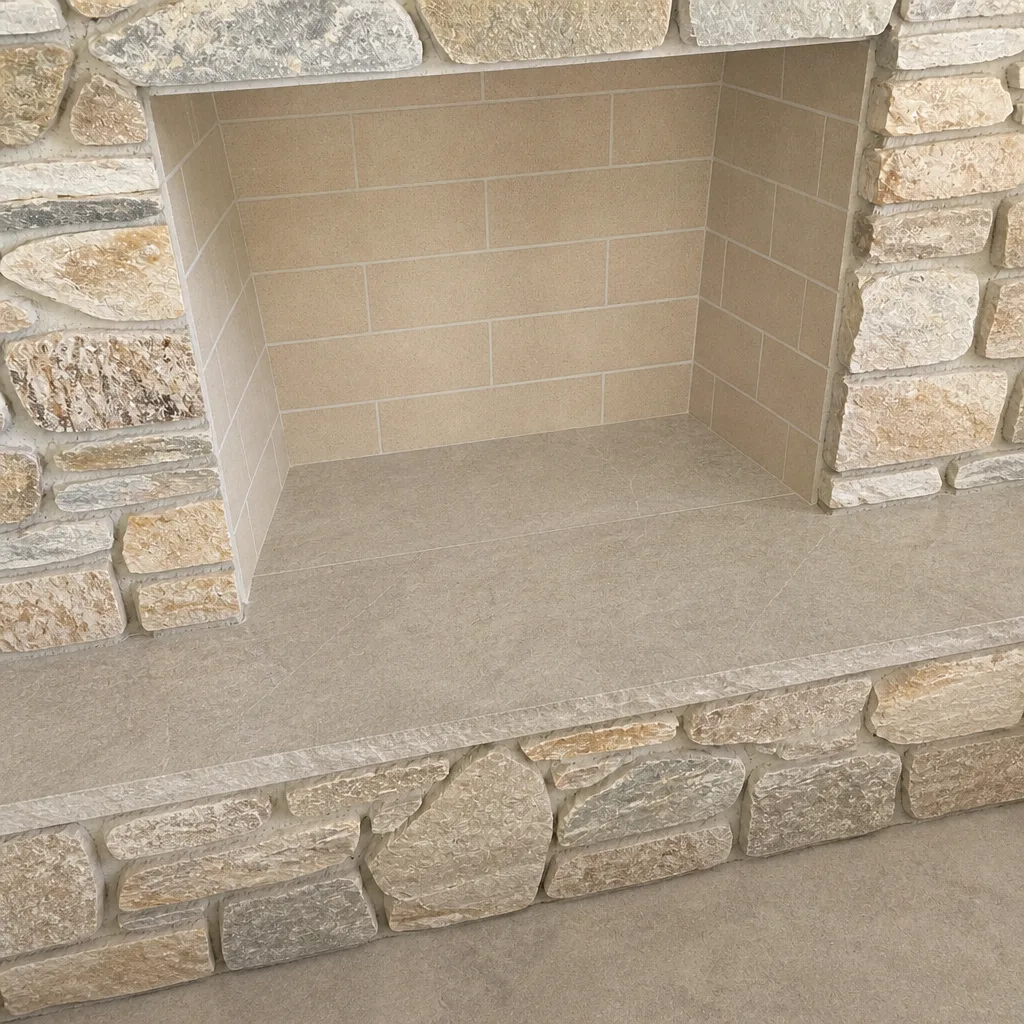
See the difference
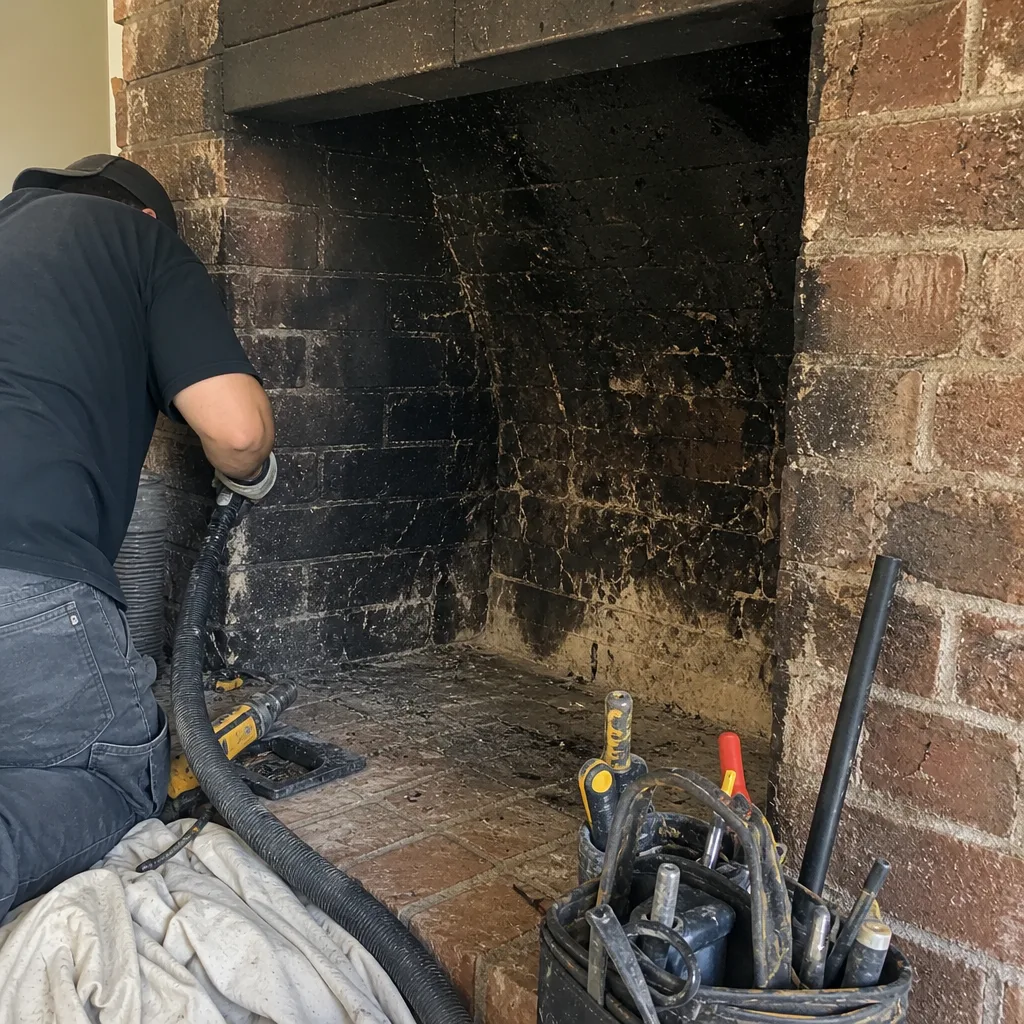 Before
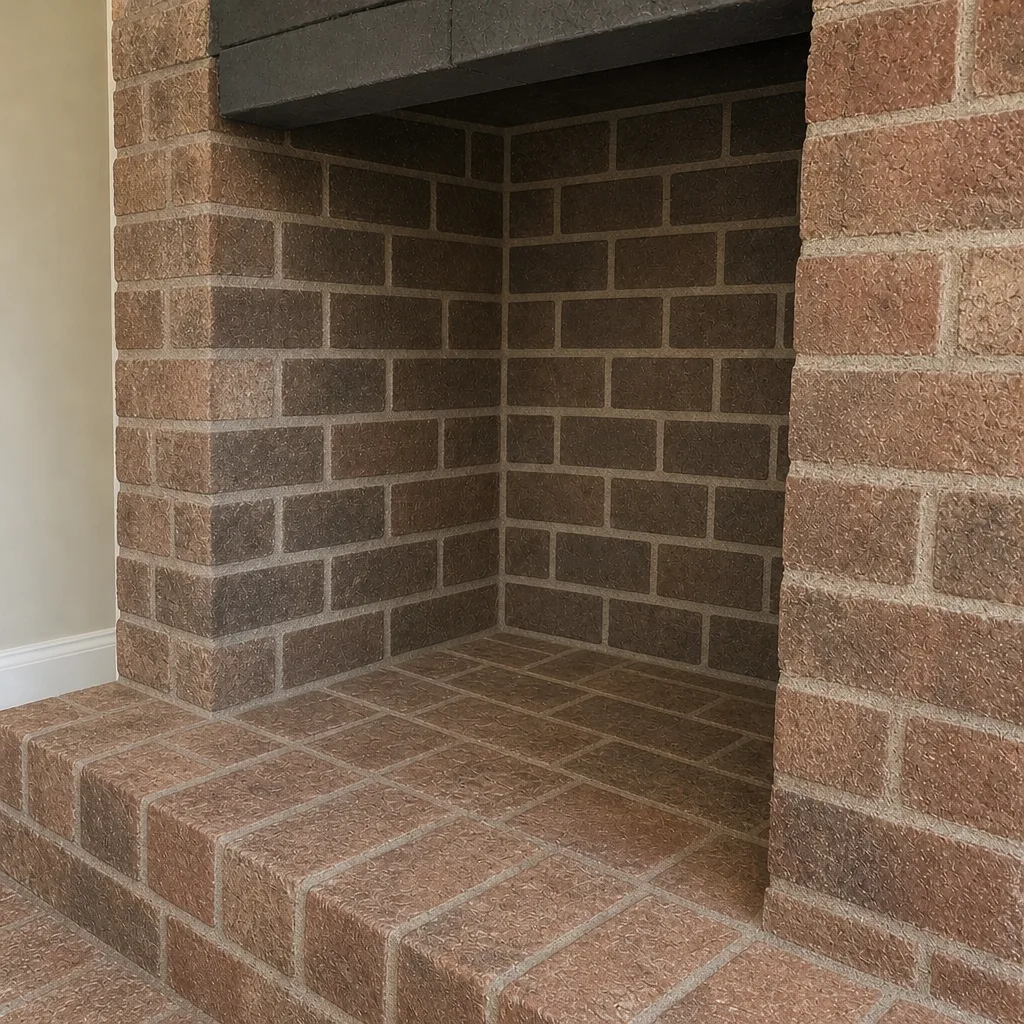 After
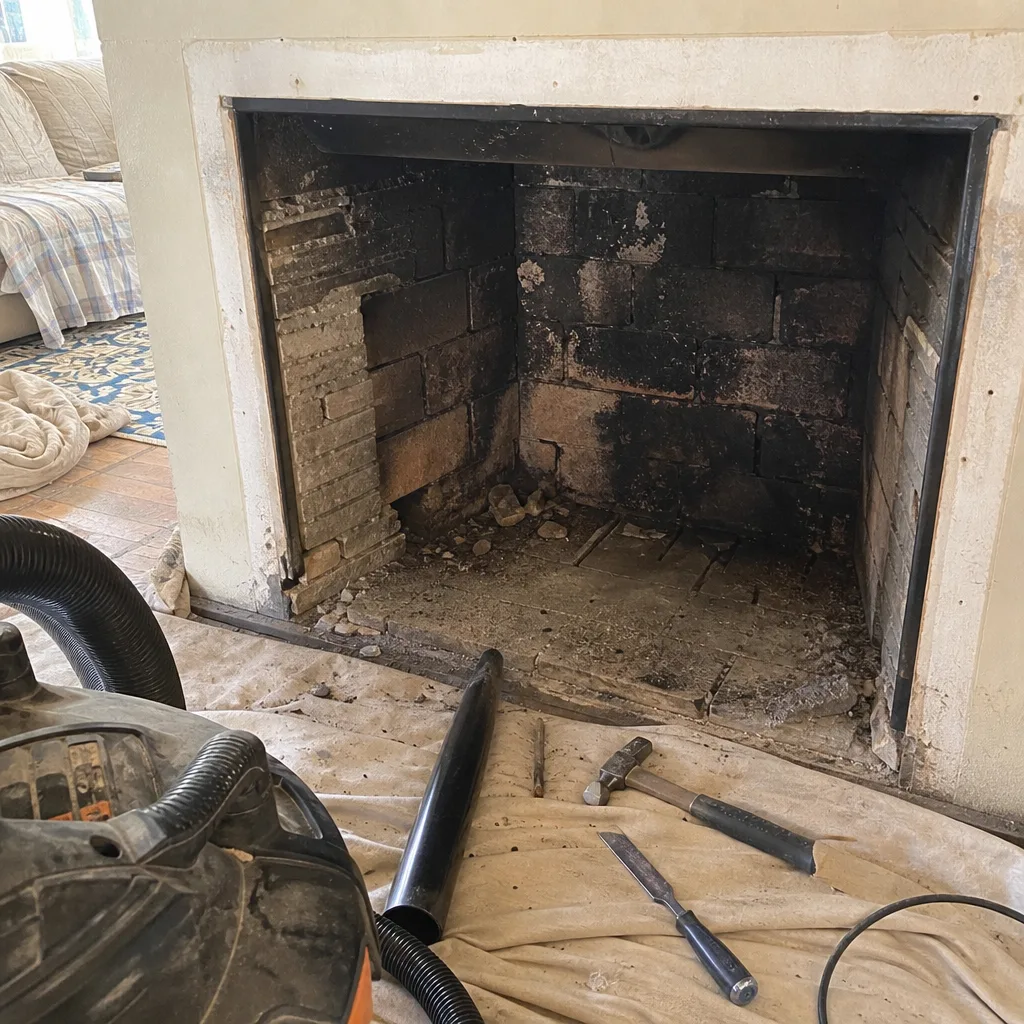 Before
 After
 Before
 After
When to Call a Professional
Some chimneys need a pro now; some can safely wait. Call us when you see smoke rolling into the room on lighting, when a smell returns within weeks of a sweep, when you find flakes of tile or metal shards on the smoke shelf, when the damper won’t seal or won’t open fully, or when you haven’t had an inspection since taking on a home you didn’t build. Those are genuine safety issues – chimney fires and carbon monoxide are real risks and they don’t announce themselves. What can usually wait: a sooty firebox and a crown that’s intact but could be resealed next season. We’ll tell you plainly which category you’re in after the camera inspection, and we won’t push a liner or masonry repair without footage you can see.
Chimney Sweep South Coast Metro offers free estimates in South Coast Metro – call (833) 509-5393. We answer 24/7. Fast dispatch from 7am to 7pm, Sunday through Friday. You’ll have a flat-price sweep agreed before anything is booked, a camera inspection with a photo report, and the option to act on what it shows before another contractor gets involved.
Frequently Asked Questions
Smoke into the room is usually draft inversion caused by negative air pressure, not a dirty flue. Tight modern homes and kitchen or bath exhaust fans pull air out faster than it can return, so the chimney becomes a return-air path. A sweep fixes creosote restriction; a pressure problem needs a different answer. Call (833) 509-5393 for free estimates – we’ll diagnose the actual cause before recommending a repair.
A standard chimney sweep in South Coast Metro typically runs in the low hundreds, and it’s set by a flat price agreed before booking. The final number depends on the flue configuration and the amount of creosote, which is why we quote from the inspection rather than a phone guess. Call (833) 509-5393 for an exact quote – estimates are free.
Not always. A liner that’s slightly cracked or just rough often can be restored from the inside with HeatShield ceramic resurfacing rather than a full reliner, and that’s a less invasive, lower-cost pathway. A full reliner is right when the existing liner has separated, is the wrong size for the appliance, or isn’t rated for the fuel you burn. Call (833) 509-5393 and we’ll show you the camera evidence before you decide.
Most chimneys should be swept when the creosote layer reaches about the thickness of a coin, which for regular fireplace use usually means an annual sweep timed before the burning season. If you burn often, or you’ve had a smoky fire or an odor problem, check sooner. Call (833) 509-5393 to book a sweep and learn what your own flue is doing.
Skipping the sweep lets creosote build until it can catch fire inside the flue, and chimney fires are serious even when they don’t visibly damage the house. Skipping a liner repair opens a pathway for carbon monoxide and hot gases to escape into the structure, which is the hazard we treat most seriously. Call (833) 509-5393 for a free estimate so we can confirm whether your chimney is safe to use.
That pattern points to condensation, not soot. The marine layer and cool mornings keep the flue below the temperature needed to dry out, so moisture re-wets the creosote and the acidic film produces a heavy, sour smell. Sweeping doesn’t fix it; insulating the flue, correcting the cap, and stopping warm-air escape through the damper do. Call (833) 509-5393 and we’ll check the flue, cap, and crown together.
The Bottom Line
The most useful thing you can do for your chimney is to read your own symptom before calling. Creosote restriction responds to a sweep. Draft inversion responds to pressure and termination. A liner failure shows up as smell, staining, or debris. Condensation odor responds to insulation and a proper cap. Firebox and smoke chamber issues respond to targeted repairs – and sometimes to HeatShield ceramic resurfacing rather than a full reliner. The one call that always pays for itself is a camera inspection with a repair plan behind it, because it turns guesses into evidence. If you’re in South Coast Metro and your chimney is smoking, smelling, or simply undocumented, call (833) 509-5393. We answer 24/7. Fast dispatch from 7am to 7pm, Sunday through Friday. Free estimates, and we’ll tell you plainly what needs fixing and what can wait.
Written by the team at Chimney Sweep South Coast Metro.