
Last updated November 23, 2026
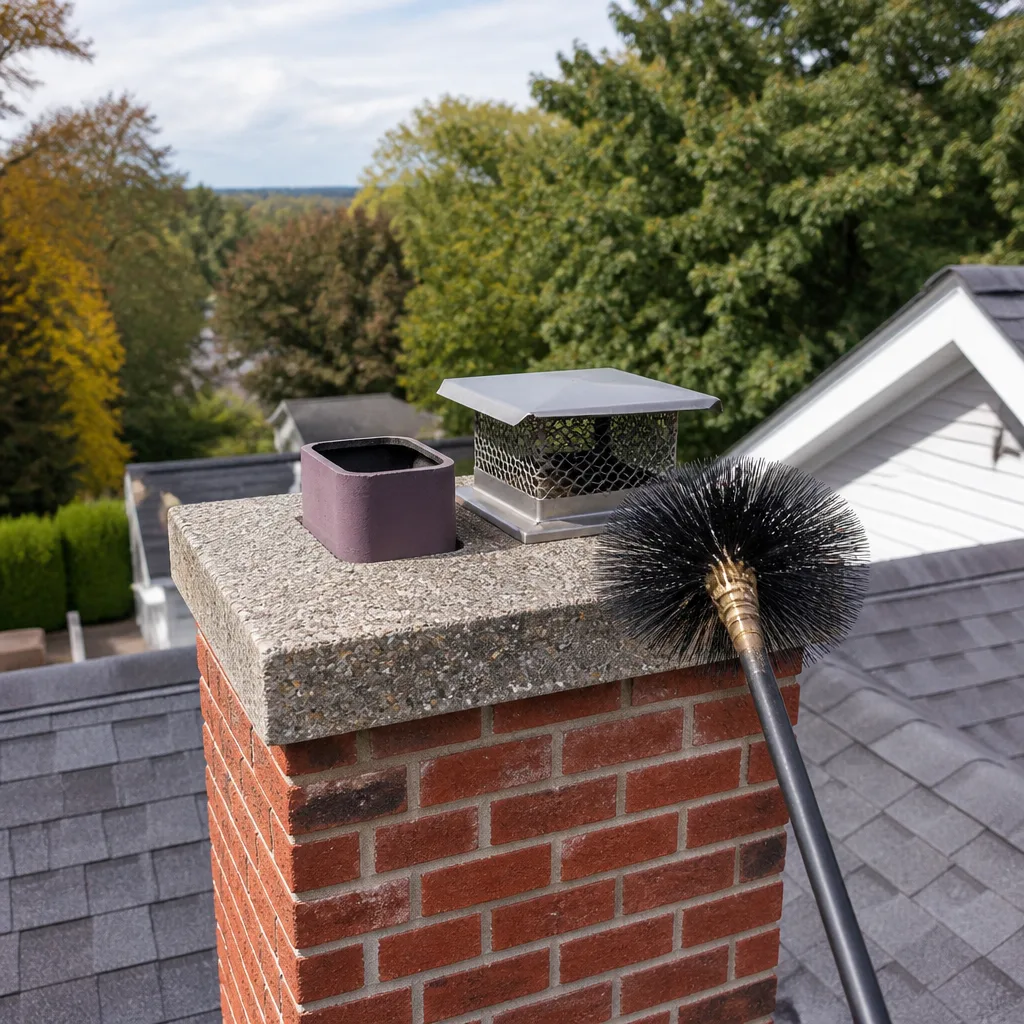 Sweep & inspection
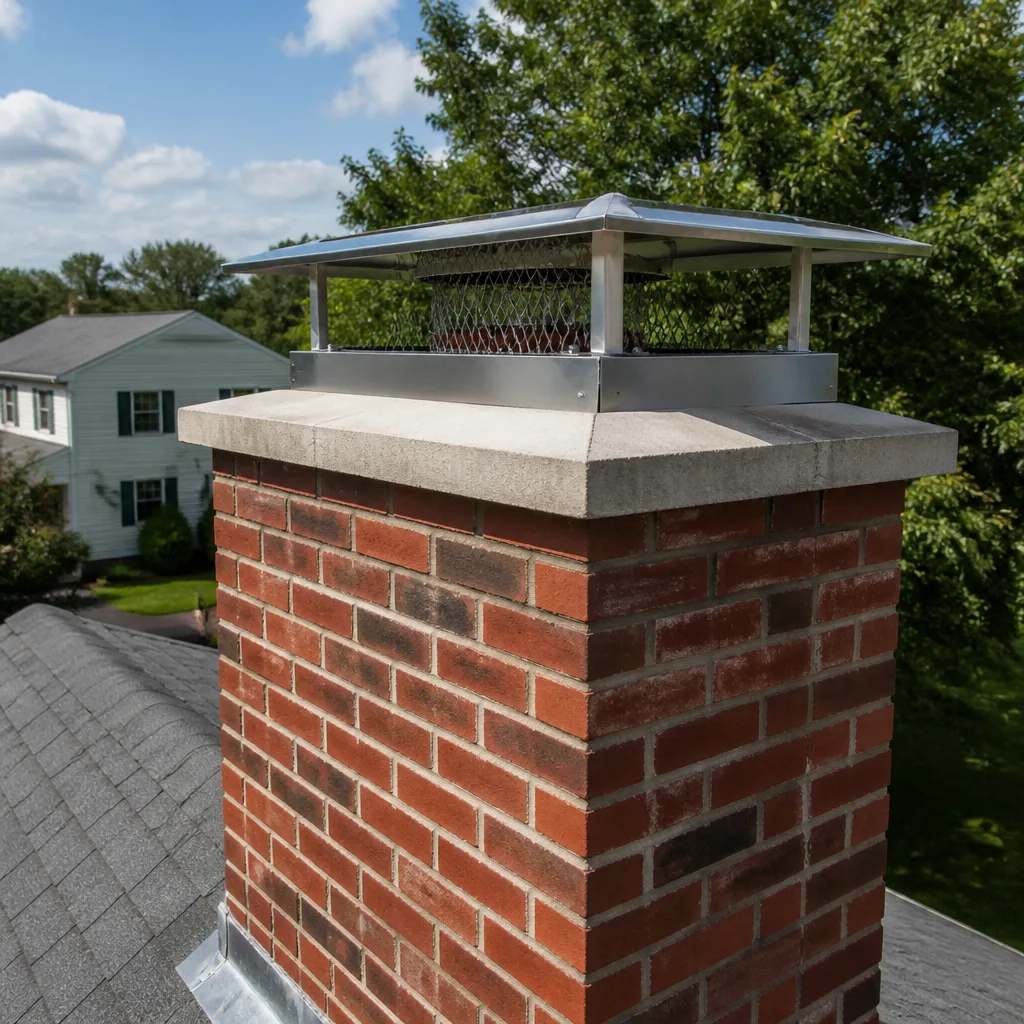 Caps & crowns
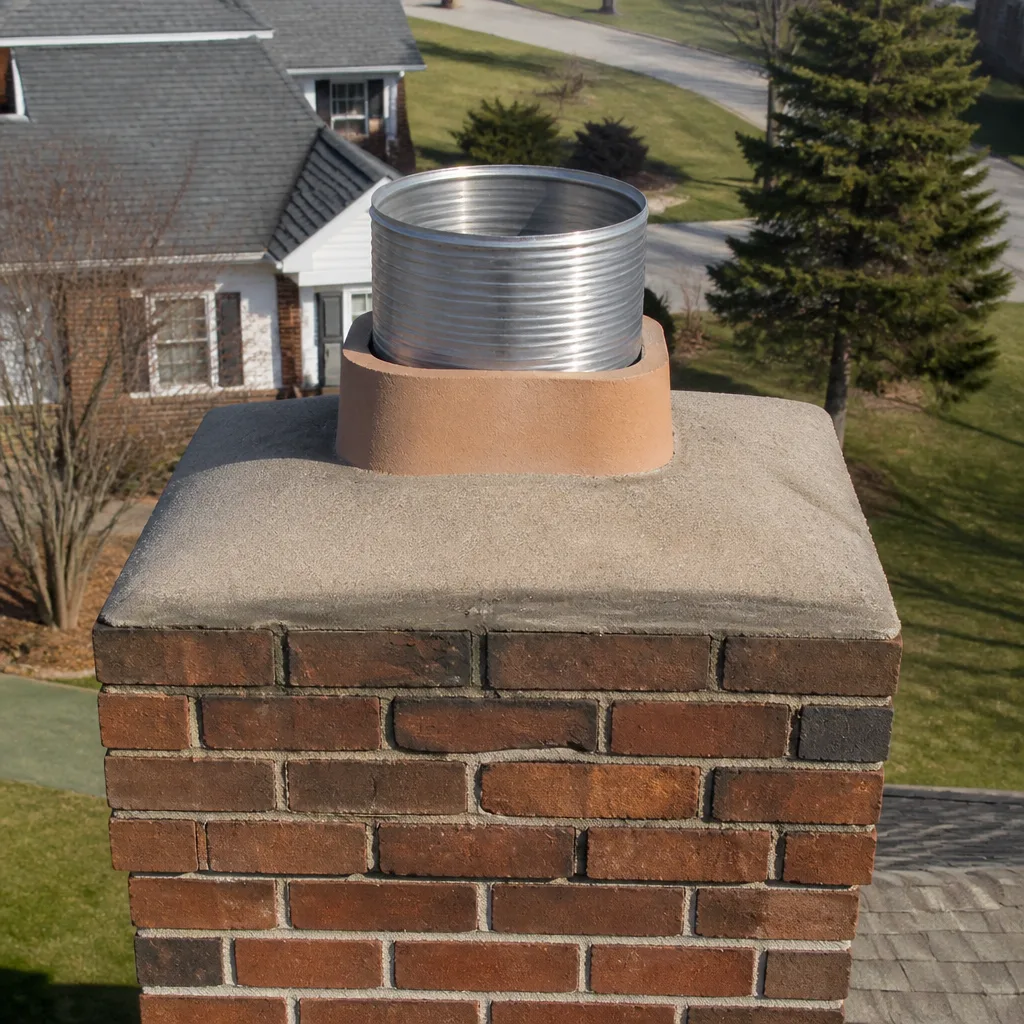 Flue relining
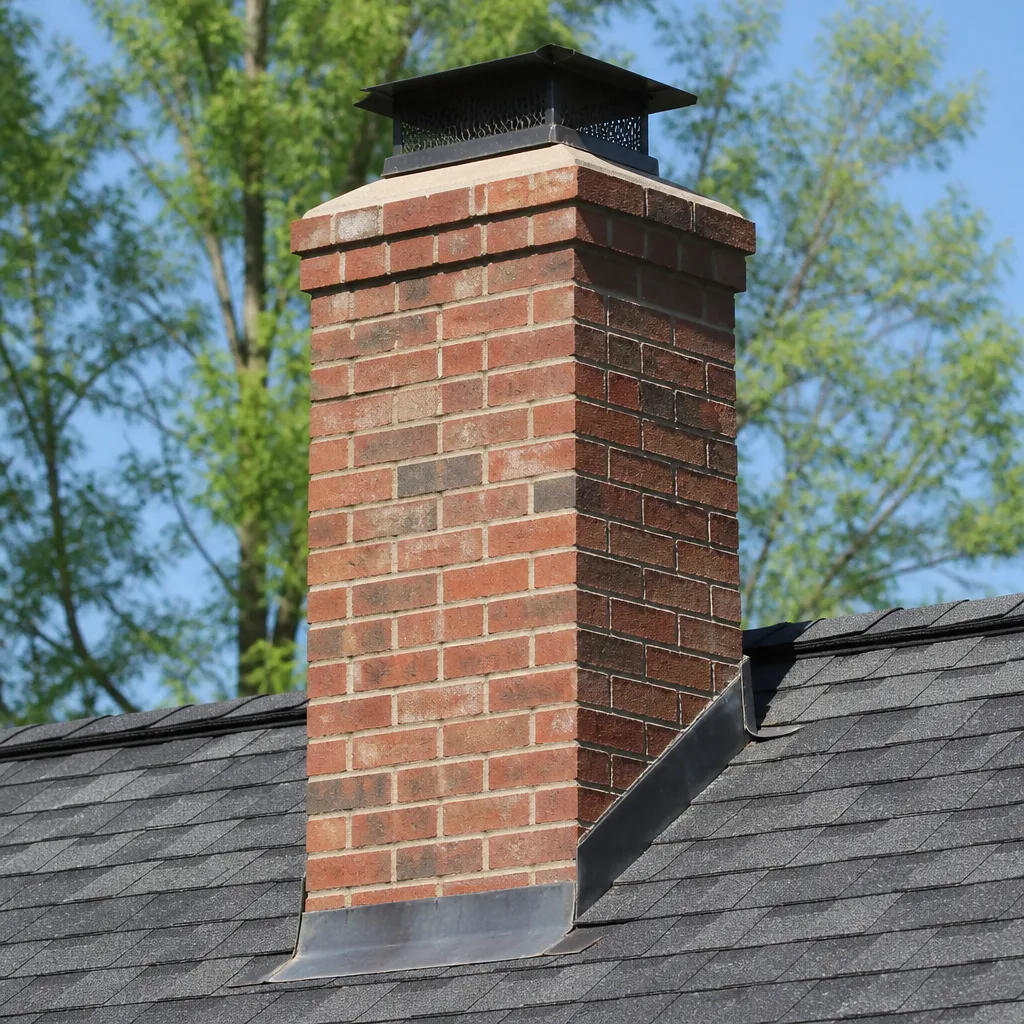 Masonry repair
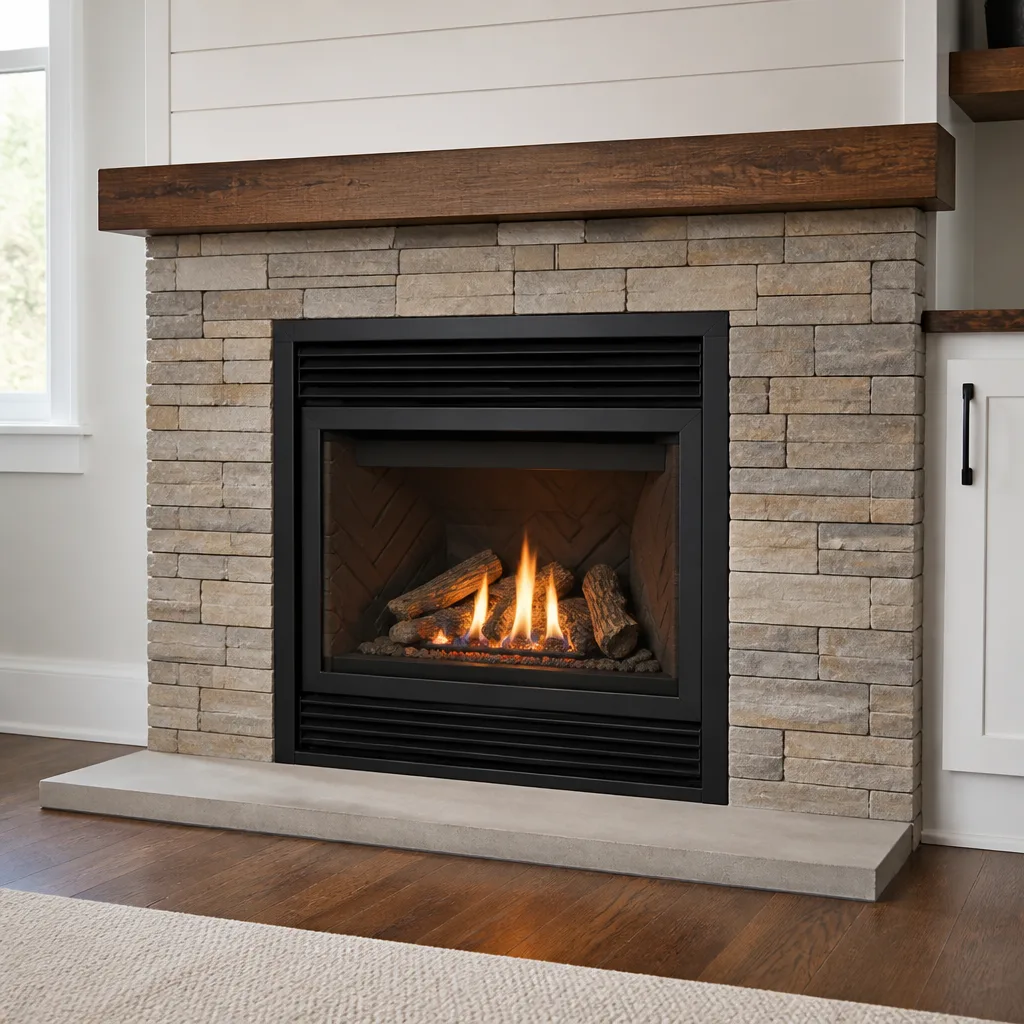 Gas fireplace service
Level 1 sweep and inspection to the NFPA 211 annual standard - flue, crown, cap, and flashing checked and photographed
Chimney sweep logs do not sweep chimneys. They loosen some creosote - which then falls where a brush and vacuum still have to collect it.
Chimney Cleaning Emergency Preparedness Guide for South Coast Metro Homes
Most chimney fires we’re called out to inspect start in fireplaces the homeowner used “only a few times.” That’s the counterintuitive part of chimney safety in South Coast Metro: low use does not mean low risk. A fireplace lit a handful of evenings each winter still builds creosote, and creosote that sits through months of dry Santa Ana wind weather glazes into a fuel that lights easily and burns hot. Our technicians have up to 11 years of experience, and the pattern holds – the houses we worry about most are the quiet ones. This guide covers how to spot an active chimney fire, how to prepare before high-wind season, what condition your cap and damper need to be in, and what to document for your insurer if the worst happens.
Quick Answer
Emergency preparedness for a South Coast Metro chimney means two things: knowing the signs of an active chimney fire (a low roaring sound, a strong burning smell, black smoke or glowing from the top of the flue) and calling 911 immediately if you see them; and getting your flue inspected and swept before wind season and before any power outage, so a blocked or creosote-loaded chimney never becomes the thing you rely on for heat in an emergency. A professional sweep with a camera inspection is the preparation step that makes every other step safer.
Styles & brands we work with
- Sweep & inspection
- Caps & crowns
- Flue relining
- Masonry repair
- Gas fireplace service
Table of Contents
- How do you know if your chimney is on fire right now?
- Why Santa Ana winds raise chimney risk on two fronts
- What to do with the damper before and during a high-wind event
- The pre-emergency chimney checklist
- How to safely close off a fireplace that looks blocked or damaged
- What to document and report to your insurer after a chimney fire
- Creosote: the hidden fuel in a rarely used fireplace
- Building chimney readiness into your household fire plan
How Do You Know If Your Chimney Is on Fire Right Now?
A chimney fire is not always the dramatic flames-out-the-top event people picture. Many burn quietly inside the flue, and the first clue is sound or smell rather than sight. If you suspect one, get everyone out of the house and call 911 before you investigate further. Do not open the firebox door to look – that feeds the fire oxygen and can push smoke and flame into the room.
Watch and listen for these indicators:
- A low, rumbling roar or a sound like a distant train coming from the chimney, even with no fire visible in the firebox.
- Loud popping or crackling that continues after the fire has died down, or a tapping sound from the flue.
- A strong, hot, tar-like burning smell in the room or outside near the chimney top – distinct from ordinary woodsmoke.
- Dense black or dark gray smoke pouring from the chimney cap, or smoke drifting back into the room.
- Glowing or sparks visible at the top of the flue, or a visible heat shimmer above the cap.
- Creosote flakes or pieces of the flue liner landing on the roof or in the yard below.
The immediate response sequence, in order:
- Get every person out of the house and call 911 from outside.
- If you have a working chimney fire extinguisher or one designed for the purpose and can reach it safely, use it only from the ground – never climb onto the roof.
- Close the firebox doors and any air intakes on the stove or insert to starve the fire of oxygen.
- Do not use water on a chimney fire from inside the house; it can crack a hot flue liner and send steam and smoke into the room.
- Wait for firefighters. Do not re-enter until they clear the building.
- After the fire is out, do not use the fireplace again until a professional inspects the flue and confirms the liner and mortar are sound.
The gap between a small chimney fire that a homeowner catches early and a structural fire is usually the same gap: how fast the fire was reported. When in doubt, treat it as real and call. We answer 24/7 and can book a post-fire inspection in South Coast Metro once the fire department has released the property.
Why Santa Ana Winds Raise Chimney Risk on Two Fronts
Santa Ana wind events do two things at once to a chimney system, and they work against each other. First, the extreme low humidity and sustained wind dry out vegetation and structures until a single ember from a chimney, grill, or fire pit can start a spot fire. Second, the pressure differences that drive these winds can disrupt normal draft, causing a chimney that vents fine on a calm evening to backdraft smoke and hot gases into the living space during a wind event. A weak or partially blocked flue makes both problems worse.
What that means practically in South Coast Metro:
- A spark arrestor and sound cap matter more during wind events. Without one, hot embers can leave the flue and land on a dry roof or in dry landscaping. A cap installed with a proper spark screen and secured against wind is a baseline safety item, not a finishing touch. We install caps and crowns using components from Gelco and other professional trade lines, which hold up better in wind than generic hardware-store caps.
- Creosote is drier and more combustible after months of low-humidity weather. The buildup that seemed harmless in a humid spring is a different fuel by the time the winds arrive.
- Backdrafting is a carbon monoxide concern, not just a smoke nuisance. If smoke rolls back into the room when you light a fire on a windy day, stop, open a window, and let the fire die. A persistent backdraft points to a venting problem that needs diagnosis, not a workaround.
The preparation window is before the winds arrive, not during. A camera inspection in the calm weeks before typical wind season tells you exactly how much creosote is in the flue and whether the cap and crown can handle a wind event. We’ve seen the pattern in South Coast Metro homes where the fireplace sees light use and the flue sees none of the maintenance: the first strong wind event of the season is when the problem gets noticed.
What to Do With the Damper Before and During a High-Wind Event
The damper is the one control a homeowner has over chimney draft in real time, and it’s the most misunderstood. In plain terms: close it when the fireplace is not in use, and during a wind event keep it closed unless a fire is actively burning. An open, unused damper is an open hole to the outside, letting cold air, wind-driven smoke, and debris into the house, and in some cases acting as a draft path that pulls air the wrong direction.
Here’s how to manage it:
- When the fireplace is cold and unused: damper fully closed. This keeps wind-driven smoke and debris out and stops conditioned air from escaping up the flue.
- Before lighting a fire on a windy day: open the damper fully, light a small test fire, and watch the smoke. If it rolls back into the room instead of going up the flue, close the damper, put the fire out, and wait for calmer conditions or call for inspection.
- During an active wind event with no fire: damper closed. If smoke or the smell of soot is coming into the room with the damper closed, that’s a sign of a damaged damper, a gap in the flue, or a pressure problem – a reason to get the system inspected, not a reason to open it wider.
- If a chimney fire is suspected: close the damper if you can reach it safely from outside the firebox, and close the firebox doors. Starving the fire of air slows it while you wait for the fire department.
A damper that won’t close fully, sticks, or feels loose when you touch it is a repair item, not a quirk to live with. If you’re not sure your damper is sealing, we can check it during the same visit as a chimney sweep and tell you honestly whether it needs adjustment or replacement.
The Pre-Emergency Chimney Checklist
Before you count on a fireplace for heat during a power outage, or before the wind season arrives, a chimney system needs to pass a basic readiness check. This is the condition your cap, damper, and cleanout need to be in – not to look tidy, but to work when the power grid doesn’t.
- Cap and spark screen intact and secured. Check from the ground with binoculars, or have the roof checked professionally. A missing cap is an open door for birds, rain, and embers. A loose cap is a wind hazard.
- Crown free of cracks, with no missing mortar at the flue top. The crown sheds water away from the chimney. A cracked crown lets water into the masonry, which is a structural issue over time. We repair and rebuild crowns using Gelco and other professional trade materials.
- Damper opens and closes fully and seats flush. Test it by hand with the firebox empty and cold.
- Flue swept and inspected with a camera. This is the step that tells you how much creosote is present and whether the liner has any gaps, cracks, or offset sections. A camera inspection with a photo report is included so you can see what we see.
- Cleanout door sealed and free of ash buildup. A cleanout that doesn’t seal allows air into the system and can let ash and smoke into the room. Empty it before the season, not during.
- Firebox and hearth sound, with no cracked brick or loose mortar. Cracks can let heat through to framing; loose mortar means the firebox needs repair.
- Carbon monoxide detectors working on every floor. A chimney that vents correctly during calm weather can backdraft during a wind event. Working detectors are the backstop.
If a step fails, it’s fixable – and the difference between a fireplace you can trust and one you can’t is usually a sweep, an inspection, and a repair. For the cap and crown items specifically, we handle chimney cap & crown installation with the same visit that catches the problem.
How to Safely Close Off a Fireplace That Looks Blocked or Damaged
If you suspect a blockage or see signs of damage – smoke coming back into the room, soot falling into the firebox, a portion of the flue liner visible from the top, or an animal nest in the flue – the safe move is to stop using the fireplace until it’s inspected. Do not try to clear the flue from the roof, and do not burn “cleaning logs” in a system that might be blocked; that’s a fire hazard, not a fix.
To temporarily close off a damaged or blocked fireplace without creating new hazards:
- Seal the firebox opening with a rigid, fire-rated barrier if you can do it without drilling or nailing into masonry you don’t understand. The simplest safe option is a purpose-made fireplace cover or a heavy sheet of non-combustible board held in place. Don’t stuff insulation or plastic into the opening – it can melt, off-gas, or catch fire.
- Keep the damper closed and disconnect the fireplace from your routine. Move furniture and firewood away so nobody lights it out of habit.
- Post a note at the opening. A card on the firebox door that says “Do not use – awaiting inspection” prevents a visitor or family member from lighting it accidentally. This sounds trivial; it matters more than people think.
- Don’t seal the top of the flue permanently. A blocked-top flue without proper venting can trap moisture and cause further masonry damage. Leave the cap on, get it inspected.
- Book the inspection sooner rather than later. A blocked flue is a carbon monoxide risk if anyone uses the fireplace or a connected appliance, and a damaged liner will only get worse with use.
We’d rather see a fireplace in South Coast Metro sitting closed and waiting for inspection than being pressed into service during a cold snap. If you’re not sure whether the blockage is real, our inspection answers it with a camera before anyone picks up a tool.
What to Document and Report to Your Insurer After a Chimney Fire
After a chimney fire, the insurance process is faster and fairer when you have documentation. Report the loss to your carrier promptly – most policies expect notice in days, not weeks – and hold on to everything from the fire department’s response and the inspection that follows. Insurers care about cause and scope, and a professional inspection report is the document that establishes both.
What to gather and where the gaps usually appear:
- Fire department report or case number. Ask the responding crew for the incident number before they leave.
- Photographs of the firebox, flue top, cap, and any interior smoke or water damage. Take them after the fire is out and the property is cleared, not during the response.
- A written professional inspection report. This matters most when it includes specific language on the extent of damage: the condition of the liner, whether the fire penetrated the masonry, whether the flue tile cracked, and what repair scope is required. Vague reports (“chimney needs work”) slow claims down. Ask the inspector to describe findings in terms of components and condition.
- Any damage to the roof, cap, siding, or landscaping from embers. These are often separate line items in a claim and easy to miss.
- Receipts for any emergency mitigation – barrier materials, temporary sealing, or a fire extinguisher used.
The inspection report is the piece most homeowners are least prepared for. When we inspect a chimney in South Coast Metro after a fire, we photograph what we find, describe the condition of each component, and put the repair scope in writing, so the claim conversation starts from evidence rather than a guess. That same report guides the chimney repair work itself.
Creosote: the Hidden Fuel in a Rarely Used Fireplace
Creosote is the residue wood smoke leaves on the inside of a flue, and its danger depends on how much is there and what form it’s in. It starts as light, flaky soot and, over repeated burns with limited draft, can become a shiny, hardened glaze that ignites at a lower temperature and burns hotter. The reason this catches South Coast Metro homeowners off guard is the low-use pattern: the fireplace is lit for the occasional cool evening, and nobody notices the buildup because the firebox doesn’t look dirty. The flue, not the firebox, is where the creosote lives.
What to know about the buildup:
- Wood type and draft quality drive creosote more than frequency of use. A single season of unseasoned wood or a cold, slow-burning fire can leave more buildup than a year of clean, hot fires.
- A camera inspection reveals the flue condition. You can’t see the upper flue from the firebox. The camera shows the creosote level and the liner’s condition, and we photograph it so you can see it for yourself. Nothing is recommended unless the camera evidence supports it.
- If the liner is compromised, HeatShield ceramic resurfacing can restore it without a full liner tear-out. It’s a specialist repair most sweep services don’t offer, and it’s less invasive and less costly than full replacement when the liner qualifies. When a full replacement is the right call, we install DuraFlex liner systems.
- Annual sweep and inspection is the baseline. Call us if you can’t remember the last time the flue was swept. An annual sweep is the cheapest insurance a chimney has.
If you’ve only used your fireplace a few times and you’re wondering whether a sweep is worth it, we’d tell you plainly: for a chimney in South Coast Metro that hasn’t been looked at in a while, it’s the inspection that answers the question, not a guess from the firebox.
Building Chimney Readiness Into Your Household Fire Plan
Most home fire plans treat the chimney as a background item. In practice, the chimney is the one part of the house that routinely carries open flame through the structure, and it deserves its own line in the plan. Building that readiness into your household fire plan takes an afternoon and pays off the first time it matters.
What a chimney-ready household plan includes:
- Know the two emergency scenarios and the response for each. Active chimney fire: everyone out, call 911, no re-entry until cleared. Power-outage reliance on the fireplace: light only if the system has been swept and inspected, damper open, smoke drafting up.
- Put the phone number for a chimney professional where everyone can find it. Ours is (833) 509-5393. We answer 24/7, with fast dispatch from 7am to 7pm, Sunday through Friday.
- Walk through the house and point out the damper, the cleanout door, and the firebox door. Every adult should know where they are and how they work.
- Check carbon monoxide detectors and test the smoke alarms. Replace batteries as part of the annual season reset.
- Schedule the sweep and inspection before wind season, not after. Book it like you’d book any seasonal maintenance.
- Keep a fire-rated barrier and a chimney extinguisher within reach of the fireplace. Know how to use them; don’t improvise.
The fireplace becomes the fallback heat source during an outage, and the difference between a safe fallback and a hazard is the work you did months earlier. This is one of the reasons we do the whole lifecycle – the sweep, the inspection, the fireplace repair, and the chimney repair – under one company, so the findings from an inspection lead straight to a fix.
Common Mistakes to Avoid
- Assuming a rarely used fireplace is clean. The flue, not the firebox, is where creosote collects, and a light-use fireplace can still accumulate a dangerous load over a season. Schedule an inspection if you can’t recall the last sweep.
- Opening the firebox door when you suspect a chimney fire. It feels like the instinctive move, but feeding oxygen can push flame and smoke into the room. Get out and call 911 first.
- Using water on a burning chimney from inside. A cold shock on a hot flue can crack the liner. Leave suppression to the fire department.
- Burning a “cleaning log” to skip the sweep. It doesn’t remove glazed creosote and can ignite what’s there. A camera-assisted sweep is the only reliable approach.
- Sealing a blocked flue from the top “temporarily.” A permanently sealed top without proper venting traps moisture and damages the masonry. Leave the cap on; close off the firebox instead.
- Climbing onto the roof to inspect or clear the flue yourself. Roof work is the leading source of injury in chimney maintenance. Use binoculars from the ground, get the roof checked professionally.
- Waiting out a wind event before getting a backdraft checked. Smoke rolling into the room on a windy day is a venting symptom, not a quirk. Get it diagnosed before the next event.
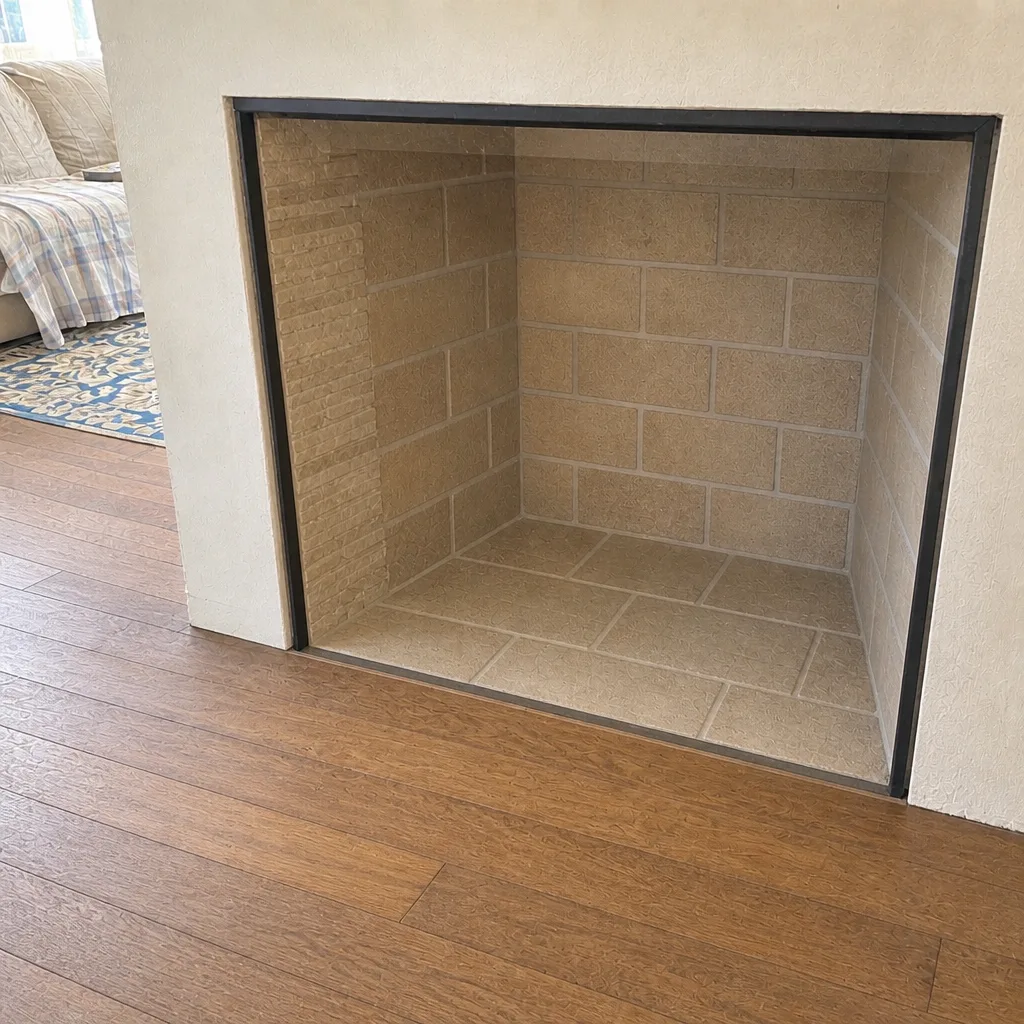
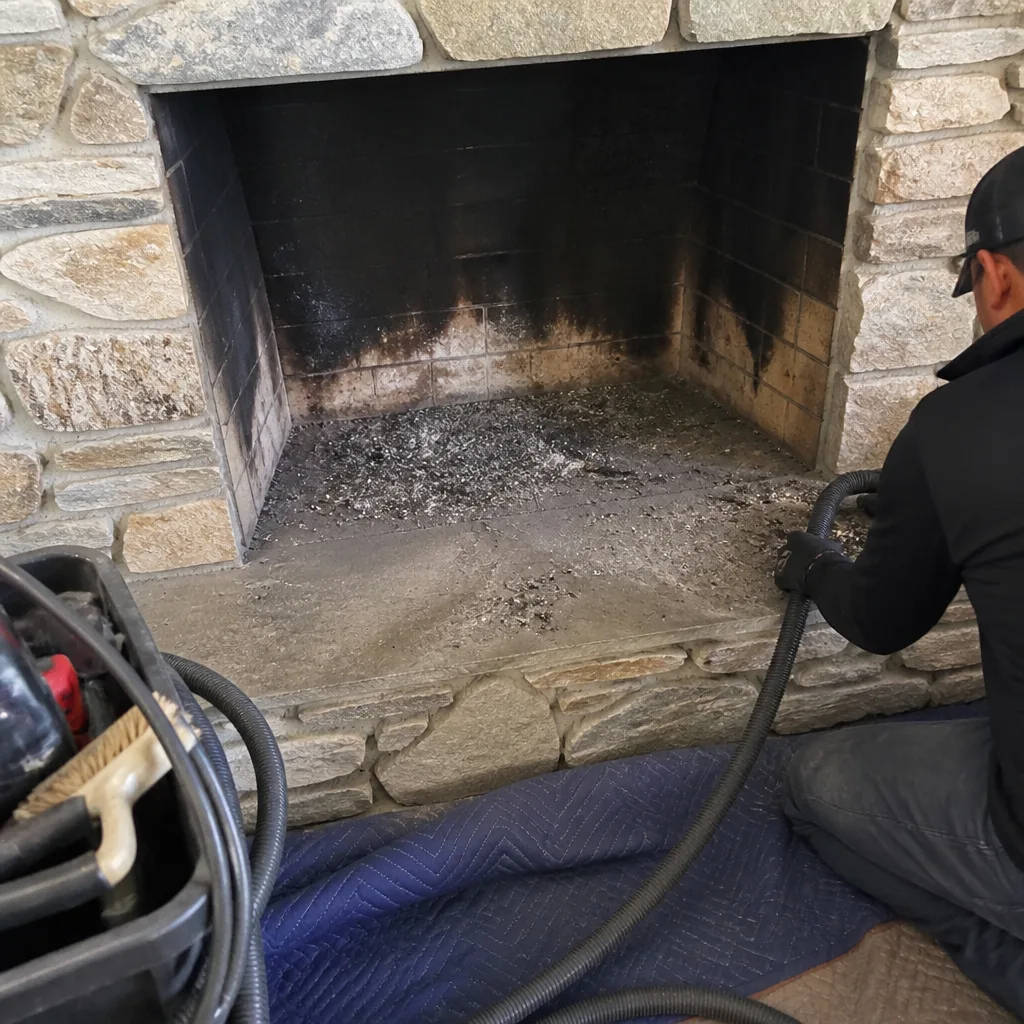
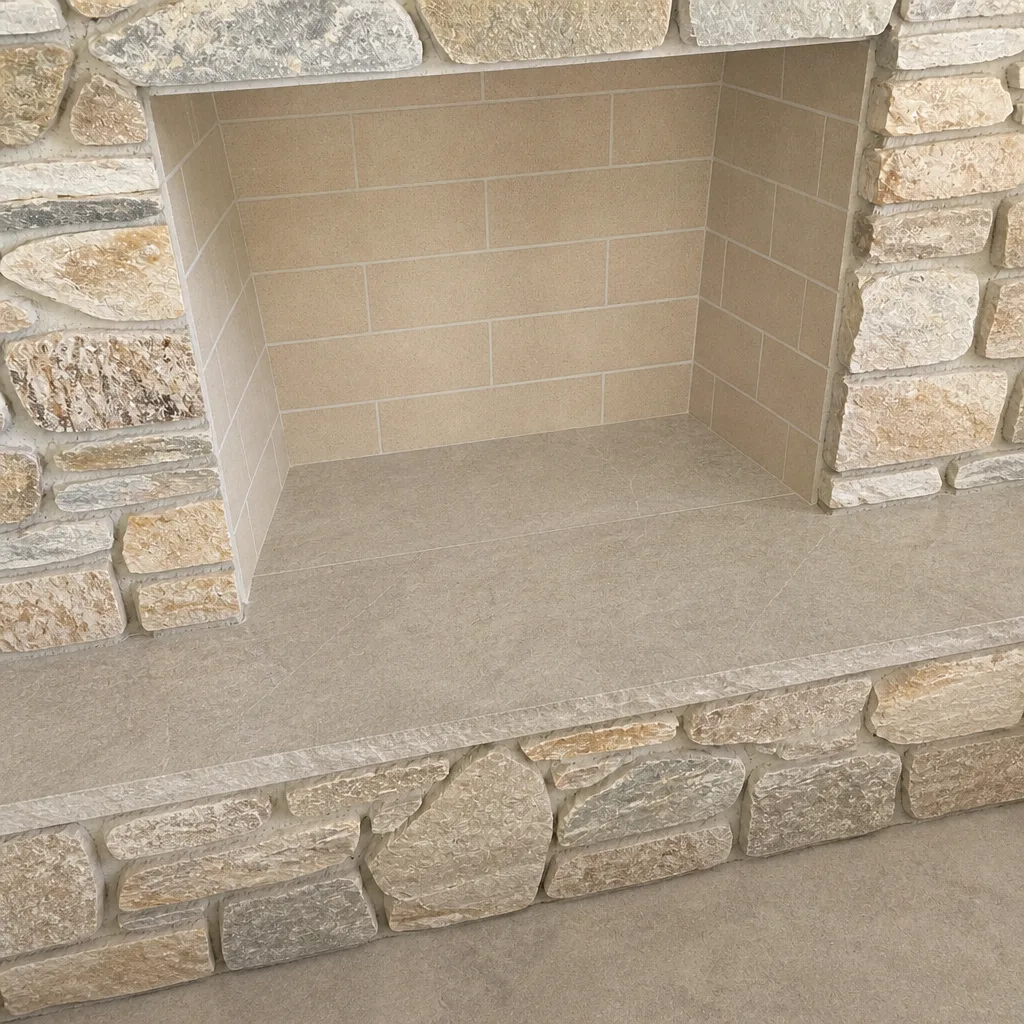
See the difference
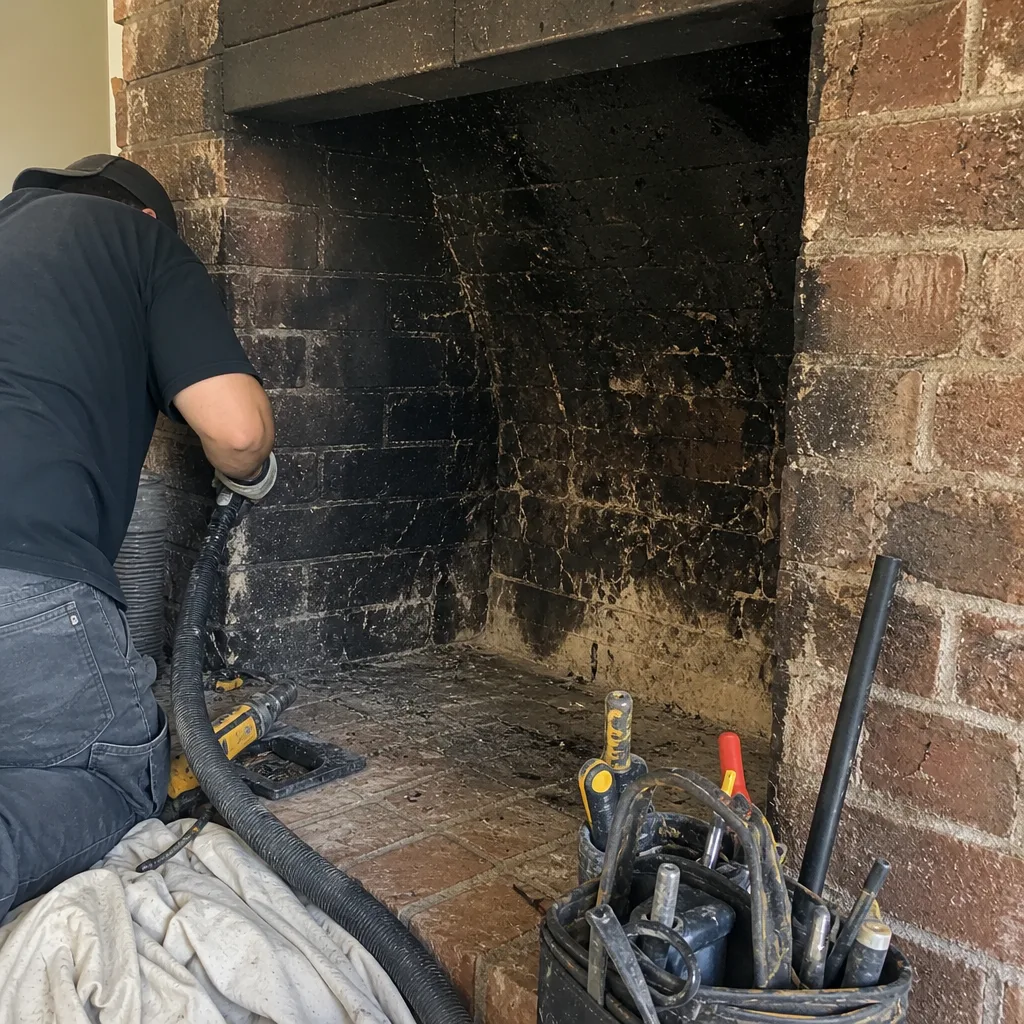 Before
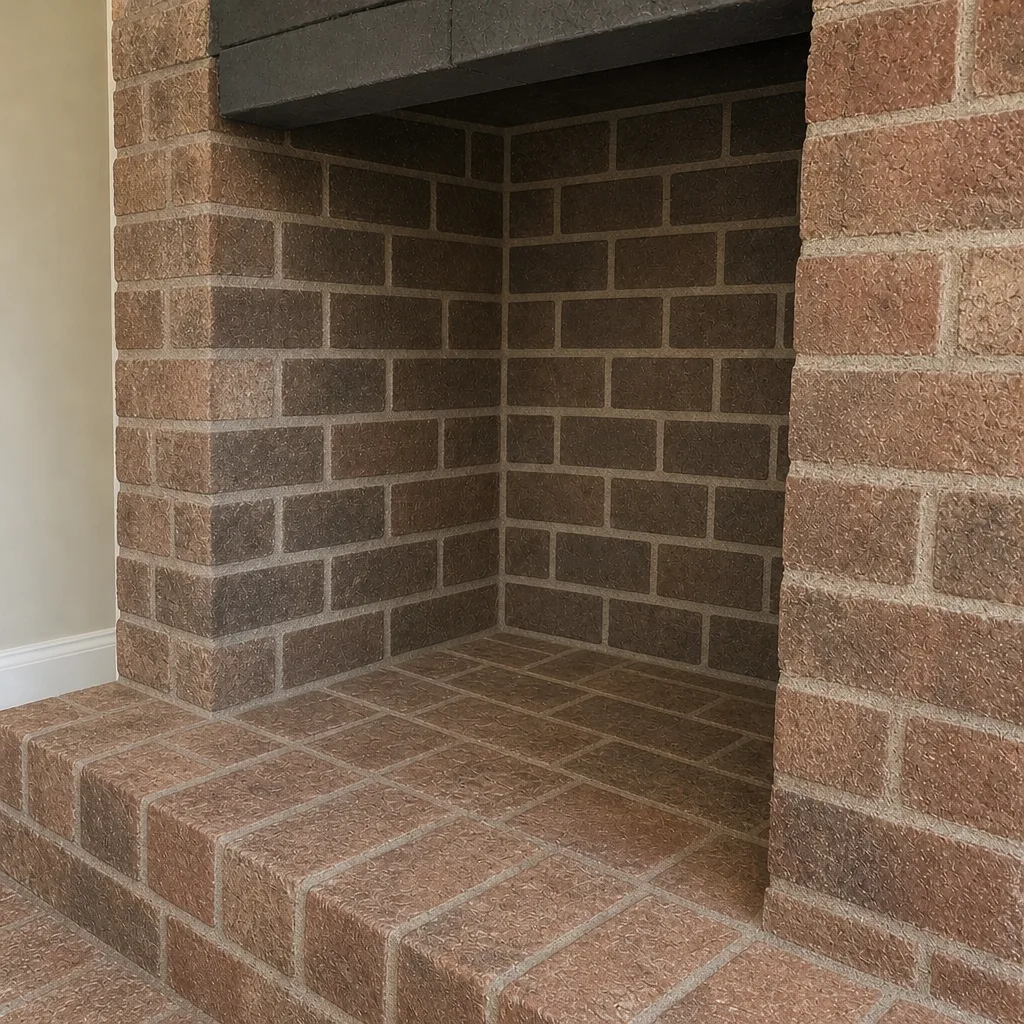 After
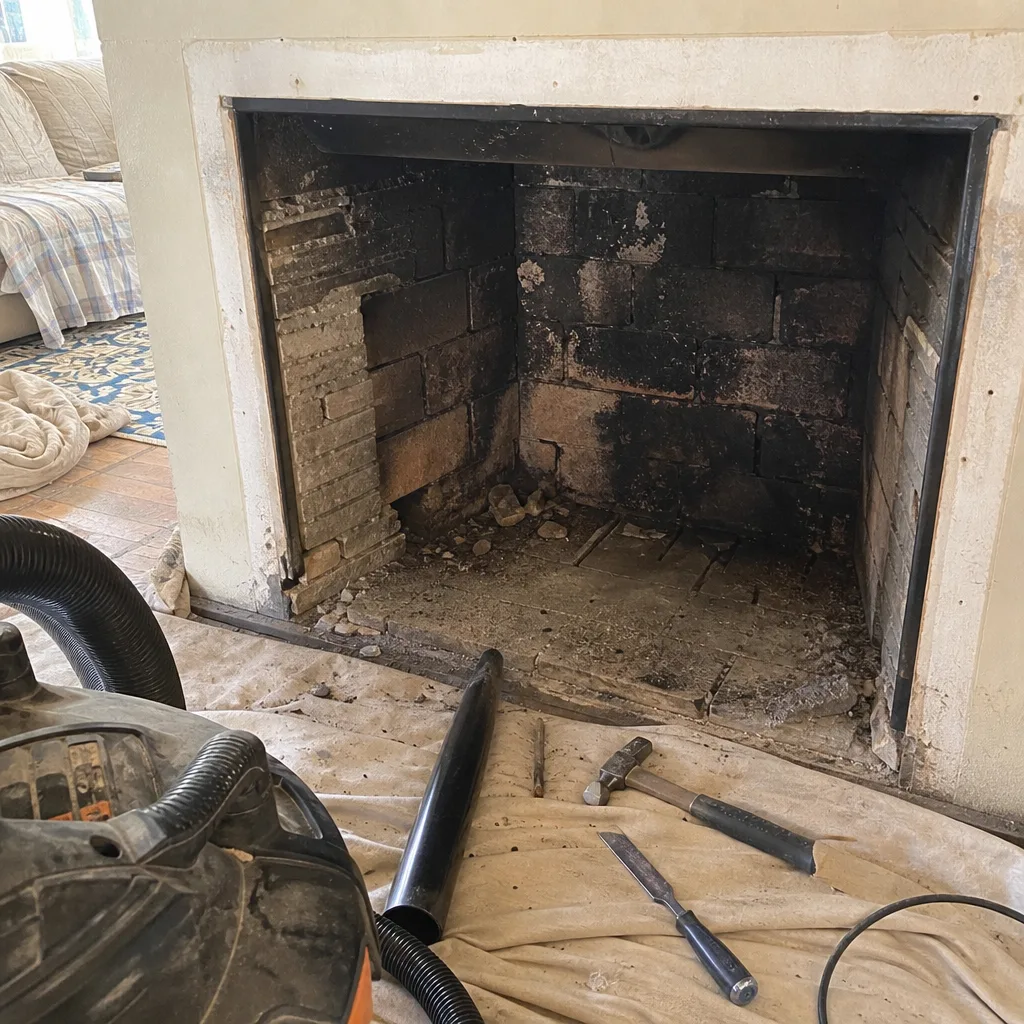 Before
 After
 Before
 After
When to Call a Professional
Call us when you suspect an active chimney fire (call 911 first, then us for the post-fire inspection), when you can’t recall the last sweep, or when you’ve noticed any of these warning signs: smoke entering the room with the damper open, soot flakes falling into the firebox, a strong creosote smell, a cap that’s loose or missing, cracked crown mortar, or a liner visible from the top of the flue. Also call if you’re relying on a fireplace for heat during an outage and haven’t had the flue inspected, or after a fire in a neighboring structure, because insurers often want your chimney documented. Chimney Sweep South Coast Metro offers free estimates in South Coast Metro – call (833) 509-5393. The written estimate sets the final price, and the camera inspection with a photo report is included.
Frequently Asked Questions
Once a year for a fireplace in regular use, and at least once before any season when you plan to rely on it – including a power-outage fallback. A rarely used fireplace still needs an annual inspection because creosote accumulates in the flue even when the firebox looks clean. Call (833) 509-5393 for an exact quote – estimates are free.
Creosote builds up in the flue until it can ignite, and a deposit that would have been swept away can become a chimney fire during a wind event. A blocked or partially obstructed flue also increases the risk of smoke and carbon monoxide backing into the room. Skipping the sweep is a small saving against a much larger repair. Call (833) 509-5393 to book a sweep and inspection.
Not always. A camera inspection determines whether the liner is intact or compromised, and some liners can be restored with HeatShield ceramic resurfacing instead of a full tear-out. If a full liner is required, we install DuraFlex systems. The report shows you exactly what we found so the decision is yours to make. Call (833) 509-5393 for an inspection quote.
We price per job by written estimate rather than quoting a flat rate sight-unseen, because the condition of the flue and the access determine the work involved. The estimate is free, and you’ll know the number before anything is booked. Call (833) 509-5393 for an exact quote – estimates are free.
Smoke rolling back during a Santa Ana wind event usually means the flue draft is being disrupted by pressure, or the flue is partially blocked or damaged. Stop using the fireplace and get it inspected. A camera inspection tells you which of the two is happening. Call (833) 509-5393 to book an inspection in South Coast Metro.
Only if the flue has been swept and inspected and the damper, cap, and firebox are in good condition. A fireplace that has never been inspected is not a safe fallback. If you’re planning to rely on it, get the inspection done before the outage, not during. Call (833) 509-5393 for a free estimate.
The Bottom Line
A chimney in South Coast Metro is a fire-safety component, not a decoration, and the preparation that keeps it safe is the same preparation you’d make for any other household emergency. Know the signs of an active chimney fire and the response sequence: everyone out, 911, no re-entry until cleared. Manage the damper before and during wind events, and check the cap, crown, cleanout, and detectors before the season. If you suspect a blockage, close off the fireplace safely and get it inspected rather than burning through it. And if a fire does happen, document everything and get a written inspection report that describes components and condition. Chimney Sweep South Coast Metro handles the sweep, the inspection, the Chimney Sweep South Coast Metro service, and the repair – one company, one point of contact, camera evidence you can see for yourself, and a written price before any work is booked. Our technicians have up to 11 years of experience, and we work with professional-grade components from HeatShield, Gelco, DuraFlex, and Copperfield, not generic substitutes.
Call (833) 509-5393 for a free estimate. We answer 24/7, with fast dispatch from 7am to 7pm, Sunday through Friday.
Written by the team at Chimney Sweep South Coast Metro.