
Last updated November 23, 2026
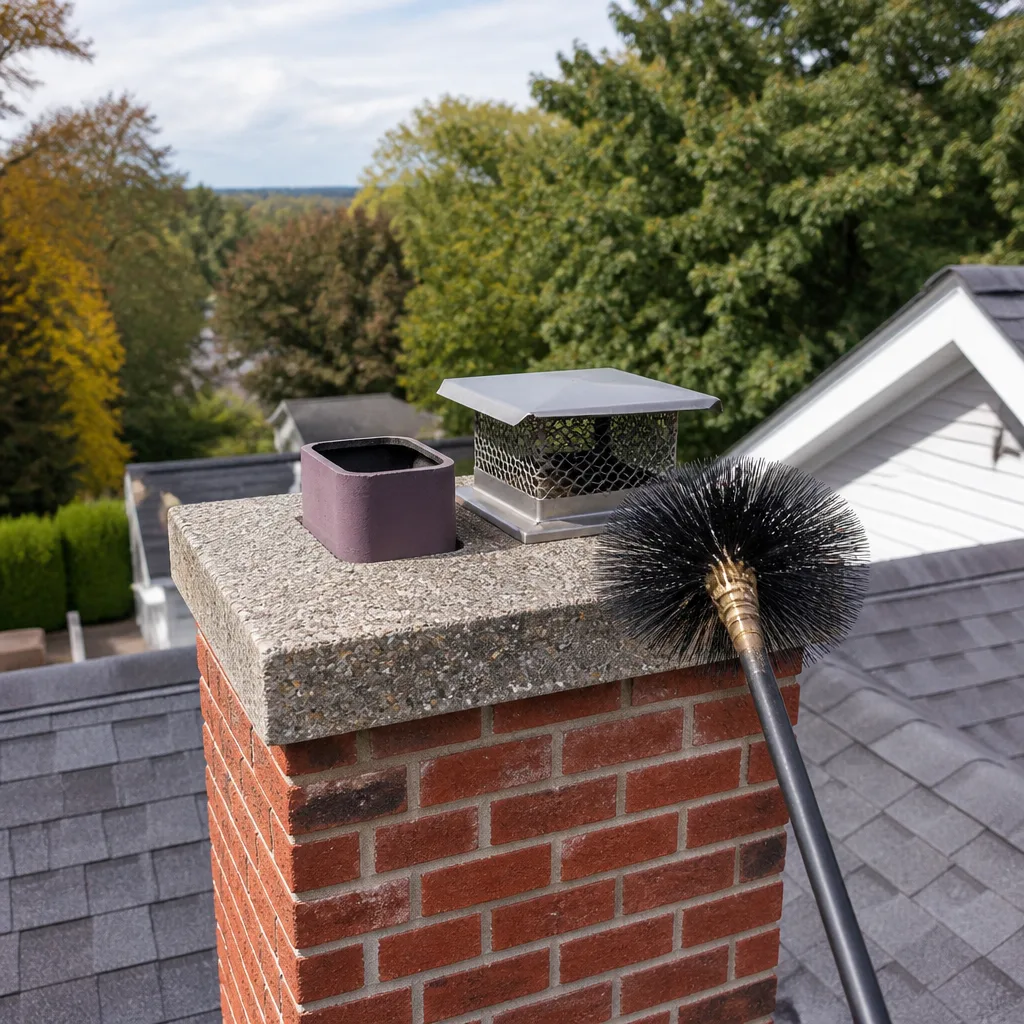 Sweep & inspection
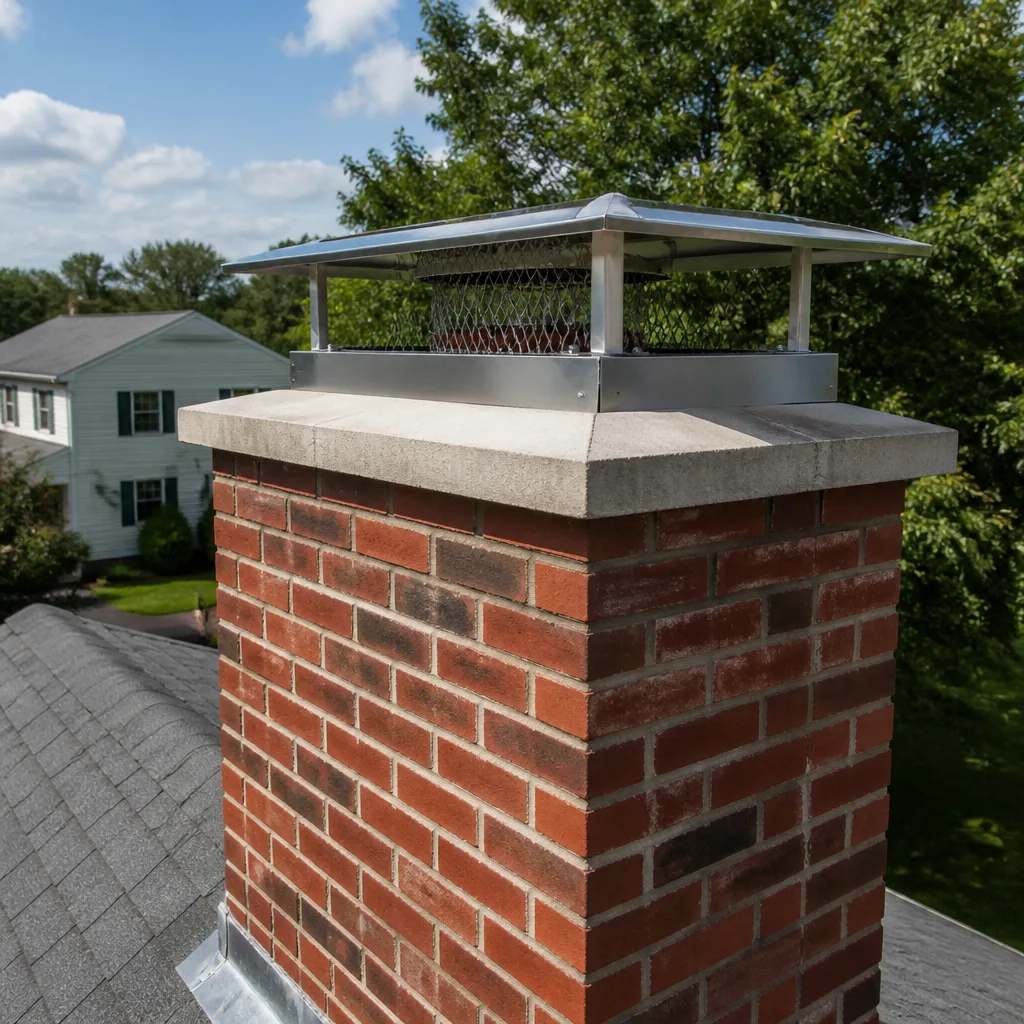 Caps & crowns
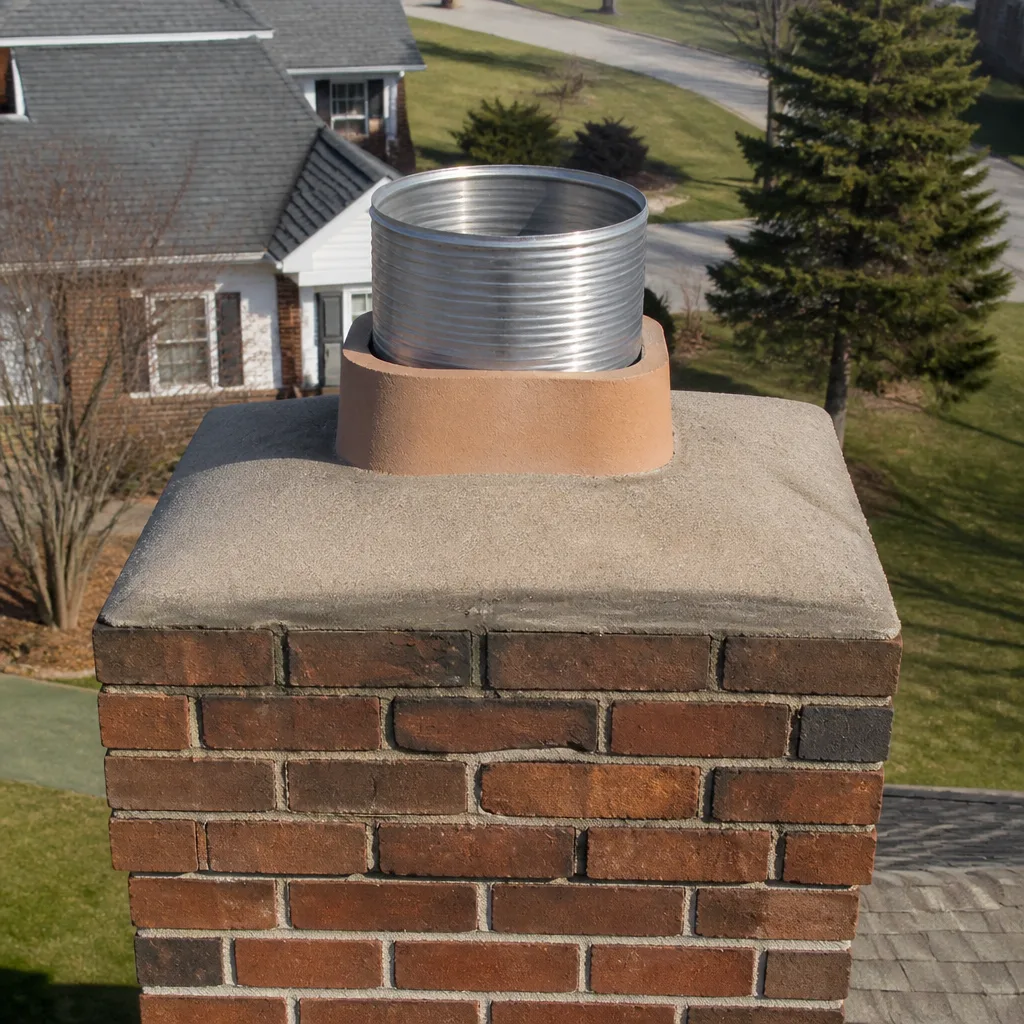 Flue relining
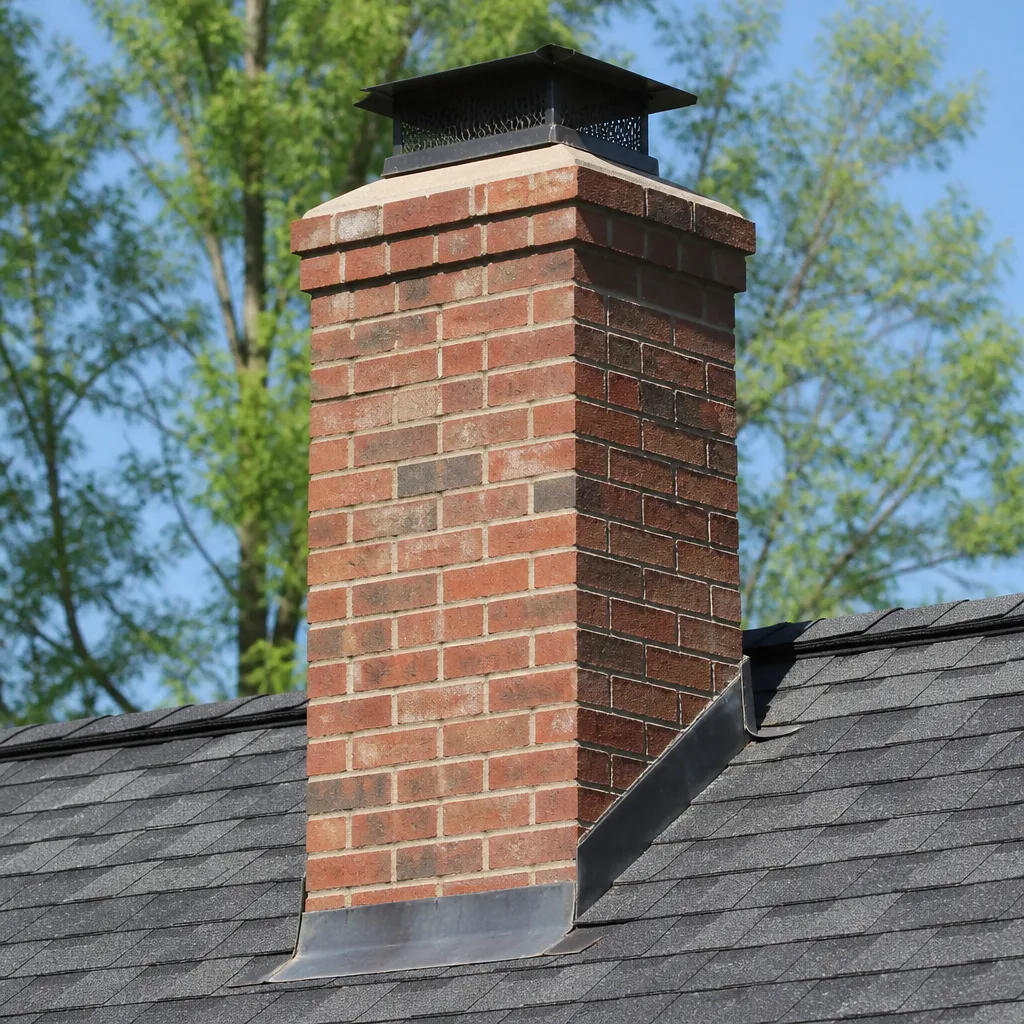 Masonry repair
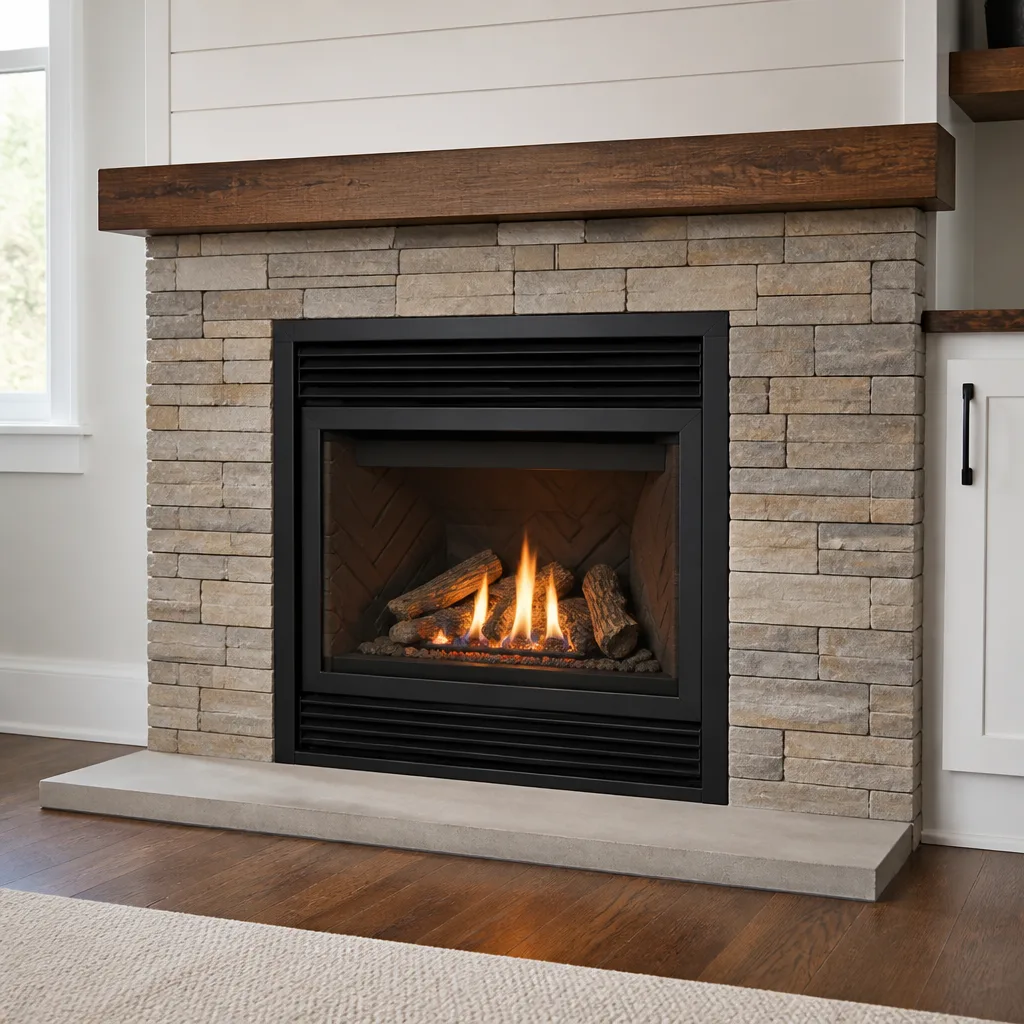 Gas fireplace service
Level 1 sweep and inspection to the NFPA 211 annual standard - flue, crown, cap, and flashing checked and photographed
Chimney sweep logs do not sweep chimneys. They loosen some creosote - which then falls where a brush and vacuum still have to collect it.
Seasonal Chimney Cleaning Care for South Coast Metro: Year-Round Homeowner’s Guide
A chimney that hasn’t been used all summer isn’t resting. It’s collecting moisture, nesting material, and spider webs in a space you’re about to light a fire in. That’s the counterintuitive part of living in South Coast Metro: because winters are mild and fireplaces sit idle for nine or ten months, the biggest threats to a flue here aren’t heavy winter use. They’re long dormancy, dry-season thermal stress, and the marine layer working on masonry from the outside in. This guide lays out the actual threat calendar for a South Coast Metro home, season by season, so you know what to check and when to book. We’ll cover what happens inside a flue during a dry summer, what October’s first-fire inspection needs to include, why Santa Ana winds pull gases the wrong way, and the spring tasks most homeowners here skip on the assumption that low use means low maintenance.
Quick Answer
Chimney care in South Coast Metro should run on a two-check calendar: a pre-season inspection and sweep in early fall before your first fire, and a post-season assessment in spring after winter’s marine layer has finished working on the masonry. Between those, moisture management (cap, crown, and damper condition) matters more here than creosote buildup does, because light use means less soot but more time for dampness, debris, and negative pressure problems to develop.
Styles & brands we work with
- Sweep & inspection
- Caps & crowns
- Flue relining
- Masonry repair
- Gas fireplace service
Table of Contents
- Why a Dormant Chimney in South Coast Metro Has Different Problems Than a Working One
- What Happens Inside a Clay-Tile Flue During a Dry South Coast Metro Summer
- The October Pre-Season Inspection: What to Check Before the First Fire
- How Santa Ana Winds and Damper Condition Push Smoke the Wrong Way
- Spring Post-Season Tasks Most South Coast Metro Homeowners Skip
- Moisture-Barrier Caps, Crowns, and Masonry Protection Through Dry Season
- A Month-by-Month Chimney Care Calendar for South Coast Metro
- When a Sweep Becomes a Repair: Matching Findings to the Right Fix
Why a Dormant Chimney in South Coast Metro Has Different Problems Than a Working One
Most chimney advice you’ll read online is written for places with hard winters, where the flue is hot and working for months on end. South Coast Metro isn’t that. A fireplace here might see a few dozen fires across a mild winter, and then the flue goes quiet from early spring through late fall. That quiet period is where the interesting stuff happens to a chimney – and it’s the part the standard advice ignores.
An actively used flue stays relatively dry inside because the heat drives moisture up and out. A dormant flue is a cool, still, enclosed column of air. That’s a moisture trap. The marine layer that rolls in across the South Coast Metro area night after night delivers damp air that settles into the flue, works its way into the masonry joints, and sits there. Meanwhile, the dry season that follows pulls that moisture back out through the brick and mortar face. The chimney isn’t static in the off-season. It’s cycling through wetting and drying, season after season, whether or not you ever light a fire.
Add what accumulates in an unused stack: dust, leaves blown in on the wind, nesting material, and the debris that gathers whenever there’s no fire to burn it off. In our experience, an unlined or clay-tile flue that sat closed all summer looks and behaves very differently from one that was swept in the fall. The chimney that “was fine last year” often isn’t, precisely because it was left dormant instead of maintained.
The takeaway is simple. In a climate where the chimney works less, maintenance windows shift. You’re not just cleaning out creosote – you’re managing moisture and debris across a long idle stretch. That demands a different rhythm than the winter-heavy schedules you’ll find in generic chimney guides. One company handles the sweep, the inspection, and the repair, which matters here because the findings from a dormant-season check are usually repair items, not just cleaning items. When they are, we come with the capability to act on them immediately rather than hand you a report and a list of calls to make.
What Happens Inside a Clay-Tile Flue During a Dry South Coast Metro Summer
The dry months are the most stressful season for a clay-tile flue in South Coast Metro, and it’s not because of fire. It’s because of thermal expansion, mortar micro-cracking, and the slow accumulation of debris in a space nobody’s looking at.
Clay tile liners and their surrounding mortar move with heat. Through a South Coast Metro summer, a flue attached to south- and west-facing masonry can bake in direct sun through the afternoon, then cool sharply overnight once the marine layer comes in. That daily expansion and contraction is gentle compared to winter freeze-thaw, but it’s relentless – day after day across months. Over years, the mortar joints between clay tiles develop hairline cracks. Once a joint opens even slightly, the seal between the liner and the chimney structure is compromised. That’s the pathway combustion gases use to reach the framing, and it’s the pathway for moisture to travel back into the masonry.
Meanwhile, an unsupervised flue collects:
- Debris and leaf fall blown in through an open or damaged cap during dry, windy weeks.
- Nesting material from birds and insects that find an uncapped or loosely capped stack an easy shelter.
- Spider webs and dust film that coat the flue walls and give a future fire a rough, sooty surface to ignite against.
- Moisture from the marine layer that condenses in a cool, still flue overnight and finds its way into any mortar crack it can.
None of this announces itself. A homeowner in South Coast Metro can go a whole summer without thinking about the chimney, and nothing looks wrong from the living room. That’s exactly why the fall check matters. Thermal cracking and debris loading are found in an inspection, not by eye from the hearth.
Two things protect a clay-tile flue through the dry season. First, a proper chimney cap and crown installation – a well-fitted cap keeps debris out and a sound crown sheds water away from the joint at the top of the stack where moisture wants in. We stock and install professional-grade components from Gelco and Famco for exactly this, because generic hardware-store caps and sealants don’t hold up to years of this climate’s wetting and drying. Second, a pre-season inspection that actually looks at the mortar joints. A chimney chimney sweep clears the debris; the inspection that follows tells you whether the flue is sound before you light anything.
The October Pre-Season Inspection: What to Check Before the First Fire
The single most valuable chimney appointment in South Coast Metro is the pre-season inspection before your first fire of the year. After nine or ten months of dormancy, the chimney has been through a full wet-then-dry cycle and collected a season of debris. October, or whenever the marine layer is breaking and the first cool evening is on the horizon, is when you want a trained eye on the whole assembly, not just the firebox.
Here’s the scope a thorough pre-season inspection should cover in our area:
- The flue interior. Look for debris, nesting material, cracked or spalled clay tiles, and gaps in the mortar joints between tiles. This is where the dry-season thermal damage shows up first.
- Creosote and soot load. Even light use leaves residue, and a rough, glazed surface from earlier seasons can still be present. It gets cleared before the first fire, not after.
- The damper. A damper has to open fully, close fully, and seat cleanly. A warped or rusted damper that can’t close leaves an open chimney throat through the whole off-season, pulling damp air and letting conditioned air escape.
- The cap and crown. Is the cap intact and properly screened? Is the crown sound, or is it cracked and letting water into the top of the stack? Both are moisture points, and both are fixable.
- The exterior brick and mortar. With the wet cycle behind it, fall is a good time to spot cracked mortar, loose brick, and any area where the masonry has started to take on water.
- The firebox and interior surround. Cracks in the firebox brick, failed firebrick, and worn mortar at the throat all get checked, because a fire burns against these surfaces directly.
- Smoke and draft check. A cold flue can draft poorly, and a blocked or partially blocked flue will tell on itself with a test before you commit to a fire.
What makes the post-dormancy inspection worth more here than in a cold-climate market is that the findings are specific to your building and its exposure. A chimney on the east side of the property that’s shaded most of the day collects moisture differently than one that bakes in afternoon sun. There’s no universal answer, which is why a report without the inspection behind it, or an inspection without the ability to fix what’s found, doesn’t get you far. We do the sweep, the inspection, and the fireplace repair or chimney repair as one job, so when the camera shows a cracked mortar joint or a failed firebrick, the fix isn’t a separate project six weeks out.
How Santa Ana Winds and Damper Condition Push Smoke the Wrong Way
A chimney depends on negative pressure – the flue drawing combustion gases up and out of the living space. Santa Ana wind events in South Coast Metro blow that arrangement apart. When strong, gusting winds hit the top of the stack from the wrong direction, they can overpower the flue’s natural draft and turn a negative pressure situation into what amounts to a backdraft. Smoke and combustion gases that should be leaving the house get pulled back inside.
The mechanism is straightforward. Draft comes from the difference between the flue’s internal pressure and the air pressure outside it. On a calm day, a warm fire in a chimney with a properly functioning damper and a clean, unobstructed flue draws well. During a Santa Ana event, the air pressure at the top of the stack is high and turbulent, and the flue can lose its draw. When that happens, a downdraft pushes gases down the chimney instead of up. That’s a carbon monoxide concern, not a cosmetic one.
Damper condition is the thing most homeowners here overlook, and it’s central to the problem.
- A fully opening damper gives the flue its best chance to draw against a downdraft.
- A partially stuck or warped damper restricts flow, making backdrafts more likely on windy days.
- A damper that won’t close leaves the chimney throat open to the off-season, letting the marine layer feed moisture into an unused flue and letting conditioned air escape.
- A missing or damaged cap exposes the flue mouth to gusting wind, which is the most direct way a downdraft gets in.
If you’ve ever noticed the smell of smoke in the room when a Santa Ana is blowing, or felt the fireplace puff before it catches, that’s the wind working against the flue. It doesn’t resolve by itself, and it doesn’t always track with heavy use – a chimney used lightly for a decade can still have a damper that no longer seats. When we inspect in South Coast Metro, we test the damper and look at cap and crown condition together, because the flue’s ability to hold draft in wind is a function of all three. If the cap or crown needs work, we install Gelco and Famco components built to handle wind and weather, rather than a generic cap that rattles and leaks.
Spring Post-Season Tasks Most South Coast Metro Homeowners Skip
Here’s where South Coast Metro differs from most of the country again. Spring, elsewhere, is often the end of the chimney’s busy season and the start of routine maintenance. In South Coast Metro, spring is the point where the marine layer has had months to work on your masonry, and the fire season is just ending. It’s the ideal moment to assess damage while the drying season is ahead of you – and it’s the appointment most homeowners here never book, because “we barely used the fireplace this year, so it’s fine.”
Low use does not mean low maintenance. The chimney’s enemies here – moisture ingress, thermal cycling, debris – accumulate whether or not you lit a fire. A spring post-season check catches them while there’s a full dry season to correct them.
What a spring post-season appointment should cover:
- Exterior masonry assessment. After a wet winter, look for cracked mortar, spalling brick, and any area where the marine layer has been getting into the joints. Spring is the right time to seal and repair before the dry season’s thermal stress begins.
- Crown inspection and moisture-barrier treatment. The crown is the chimney’s roof. A sound crown sheds water; a cracked one lets it in. Spring is when you assess and, if needed, repair or treat it.
- Cap check. Winter winds can dislodge or damage a cap. Verify it’s still seated, screened, and intact before the dry, windy season.
- Flue condition review. Note any change since the fall inspection, and document mortar joint condition so you have a baseline to compare against next fall.
- Firebox and hearth assessment. Failed firebrick, cracked firebox panels, and worn mortar get flagged here, so the repair happens before the next season, not during it.
- Liner pathway check. If the flue showed compromised joints in the fall, spring is when a plan for resurfacing or repair takes shape, ahead of the dry-season thermal cycle that would widen the problem.
We see this in our work across South Coast Metro: the chimney that skipped its spring check is the one that arrives in October with masonry damage that has had a full dry season to spread. The repair pathway differs depending on what’s found. Minor mortar issues and crown cracks are straightforward. When a clay-tile liner has cracked joints but the flue structure itself is sound, HeatShield ceramic resurfacing can restore a compromised liner without a full replacement tear-out – a specialist option most local competitors don’t offer. For a homeowner facing a “you need a new liner” diagnosis elsewhere, it’s worth knowing this middle path exists.
Moisture-Barrier Caps, Crowns, and Masonry Protection Through Dry Season
If the biggest year-round threat to a South Coast Metro chimney is moisture, then the cap and crown are the front-line defense – and they deserve more attention here than the generic chimney industry gives them. The reasoning is plain once you see the cycle: the marine layer introduces damp air from spring through fall, and the dry season pulls moisture out of the masonry. Wetting and drying, over and over, on the same brick and mortar. Anything that keeps water out of the top of the stack and out of the joints reduces that stress.
Two components do most of that work:
- The chimney cap. A properly fitted cap keeps water from falling directly down the flue and keeps debris, birds, and wind-blown material out of the stack. It’s the single easiest moisture and debris control on a chimney. A loose, damaged, or missing cap defeats the whole system, and in a windy climate like ours, an undersized or poorly anchored cap is one good gust away from being gone.
- The crown. The crown is the sloping top of the chimney that sheds water away from the masonry below it. A cracked or eroded crown lets water into the top of the stack, and from there the moisture finds its way down through the joints. A sound, well-formed crown with a proper moisture barrier directs water off the chimney instead of into it.
We stock and install Gelco and Famco ventilation and cap products for this exact purpose. These are commercial-grade components from an intentional set of professional-trade supply lines, and we work with them rather than generic hardware-store substitutes because cap and crown work has to hold up through years of our wet-then-dry cycles. If a masonry chimney needs a new crown, we form and install it so the water sheds correctly, not just a cosmetic patch over a cracked top.
The dry season is when this pays off. A chimney with a sound chimney cap & crown treatment dries out cleanly through the arid months and comes back into the next season intact. A chimney without it keeps a moisture reservoir inside its masonry, and each thermal expansion cycle works the joints a little more. That’s why we treat the cap and crown as the first line of seasonal care here, not an optional add-on to a sweep.
A Month-by-Month Chimney Care Calendar for South Coast Metro
You don’t need to think about your chimney every month, but knowing which seasons matter and why keeps you ahead of the actual threat calendar for this climate. For a South Coast Metro home, the year breaks down like this.
- Early fall (before the first fire). Book the pre-season inspection and sweep. This is the most important appointment of the year. It clears the dormancy season’s debris, checks the flue, damper, cap, and crown, and confirms the chimney is ready for combustion.
- Late fall into winter (mild fire season). Light fires normally, but watch for the Santa Ana signature – smoke puffing into the room, poor draft, or a smell of smoke on windy days. Those are damper and cap clues, not evidence you need a full rebuild.
- Early spring (as the fire season ends). Book the post-season assessment. After the marine layer’s wet stretch, inspect exterior masonry, crown, cap, and firebox, and plan any repairs while the dry season is ahead.
- Late spring to early summer. If fall or spring found cracked clay tiles or a compromised liner, take care of the repair here – HeatShield resurfacing, mortar repair, or cap and crown work – before the dry season’s thermal cycling starts.
- Mid-summer (the dormant stretch). Minimal active maintenance, but a good time to confirm the cap is seated and screened. This is when debris and nesting material most often find their way into an uncapped stack.
The pattern is not complicated. In South Coast Metro, the two most valuable things you can do are the fall before-use inspection and the spring after-use assessment. Everything in between is monitoring. For a more detailed look at what each appointment involves, our main Chimney Sweep South Coast Metro page lays out the full scope of the sweep, inspection, and repair continuity, and it’s the place to start if you’re mapping out your first full seasonal cycle.
The reason the calendar matters at all is that timing and the local climate are tied together. Skipping either of the seasonal checks means the chimney runs through a full wet-dry cycle unsupervised. Two appointments a year is the whole ask, and together they cover the sweep, the inspection, and a plan for anything the inspection turns up.
When a Sweep Becomes a Repair: Matching Findings to the Right Fix
A chimney inspection in South Coast Metro frequently turns up more than soot. That’s not an upsell – it’s what the dry-season cycle and long dormancy produce. The question for a homeowner is what a finding actually requires, and the answer depends on what the inspection shows. Here’s how the common findings tend to map to the right repair.
- Debris, soot, and light creosote: a sweep, plain and simple. The flue gets cleared and confirmed before use.
- Cracked or eroded crown: crown repair or replacement with a properly formed, water-shedding top. Left alone, a failed crown feeds moisture straight into the masonry below it.
- Missing, damaged, or undersized cap: a new cap installed with commercial-grade components. This is the cheapest moisture and debris defense a chimney has.
- Early mortar joint issues and minor surface cracks in the flue: mortar repair and, where appropriate, a ceramic resurfacing treatment to restore the liner surface and seal it against further moisture and gas penetration.
- Cracked clay-tile liner with sound surrounding structure: HeatShield ceramic resurfacing can often restore a compromised liner without a full replacement. It coats and repairs the interior surface, restoring the seal that cracked joints destroyed.
- Failed firebox brick or firebrick: fireplace and firebox repair, because a fire burns directly against these surfaces and can’t be run against failed material.
The part that matters most in South Coast Metro is the continuity. A damage finding is worth what the contractor can do about it. An inspection without the ability to repair is just a report, and the homeowner ends up coordinating a sweep, an inspection, and a separate mason or liner specialist. We cover the full chimney lifecycle in one company – cleaning, inspection, chimney repair, and fireplace repair – so what the camera finds gets addressed in the same workflow. Where a lesser-invasive fix is possible, we’ll take that route; where a liner has failed structurally, we’ll tell you what a full reliner actually requires. Either way, you’ll see what we see before we recommend anything.
We work with DuraFlex, HeatShield, Olympia Chimney, and Copperfield across those repair categories, which means the fix is specified against professional-grade components, not improvised from what’s on a hardware-store shelf. Our technicians have up to 11 years of experience, and the value of that shows up here – in the judgment about whether a flue needs resurfacing or a reliner, whether a crown just needs repair or replacement, and whether a finding can safely wait until the next seasonal window.
Common Mistakes to Avoid
- Treating low use as low maintenance. If the fireplace sat idle all summer, that’s a reason to inspect, not a reason to skip it. The dormancy season is exactly when moisture, debris, and masonry cracking accumulate.
- Skipping the spring post-season check. Most South Coast Metro homeowners book the fall sweep and forget the spring assessment. Spring is when the marine layer’s wet stretch has done its work and there’s still a full dry season to make repairs.
- Leaving the cap off or patched with generic hardware. An uncapped or poorly capped flue in a windy climate collects moisture, debris, and nesting material. The cheap cap is the expensive mistake.
- Ignoring a damper that won’t close or seat properly. A stuck-open damper during the off-season lets the marine layer into an unused flue and lets conditioned air escape, all while making Santa Ana wind backdrafts worse during the fire season.
- Assuming a smoke smell on a windy day means a rebuild. A Santa Ana wind puffing smoke into a room is usually a draft, cap, or damper problem, not a failed chimney. Get it diagnosed before letting anyone quote a full rebuild.
- Having a cracked clay-tile liner declared a total loss without a second look at repair options. HeatShield ceramic resurfacing restores many compromised liners without a tear-out. If all you’ve been told is “new liner,” it’s worth asking about the resurfacing pathway.
- Getting an inspection with no one to fix what’s found. In South Coast Metro, the findings are often real repair items. An inspection that ends in a report and a list of other contractors to call wastes the value of the appointment.
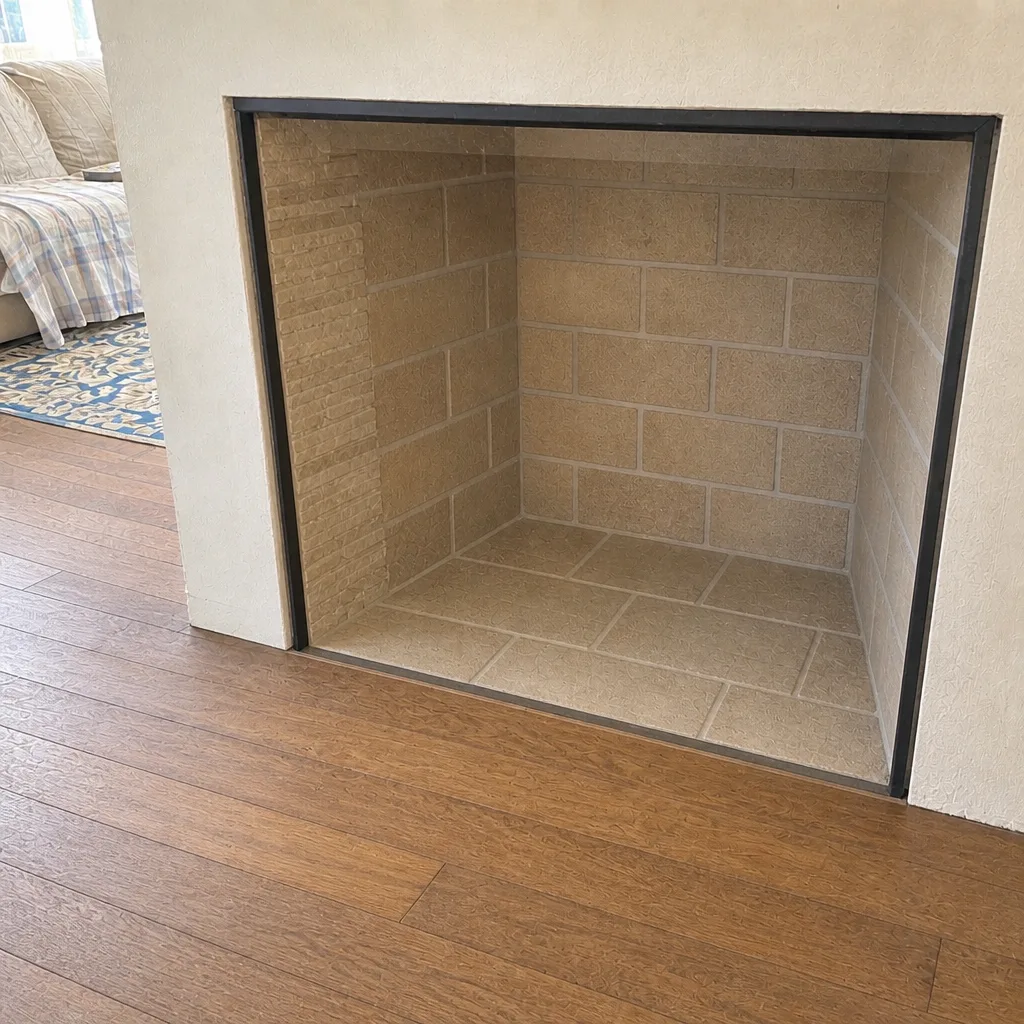
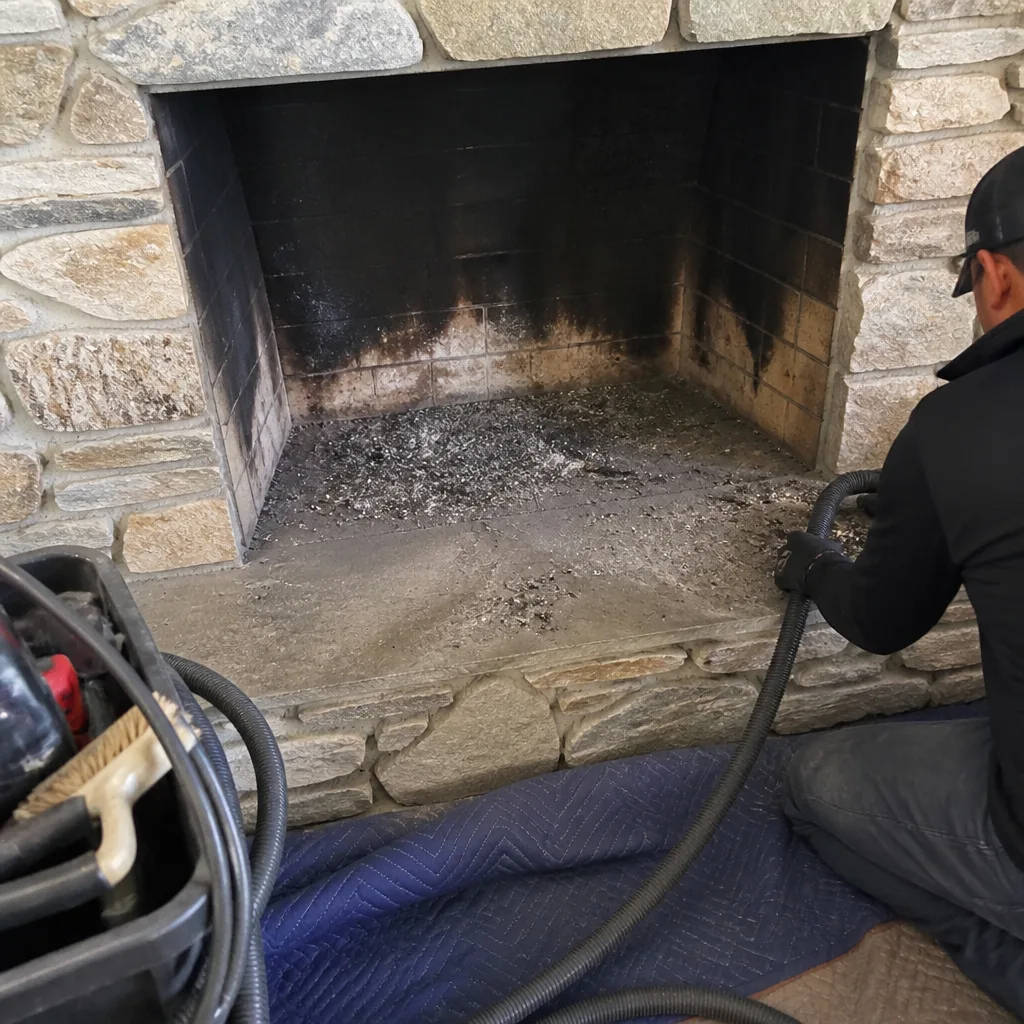
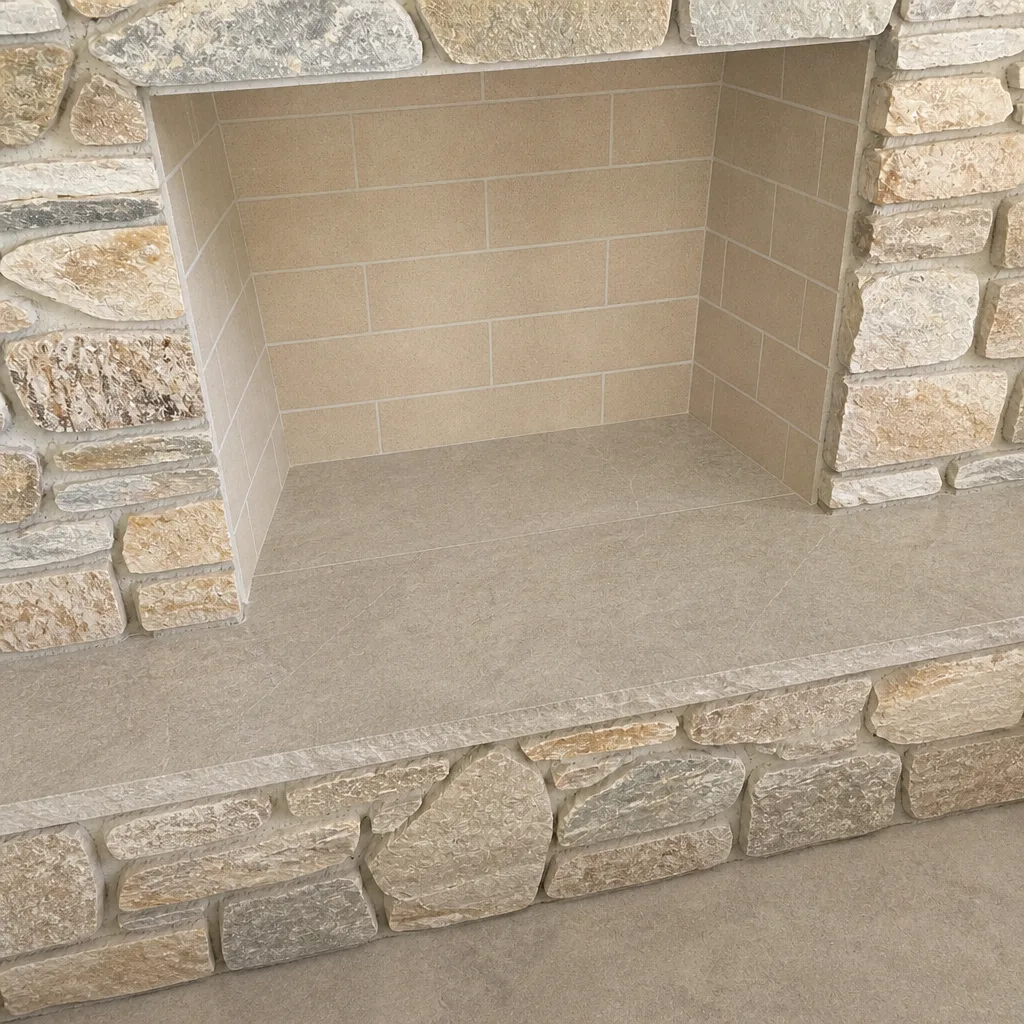
See the difference
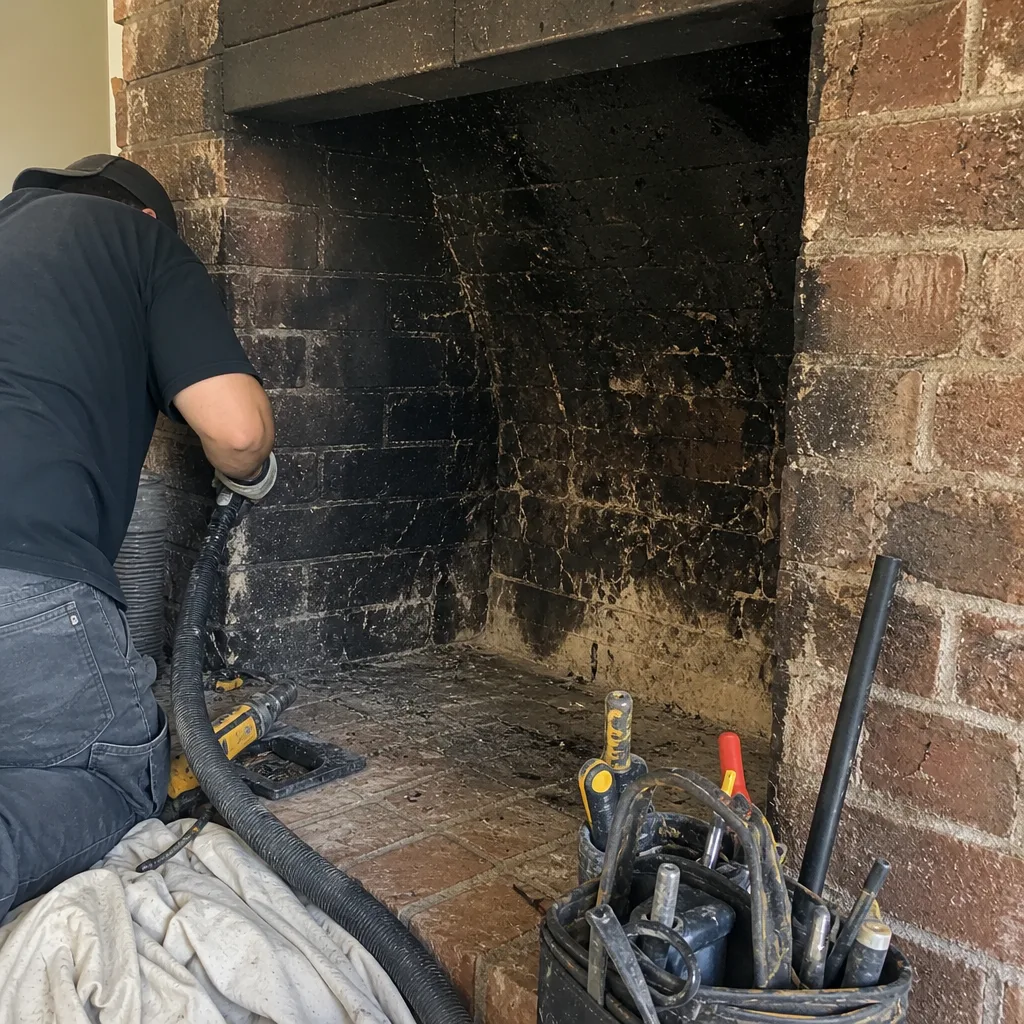 Before
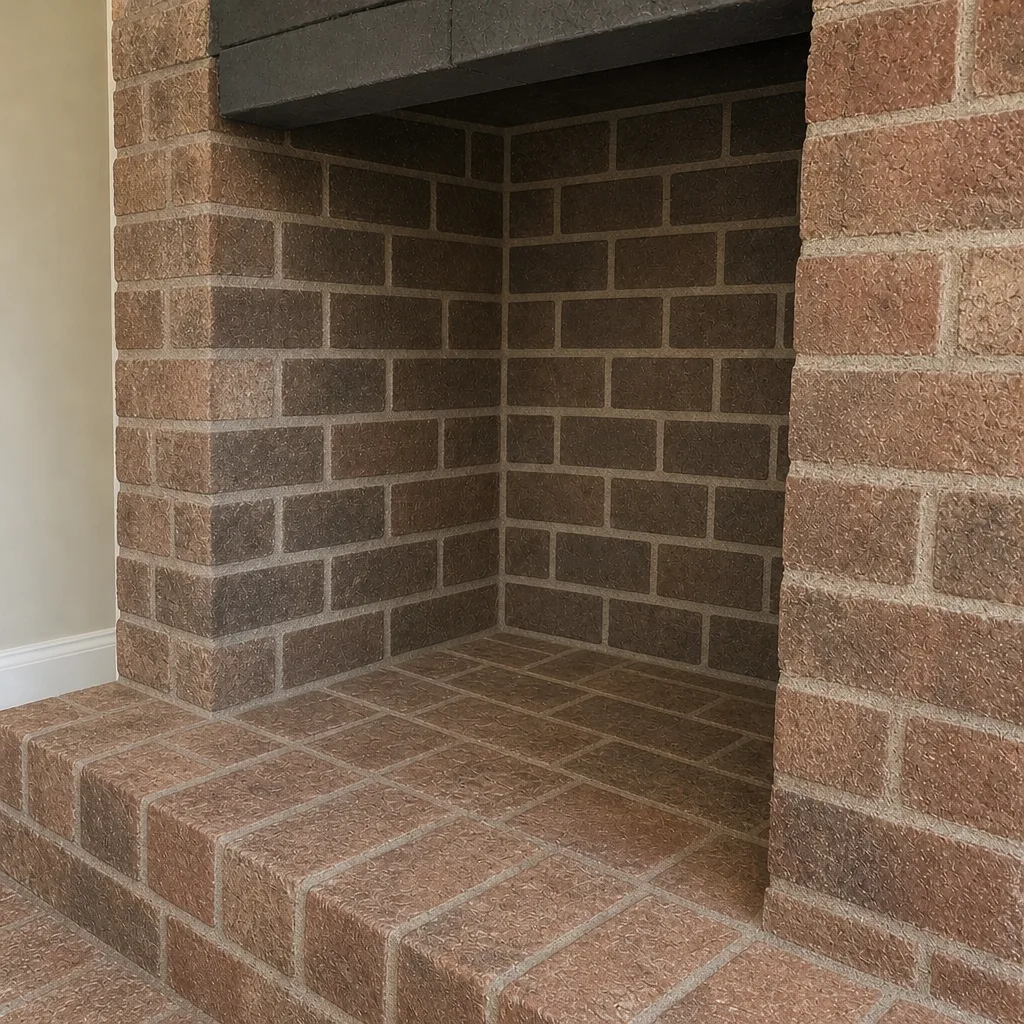 After
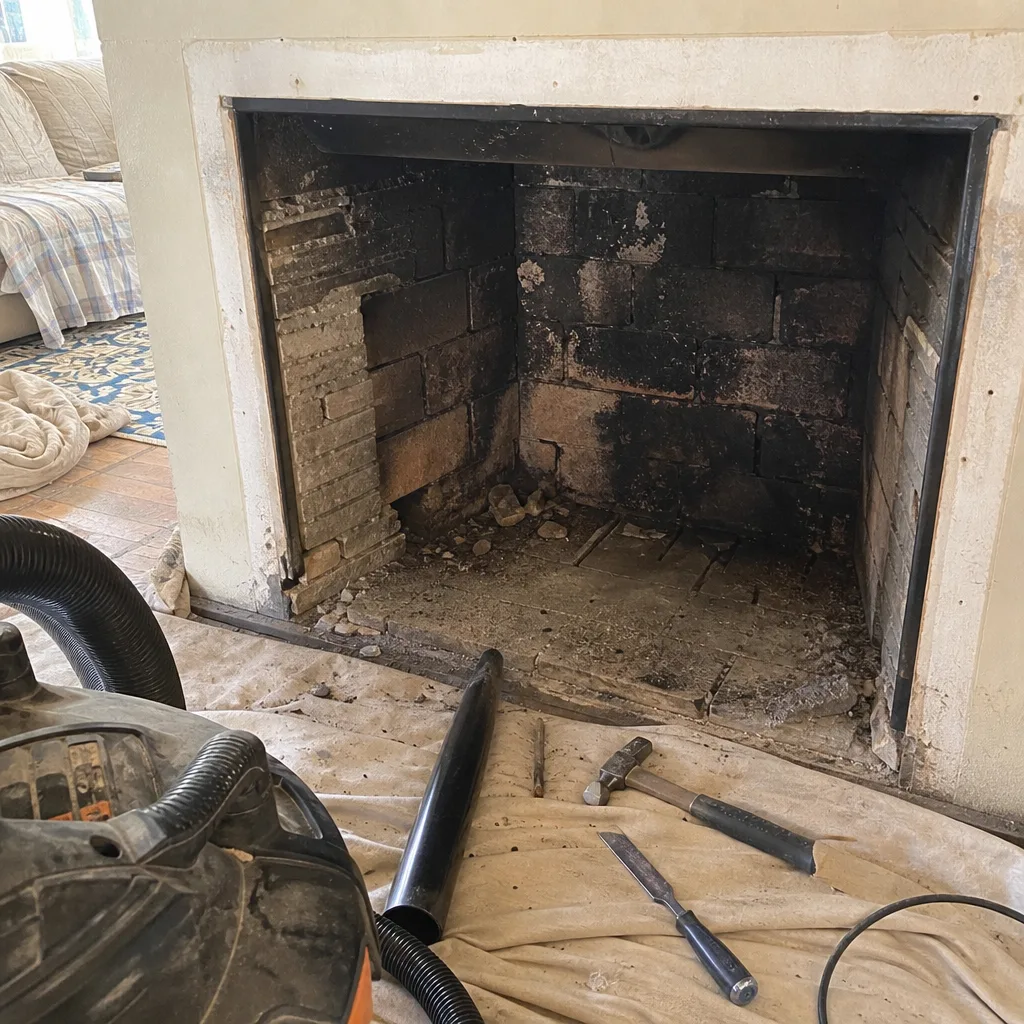 Before
 After
 Before
 After
When to Call a Professional
Most chimney care in South Coast Metro is seasonal and predictable, but some situations should have you on the phone rather than waiting for the next window. Call if you’ve had a chimney fire, even a small one – the flue may have cracked whether or not you smelled or heard it. Call if you see cracked or missing mortar, loose brick, or a crown that’s visibly damaged. Call if the firebox lining is cracked or crumbling, since you can’t safely burn against failed firebrick. Call if smoke backs into the room during Santa Ana winds, if the damper won’t open or close, or if the cap is missing or damaged. And call before the first fire of the year if the chimney hasn’t been inspected since the last season – the post-dormancy check is the most important appointment of the calendar. Chimney Sweep South Coast Metro offers free estimates in South Coast Metro – call (833) 509-5393. The estimate is free, the price is set per job by the written estimate, and nothing gets recommended without camera evidence you can see for yourself.
Frequently Asked Questions
A South Coast Metro chimney should get a sweep and inspection once a year before the fire season, plus a spring post-season assessment of the masonry, cap, and crown. Light use doesn’t change the schedule, because the threats here are dormancy and moisture, not heavy creosote. A lightly used fireplace still collects debris and moisture over ten months of sitting idle. Call (833) 509-5393 for an exact quote – estimates are free.
A smoke smell during Santa Ana winds is usually a downdraft: gusting wind at the top of the stack overpowers the flue’s draft and pushes combustion gases back into the room. A damaged or missing cap and a damper that won’t open fully make it worse. That’s a carbon monoxide concern, so get it checked before you burn during a wind event. Call (833) 509-5393 – estimates are free.
A cracked clay-tile flue often can be repaired without a full reliner tear-out. HeatShield ceramic resurfacing restores the interior surface and seals cracked joints when the flue structure itself is sound. Whether resurfacing is the right route depends on what the camera shows, and a full replacement is only necessary when the liner has failed structurally. Call (833) 509-5393 – estimates are free.
Before the first fire after a summer of dormancy, have the flue inspected for debris and cracked mortar joints, test the damper’s full open-and-close, confirm the cap is intact and screened, and check the crown and exterior masonry for water damage. The dormant season is exactly when moisture and debris collect in a South Coast Metro flue. Call (833) 509-5393 – estimates are free.
Skipping a year or two means the chimney runs through full wet-dry cycles unsupervised, and small problems – a cracked crown, an open mortar joint, a clogged flue – get a season or more to spread. In a mild climate the damage is silent until the flue fails a check or a drafting problem shows up in the room. A fall inspection every year catches it early, when the repairs are smaller. Call (833) 509-5393 – estimates are free.
Yes. The marine layer delivers damp air that settles into a dormant flue and works into masonry joints over months, then the dry season pulls that moisture back out through repeated thermal cycles. That wetting and drying stresses brick and mortar year after year, which is why a moisture-barrier cap and a sound crown matter more here than in a dry, inland climate.
The Bottom Line
South Coast Metro’s mild climate changes the chimney-care calendar. Because fireplaces sit idle most of the year, the biggest threats are dormancy, moisture, and dry-season thermal stress, not creosote from heavy winter use. Handle the two appointments that count: the pre-season inspection and sweep before your first fire, and the post-season assessment of masonry, cap, and crown in spring. Protect against moisture year-round with a proper cap and crown, watch the damper for Santa Ana wind backdrafts, and treat a cracked clay-tile liner as a resurfacing question before a replacement question. When an inspection turns up a repair, get a contractor who can do the sweep, the repair, and the fireplace work in one place – and show you the camera evidence behind every recommendation. Call (833) 509-5393. We answer 24/7. Fast dispatch from 7am to 7pm, Sunday through Friday. Estimates are free and the price is set per job by the written estimate.
Written by the team at Chimney Sweep South Coast Metro.